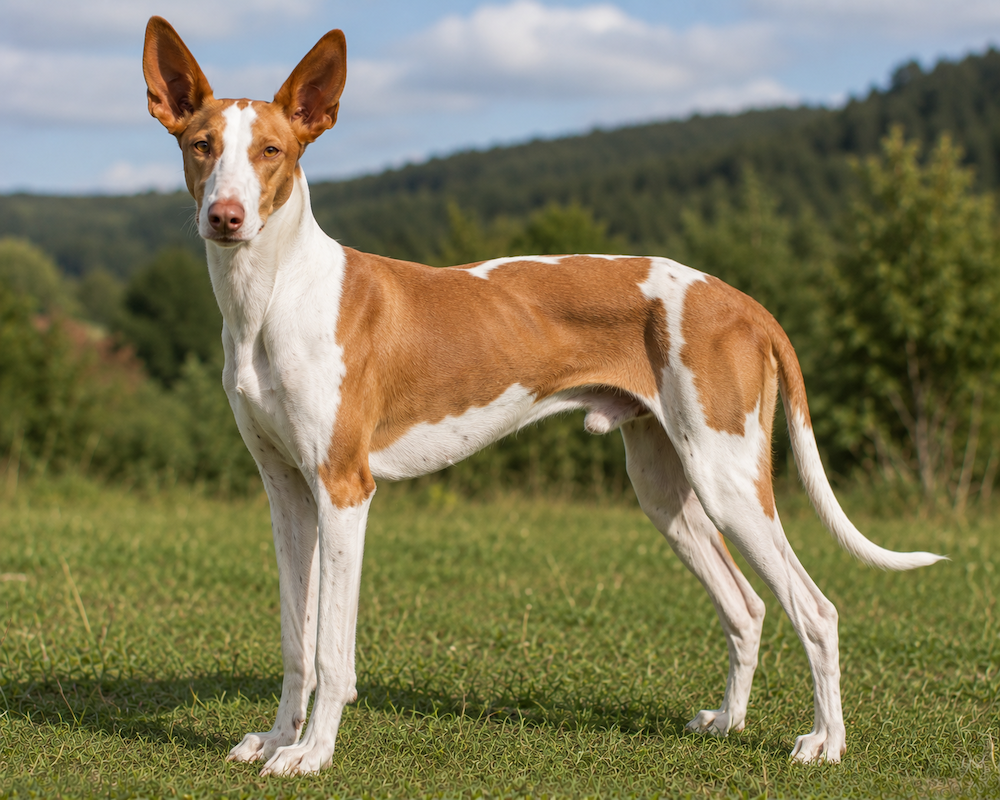







Elegant, athletic, and incredibly agile — the Ibizan Hound is an ancient sighthound that combines remarkable speed with a gentle, affectionate personality.
🧠 QUICK SNAPSHOT
- Temperament: Intelligent, gentle, independent
- Energy Level: High
- Size: Medium to Large
- Good With Families: Yes
- Trainability: Moderate
- Grooming: Low
- Best For: Active families, experienced owners, homes with secure fencing
📚 OVERVIEW
The Ibizan Hound is one of the world’s oldest dog breeds, with origins dating back thousands of years. Believed to have descended from ancient Egyptian hunting dogs, the breed later became closely associated with the Spanish island of Ibiza, where it was prized for hunting rabbits across rocky terrain. Built for speed, agility, and endurance, the Ibizan Hound is a graceful athlete capable of remarkable leaps and lightning-fast acceleration.
Despite its impressive hunting abilities, the Ibizan Hound is a calm, affectionate companion inside the home. It enjoys relaxing with its family after exercise and is known for its gentle, sensitive nature. Elegant in appearance with its tall ears, lean body, and amber eyes, this breed combines beauty with intelligence. Owners who understand the needs of sighthounds and can provide plenty of safe exercise will find the Ibizan Hound to be a loyal and rewarding companion.
✅ PROS & CONS
Pros
- Gentle and affectionate with family
- Extremely athletic and graceful
- Low-maintenance coat
- Generally healthy breed
- Quiet indoors after exercise
Cons
- Strong prey drive
- Needs secure fencing
- Can be independent during training
- Requires plenty of daily exercise
- May be reserved with strangers
Is an Ibizan Hound a Good Family Dog?
Yes, the Ibizan Hound makes an excellent family dog for households with an active lifestyle. It is affectionate, gentle, and forms strong bonds with its family while maintaining a calm and dignified personality. Unlike some energetic breeds, it is often relaxed indoors once its exercise needs have been met.
The breed generally gets along well with respectful children and usually enjoys living alongside other dogs. However, because of its powerful hunting instincts, smaller pets such as rabbits, guinea pigs, or free-roaming birds may trigger its natural prey drive. Early socialisation can help the breed become more comfortable with cats, although careful introductions and supervision are always recommended.
Ibizan Hounds appreciate companionship and enjoy participating in family activities, particularly those involving outdoor adventures. Families who can provide regular exercise, gentle training, and plenty of affection will be rewarded with a loyal, elegant, and loving companion.
How Much Exercise Does an Ibizan Hound Need?
The Ibizan Hound requires 60 to 90 minutes of exercise every day to remain physically fit and mentally satisfied. Bred to hunt over long distances, it possesses excellent stamina and thrives when given opportunities to run safely in secure, enclosed areas.
Long walks, hiking, lure coursing, running, agility, and interactive games all provide excellent outlets for the breed’s energy. Because of its exceptional speed and instinct to chase moving objects, off-lead exercise should only take place in securely fenced environments. Once an Ibizan Hound spots prey, even the best-trained dog may ignore recall commands.
Mental stimulation is also important. Puzzle toys, scent games, trick training, and obedience sessions help engage the breed’s intelligent mind. A combination of physical exercise and enrichment allows the Ibizan Hound to remain calm, content, and well balanced at home.
Is an Ibizan Hound Easy to Train?
The Ibizan Hound is intelligent but naturally independent, making training moderately challenging compared to more eager-to-please breeds. Developed to make its own decisions while hunting, it often prefers thinking for itself rather than blindly following commands.
Positive reinforcement using praise, treats, toys, and patience produces the best results. Short, enjoyable training sessions help maintain motivation, while harsh corrections should always be avoided, as this sensitive breed responds poorly to forceful methods.
Early socialisation is essential to help puppies become confident around different people, animals, and environments. Reliable recall requires ongoing practice but should never be fully trusted in unfenced areas due to the breed’s powerful prey drive. With consistent, positive training, the Ibizan Hound develops into a polite, responsive, and enjoyable companion.
Does an Ibizan Hound Shed?
The Ibizan Hound is considered a low-shedding breed, making it relatively easy to maintain. It comes in both smooth-coated and wire-coated varieties, with both requiring only modest grooming compared to many other medium-to-large breeds.
Weekly brushing is generally enough to remove loose hair and keep the coat healthy. Smooth-coated dogs can be groomed with a soft rubber mitt, while wire-coated individuals benefit from occasional hand-stripping or trimming to maintain coat texture. Bathing is only necessary when the dog becomes particularly dirty.
Although the breed sheds very little, it is not considered hypoallergenic. Routine nail trimming, ear cleaning, and dental care are also important parts of regular grooming to maintain overall health and wellbeing.
What Health Problems Are Common in an Ibizan Hound?
The Ibizan Hound is generally a healthy and long-lived breed, often living 12 to 15 years. Thanks to careful breeding and its relatively diverse gene pool, inherited health problems are less common than in many other purebred dogs.
Nevertheless, prospective owners should be aware of several conditions. Hip dysplasia can occasionally occur, while some dogs may develop autoimmune thyroid disease, seizures, or inherited eye disorders. Like many deep-chested breeds, there is also a small risk of gastric dilatation-volvulus (bloat), a life-threatening emergency that requires immediate veterinary treatment. Because the breed has very little body fat, some Ibizan Hounds can also be more sensitive to anaesthesia than other dogs.
Regular veterinary examinations, maintaining a lean body condition, feeding a high-quality diet, and purchasing a puppy from health-tested parents all help reduce health risks. With appropriate care, the Ibizan Hound remains an active, healthy, and elegant companion well into its senior years.