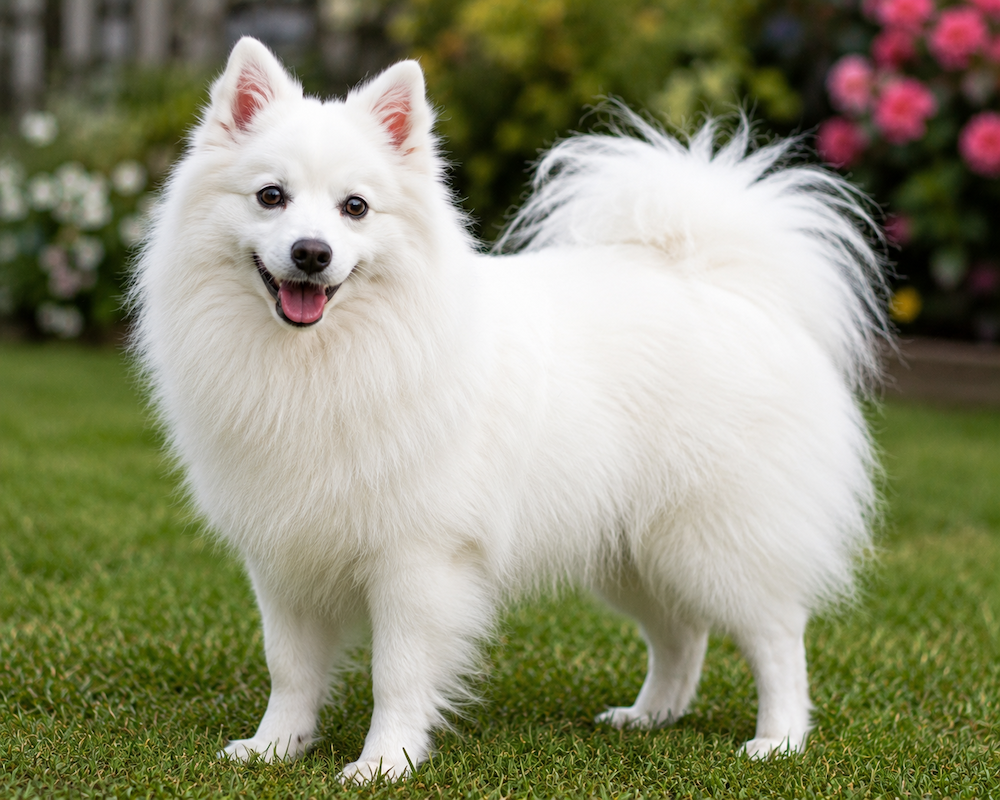







Fluffy, cheerful, and full of charm — a bright companion that loves people and family life.
🧠 QUICK SNAPSHOT
- Temperament: Friendly, intelligent, affectionate
- Energy Level: Moderate
- Size: Small to medium
- Good With Families: Yes
- Trainability: High
- Grooming: Moderate
- Best For: Families, companionship, apartment living
📚 OVERVIEW
The Japanese Spitz is a beautiful companion breed known for its brilliant white coat, fox-like face, and cheerful personality. Despite its fluffy appearance, the coat is surprisingly easy to maintain and naturally resists dirt.
These dogs are affectionate, loyal, and highly social, making them excellent companions for families, singles, and first-time dog owners alike.
✅ PROS & CONS
Pros
- Friendly and affectionate personality
- Highly trainable and intelligent
- Great with children and families
- Beautiful white coat with relatively easy maintenance
Cons
- Can be vocal when alerting owners
- Needs companionship and attention
- May develop separation anxiety if left alone too often
- Regular brushing is required
Is a Japanese Spitz a Good Family Dog?
Yes. Japanese Spitz are generally affectionate, playful, intelligent and strongly family-oriented.
They’re usually excellent with respectful children and enjoy being involved in family life.
Their manageable size, cheerful personality and adaptability have helped make them popular companion dogs in Japan, Australia and many other countries.
How Much Exercise Does a Japanese Spitz Need?
Most adults need around 45–60 minutes of exercise each day, along with play and mental stimulation.
They enjoy walks, games, training and exploring with their owners.
They’re energetic without generally requiring the extreme workload of breeds such as Border Collies or Huskies.
Is a Japanese Spitz Easy to Train?
Usually, yes.
They’re intelligent, attentive and generally eager to interact with their owners.
Positive reinforcement works particularly well.
Their playful personality means short, interesting training sessions are usually more successful than repetitive drills.
Are Japanese Spitz Intelligent?
Yes.
They learn routines and tricks quickly and are excellent at reading their owners.
Their intelligence, manageable size and enthusiasm make them good candidates for obedience, rally, tricks and other companion-dog activities.
Are Japanese Spitz Stubborn?
They can occasionally have an independent streak, but they’re generally more cooperative than many primitive Spitz breeds.
Boredom can look like stubbornness.
Keeping training enjoyable usually produces much better results.
Does a Japanese Spitz Shed?
Yes — substantially.
Japanese Spitz have a dense double coat and shed throughout the year, with heavier seasonal shedding when they “blow” their undercoat.
Anyone wanting a white dog with no white hair around the house should probably look elsewhere.
Is a Japanese Spitz Hypoallergenic?
No.
They shed considerably and produce normal canine allergens through skin and saliva.
Their fluffy white coat doesn’t make them hypoallergenic.
How Often Should You Groom a Japanese Spitz?
Brushing thoroughly around two or three times each week is usually sufficient, with more frequent grooming during seasonal shedding.
Despite the impressive coat, grooming is often easier than people expect.
The coat’s texture naturally helps resist some dirt.
Why Does a Japanese Spitz Stay So White?
The outer coat has a relatively smooth, dirt-resistant texture, so dried mud and dirt can often brush away surprisingly easily.
That doesn’t mean the coat is literally self-cleaning.
Regular grooming and occasional bathing are still necessary.
Does a Japanese Spitz Have a Self-Cleaning Coat?
“Self-cleaning” is an exaggeration, but there’s some truth behind the reputation.
Dirt often dries and falls or brushes out of the harsh outer coat rather than becoming deeply embedded.
Owners are sometimes surprised by how quickly a muddy dog becomes white again.
How Often Should You Bathe a Japanese Spitz?
Usually only when necessary.
Frequent bathing isn’t required to keep a healthy coat white.
Using appropriate dog shampoo and thoroughly drying the dense undercoat are important.
Can You Shave a Japanese Spitz?
Routine shaving is generally not recommended.
The double coat provides insulation and protection, and shaving can interfere with normal coat growth and texture.
Medical clipping is a different matter and should follow veterinary advice.
Does a Japanese Spitz Need Haircuts?
No regular full-body haircut is necessary.
The breed should retain its natural Spitz outline.
Minor tidying around the feet or hygiene areas may occasionally be useful.
Why Is My Japanese Spitz Shedding So Much?
Seasonal shedding can be dramatic.
The soft undercoat is periodically released in large quantities, sometimes producing enough loose fluff to appear as though another small dog has emerged during brushing.
This is normal coat cycling.
What Health Problems Are Common in Japanese Spitz?
The Japanese Spitz is generally considered a relatively healthy breed, but potential concerns include patellar luxation and certain eye problems.
Some individuals may develop allergies or skin conditions.
Responsible breeding and appropriate health screening remain important.
Are Japanese Spitz Prone to Patellar Luxation?
They can be.
Patellar luxation occurs when the kneecap moves out of its normal position.
Signs may include intermittent skipping or suddenly carrying a hind leg.
Do Japanese Spitz Get Tear Stains?
Some do.
Tears can produce reddish-brown staining beneath the eyes, which is particularly visible against a pure white coat.
Persistent excessive tearing should be investigated rather than treated only as a cosmetic issue.
Are Japanese Spitz Prone to Eye Problems?
Eye conditions can occur, although the breed is generally considered comparatively healthy.
Responsible breeders should follow appropriate eye-screening recommendations.
Persistent redness, cloudiness, discharge or visual changes deserve veterinary assessment.
How Long Does a Japanese Spitz Live?
Japanese Spitz commonly live around 12–16 years.
Their moderate size and generally functional body structure contribute to good longevity.
Healthy weight, dental care, exercise and responsible breeding remain important.
How Big Does a Japanese Spitz Get?
Japanese Spitz are small-to-medium dogs.
Adults generally stand around 30–38 cm at the shoulder, depending on sex and the breed standard being used.
Many weigh approximately 5–10 kg, although individual size varies.
Is There a Mini Japanese Spitz?
There is no officially recognised Miniature Japanese Spitz variety.
The standard breed is already relatively compact.
Dogs advertised as “Mini Japanese Spitz” may simply be smaller individuals or come from deliberately undersized breeding lines.
Is There a Teacup Japanese Spitz?
No recognised Teacup Japanese Spitz exists.
Extreme miniaturisation isn’t part of the traditional breed standard.
Responsible breeders should prioritise health and sound structure rather than producing the smallest possible dog.
Can a Japanese Spitz Live in an Apartment?
Yes.
Their moderate size and adaptability can make them excellent apartment dogs if they’re exercised properly.
The biggest potential challenge is often barking, particularly if alert behaviour isn’t managed from puppyhood.
Does a Japanese Spitz Need a Backyard?
No.
A garden is useful but not essential.
Regular walks, play and interaction are more important than simply having access to outdoor space.
Can a Japanese Spitz Be Left Alone?
Adult dogs can learn to tolerate reasonable periods alone.
However, Japanese Spitz are strongly companion-oriented and generally prefer being involved with their families.
Long periods of isolation can contribute to boredom or separation-related behaviour.
Are Japanese Spitz Prone to Separation Anxiety?
Some can be.
Their strong attachment to people means independence should be taught gradually from puppyhood.
Exercise, enrichment and predictable routines can help.
Are Japanese Spitz Velcro Dogs?
Many are.
They often follow their owners around and want to participate in whatever the household is doing.
They’re companion dogs with a strong social orientation toward humans.
Are Japanese Spitz Cuddly?
Usually.
Many enjoy laps, physical contact and sleeping close to their owners.
Their enormous fluffy coat makes them particularly effective at looking like living white teddy bears.
Are Japanese Spitz Good With Children?
Generally, yes.
They’re playful and usually robust enough for family life while remaining small enough to manage easily.
Children should still learn respectful handling and interactions should be supervised.
Are Japanese Spitz Good With Other Dogs?
Usually.
Properly socialised Japanese Spitz tend to be sociable and playful with other dogs.
Individual temperament always matters.
Are Japanese Spitz Good With Cats?
Many can live successfully with cats, particularly when introduced appropriately.
Their prey drive is generally less intense than that of many hunting terriers and sighthounds.
Early socialisation improves the chances of peaceful coexistence.
Do Japanese Spitz Have a Strong Prey Drive?
Usually not exceptionally strong.
They may chase birds or small animals, but intense hunting drive isn’t a defining characteristic of the breed.
Individual dogs can still vary.
Are Japanese Spitz Good Off Leash?
Many can develop reliable recall with appropriate training.
They’re generally fairly people-oriented, which helps.
Secure areas are still safest until recall is genuinely dependable.
Do Japanese Spitz Bark a Lot?
They can.
Japanese Spitz are alert and quick to announce visitors or unusual activity.
Early training is important because barking can become excessive if constantly reinforced.
Are Japanese Spitz Good Watchdogs?
Yes.
They’re naturally observant and often quick to alert their owners.
Their bright white appearance may resemble a tiny Arctic guardian, but their primary contribution to home security is usually the alarm system.
Are Japanese Spitz Good Guard Dogs?
No.
They’re too small and generally too companion-oriented to function as serious protection dogs.
They make much better watchdogs than guard dogs.
Are Japanese Spitz Aggressive?
They shouldn’t be.
The ideal Japanese Spitz is friendly, confident, affectionate and lively.
Fearfulness or uncontrolled aggression isn’t characteristic of a well-bred, properly socialised dog.
Are Japanese Spitz Friendly With Strangers?
Many are friendly once introduced, although they may initially bark or act watchful.
Good socialisation helps them distinguish ordinary visitors from genuinely unusual situations.
Are Japanese Spitz High-Energy Dogs?
They’re moderately energetic.
They enjoy activity and play but usually settle well after appropriate exercise.
This balance is one reason they can adapt successfully to both family homes and apartments.
When Does a Japanese Spitz Calm Down?
Many become noticeably more settled between one and two years of age, although playful behaviour often continues throughout life.
Regular exercise and training make adolescence considerably easier.
Do Japanese Spitz Get the Zoomies?
Yes.
Many enjoy sudden high-speed laps around the house or garden.
The flowing white coat makes these episodes look considerably more dramatic than the dog’s actual size would suggest.
Are Japanese Spitz Good Running Dogs?
Healthy adults can enjoy moderate running.
They’re athletic but aren’t specialised endurance dogs.
Distance should be increased gradually after physical maturity.
Are Japanese Spitz Good Hiking Dogs?
Yes.
Their combination of moderate size, stamina and enthusiasm can make them excellent hiking companions.
Their coat should be checked afterwards for burrs, grass seeds and ticks.
Can Japanese Spitz Swim?
Most can physically swim, although enthusiasm varies.
Their dense coat becomes heavy when saturated, so supervision around deep water is important.
They’re not specialised water dogs.
Do Japanese Spitz Like Cold Weather?
Generally, yes.
Their dense double coat provides excellent insulation.
They’re typically much more comfortable in cold conditions than many short-coated companion breeds.
Can Japanese Spitz Handle Hot Weather?
They can live successfully in warm climates, including Australia, but sensible heat management is essential.
Exercise should be scheduled during cooler parts of the day, with access to shade, water and air-conditioned or cool indoor spaces during extreme heat.
Should You Shave a Japanese Spitz in Summer?
Generally, no.
The double coat provides some insulation against environmental heat as well as cold and protects the skin from sun exposure.
Heat should instead be managed through shade, water, cool indoor conditions and appropriate exercise timing.
What Does a Japanese Spitz Look Like?
The Japanese Spitz is a compact white dog with a dense double coat, pointed ears, dark almond-shaped eyes, black nose and heavily plumed tail curled over the back.
The contrast between brilliant white coat and dark facial features creates its characteristic expression.
Are Japanese Spitz Always White?
Yes. Pure white is the defining recognised colour of the Japanese Spitz.
Unlike several related Spitz breeds that occur in multiple colours, the Japanese Spitz was deliberately standardised as an all-white breed.
Can a Japanese Spitz Be Cream?
Cream shading can occasionally appear, particularly in puppies, but the recognised adult breed colour is white.
Strong persistent cream colouring isn’t the traditional ideal.
Can a Japanese Spitz Be Black?
No.
A black dog may resemble a Japanese Spitz structurally, but black isn’t a recognised colour of the breed.
Other Spitz breeds can produce very similar-looking dogs in darker colours.
Why Does a Japanese Spitz Have Black Eyes and a Black Nose?
Dark pigmentation creates a striking contrast against the white coat.
The black nose, dark eye rims and dark eyes became important characteristics during breed standardisation.
They contribute significantly to the breed’s distinctive appearance.
Why Does a Japanese Spitz Have a Curled Tail?
The heavily plumed tail carried over the back is a classic Spitz characteristic.
Similar tail carriage occurs across numerous northern and Asian Spitz breeds.
It forms an important part of the Japanese Spitz silhouette.
Is a Japanese Spitz the Same as an American Eskimo Dog?
No.
They can look remarkably similar, particularly when comparing smaller American Eskimo Dogs with Japanese Spitz.
However, they’re separate breeds with different development histories.
What Is the Difference Between a Japanese Spitz and an American Eskimo Dog?
Japanese Spitz are always white and were developed primarily in Japan during the 20th century.
American Eskimo Dogs developed from German Spitz-type dogs in the United States and occur in several recognised sizes.
Their appearance overlaps substantially, but they’re distinct breeds.
Is a Japanese Spitz the Same as a German Spitz?
No, although German Spitz dogs are highly relevant to Japanese Spitz history.
The German Spitz represents an older European breed family with multiple size and colour varieties.
The Japanese Spitz was developed later using imported white Spitz dogs.
Is a Japanese Spitz the Same as a Pomeranian?
No.
Pomeranians are considerably smaller and occur in numerous colours.
Both belong to the broader Spitz family and share features such as pointed ears, dense coats and curled tails.
Is a Japanese Spitz a Large Pomeranian?
No.
The resemblance is understandable, but the Japanese Spitz isn’t simply an oversized white Pomeranian.
Its modern breed development involved larger white Spitz dogs and produced a distinct size, structure and temperament.
Is a Japanese Spitz Related to the Samoyed?
They look similar, but the relationship is often exaggerated.
The Samoyed is a much larger Siberian working breed developed for demanding Arctic tasks.
Claims that the Japanese Spitz was simply created by miniaturising Samoyeds aren’t supported by the best historical evidence.
Is a Japanese Spitz a Mini Samoyed?
No.
The nickname is understandable because both breeds have white double coats, dark facial features and smiling expressions, but they’re separate breeds.
A Samoyed is substantially larger and has very different working ancestry.
Is a Japanese Spitz Related to the Siberian Husky?
Only broadly through the wider Spitz-type dog family.
The Siberian Husky developed as an endurance sled dog in northeastern Siberia.
The Japanese Spitz was created much later primarily as a companion breed.
Is a Japanese Spitz Related to the Finnish Spitz?
They’re both Spitz breeds but have very different histories.
Finnish Spitz were developed as hunting dogs and traditionally have red-gold coats.
Japanese Spitz are white companion dogs created during the 20th century.
Is a Japanese Spitz an Ancient Japanese Breed?
No — and this is one of the biggest misconceptions about the breed.
Unlike the Akita or Shiba Inu, the Japanese Spitz isn’t an ancient native Japanese landrace.
It’s a comparatively modern breed developed in Japan during the 20th century from imported Spitz dogs.
When Was the Japanese Spitz Created?
Development began during the 1920s and continued through the 1930s and 1940s.
Japanese breeders combined selected white Spitz dogs from several imported populations to establish a consistent medium-small white companion breed.
Why Was the Japanese Spitz Created?
Breeders wanted an attractive, intelligent and manageable white companion Spitz.
Rather than preserving an ancient working population, the project involved deliberately developing a new breed suited increasingly to modern household life.
What Breed Was Used to Create the Japanese Spitz?
The most important early foundation is generally considered to have been white German Spitz-type dogs.
Additional white Spitz dogs imported from other countries were subsequently incorporated.
The precise contribution of every population isn’t perfectly documented.
Did the Japanese Spitz Come From the German Spitz?
German Spitz ancestry is central to the accepted history.
White German Spitz dogs imported into Japan during the early 20th century provided important foundation stock.
Breeders then introduced other white Spitz populations while developing the modern breed.
Were White German Spitz Dogs Imported to Japan From China?
Historical accounts commonly describe white German Spitz-type dogs reaching Japan through China during the early 1920s.
These dogs are frequently identified as important foundation animals.
Further imports subsequently expanded the breeding population.
Was the First Japanese Spitz Shown in Tokyo?
An important early white Spitz was exhibited at a Tokyo dog show in 1921, an event frequently identified as an important milestone in the breed’s development.
Japanese breeders then began systematically developing their own white Spitz population.
What Other Dogs Were Used to Develop the Japanese Spitz?
Historical accounts mention additional white Spitz dogs imported from places including Canada, the United States, Australia and China.
Records from the development period aren’t complete enough to establish every contribution with certainty.
Was the American Eskimo Dog Used to Create the Japanese Spitz?
This is sometimes suggested because of their striking similarity and because North American white Spitz dogs were reportedly incorporated during development.
However, historical terminology around imported white Spitz dogs can be confusing.
It’s safer not to describe the Japanese Spitz as simply an American Eskimo cross.
Was the Samoyed Used to Create the Japanese Spitz?
Samoyed influence is frequently claimed online, but strong historical evidence for a major Samoyed contribution is lacking.
Their resemblance is largely explained by the shared white Spitz appearance.
The breed’s documented development is much more strongly associated with German and other white Spitz-type dogs.
Did Australian Dogs Help Develop the Japanese Spitz?
Australian white Spitz dogs are mentioned among the imported populations used during the breed’s development.
Australia later became particularly important in the breed’s international expansion.
This gives the Japanese Spitz an interesting historical connection with Australia.
When Was the Japanese Spitz Breed Standard Established?
Following years of development and disruption during World War II, the breed became more formally standardised in post-war Japan, with an official standard established in the late 1940s.
From that point, breeders increasingly selected toward the consistent appearance seen today.
Did World War II Affect the Japanese Spitz?
Yes.
Japan’s wartime devastation and food shortages created enormous difficulties for dog breeding.
Breed development and record-keeping were disrupted.
Enthusiasts rebuilt and consolidated the Japanese Spitz population after the war.
When Did the Japanese Spitz Come to Australia?
The breed became established in Australia during the 20th century, with imports helping create a strong enthusiast population.
Japanese Spitz subsequently became considerably more familiar in Australia than in some other countries.
Why Is the Japanese Spitz Popular in Australia?
Several characteristics suit Australian companion-dog owners: manageable size, family-friendly temperament, intelligence and adaptability.
Despite the thick coat, the breed can live successfully in Australia when owners manage hot weather sensibly.
Its striking appearance also attracts considerable attention.
When Did the Japanese Spitz Come to Britain?
Japanese Spitz were introduced to Britain during the 1970s, after becoming established in several other countries.
The breed gradually developed a dedicated following among British companion-dog owners.
Is the Japanese Spitz Recognised Internationally?
Yes.
The breed is recognised by numerous major kennel organisations internationally, although recognition isn’t universal.
It has particularly strong established populations in Japan, Europe and Australia.
Is the Japanese Spitz Recognised by the American Kennel Club?
The Japanese Spitz has historically lacked full AKC breed recognition, despite being established in many other countries.
This partly explains why the breed remains less familiar in the United States than in Australia, Japan or parts of Europe.
Why Isn’t the Japanese Spitz More Common in America?
Limited recognition and competition from the visually similar American Eskimo Dog have likely contributed.
American owners seeking a small white Spitz already had a well-established domestic breed available.
Why Does the Japanese Spitz Look Like It’s Smiling?
The combination of dark almond-shaped eyes, pointed muzzle and mouth shape can create a cheerful “Spitz smile.”
This expression is visually similar to that of the Samoyed, although the breeds have different histories.
Why Does My Japanese Spitz Follow Me Everywhere?
The breed was developed primarily for companionship and tends to be strongly people-oriented.
Many genuinely want to know what their owner is doing at all times.
Privacy can become somewhat theoretical once a Japanese Spitz joins the household.
Why Does My Japanese Spitz Spin in Circles?
Excited Japanese Spitz may spin when anticipating walks, meals or greetings.
Occasional excitement spinning can simply be playful behaviour.
Persistent compulsive circling deserves veterinary or behavioural assessment.
Why Does My Japanese Spitz Tilt Its Head?
Head tilting may help a dog localise sounds or focus on human communication.
Japanese Spitz are highly attentive to their owners, making the behaviour particularly noticeable.
It also happens to be devastatingly effective at obtaining human attention.
Why Does My Japanese Spitz Look Bigger Than It Really Is?
The enormous double coat creates a substantial visual illusion.
Underneath all that white fluff is a relatively lightly built dog.
Bathing can produce the surprising discovery that approximately half the dog appears to have disappeared.
Is a Japanese Spitz a Good First Dog?
Yes, for many owners.
They’re generally trainable, affectionate, adaptable and moderate in exercise requirements.
The major considerations are shedding, barking, grooming and their need for companionship.
For someone comfortable with white hair around the house, they can be an excellent introduction to dog ownership.
What Makes the Japanese Spitz Unique?
The Japanese Spitz looks like an ancient Arctic dog in miniature, but its real history is almost the opposite.
It’s a deliberately developed 20th-century Japanese companion breed, created largely from imported white Spitz dogs and refined for family life.
That combination produced a dog with the spectacular coat and alert expression of a northern working breed without the extreme exercise requirements of many true Arctic workers.
How Did the Japanese Spitz Develop in Japan?
The Japanese Spitz is a surprisingly modern breed. Its story began in early 20th-century Japan, rather than in ancient Japanese villages. White German Spitz-type dogs imported through China became important early foundation animals, with a white Spitz exhibited in Tokyo in 1921 marking an important point in the breed’s development.
Japanese breeders subsequently incorporated other carefully selected white Spitz dogs imported from several countries. Through the 1920s and 1930s they worked toward a consistent companion dog with pure white coat, pointed ears, dark eyes, black pigmentation and a plumed tail over the back.
World War II disrupted breeding, but enthusiasts consolidated the breed after the war and established a formal standard during the late 1940s. The Japanese Spitz subsequently spread internationally, becoming particularly well established in countries including Australia.
So despite looking like a tiny Samoyed that has somehow wandered out of Siberia, the Japanese Spitz is something quite different: a modern Japanese creation designed primarily to be an intelligent, adaptable and spectacularly fluffy family companion.