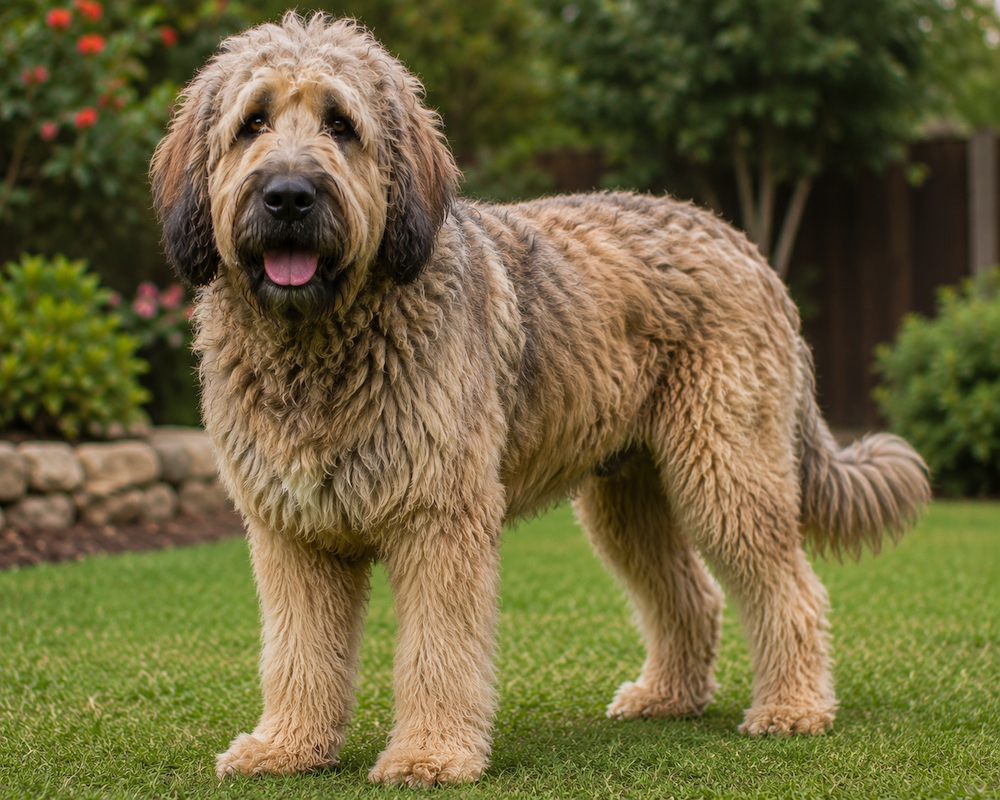







Gentle, intelligent, and impressively loyal — the Mastidoodle combines the calm strength of the Mastiff with the intelligence of the Standard Poodle to create a giant companion with a loving heart.
🧠 QUICK SNAPSHOT
- Temperament: Gentle, loyal, intelligent
- Energy Level: Moderate
- Size: Giant
- Good With Families: Yes
- Trainability: High
- Grooming: Moderate to High
- Best For: Families, experienced owners, homes with plenty of space
📚 OVERVIEW
The Mastidoodle is a designer crossbreed created by crossing a Mastiff—most commonly the English Mastiff—with a Standard Poodle. The aim is to combine the calm, gentle temperament and impressive presence of the Mastiff with the intelligence, trainability, and often lower-shedding coat of the Poodle. The result is a giant companion that is affectionate, eager to please, and remarkably devoted to its family.
Because both parent breeds contribute very different physical characteristics, Mastidoodles can vary considerably in appearance. Some inherit a dense, curly coat similar to the Poodle, while others develop a wavy or straighter coat with more Mastiff features. Regardless of coat type, most Mastidoodles are gentle giants that thrive on human companionship and enjoy being involved in everyday family life.
As with all crossbreeds, individual temperament, coat type, and health can vary depending on the traits inherited from each parent. Responsible breeding and health testing of both parent breeds remain essential.
✅ PROS & CONS
Pros
- Exceptionally gentle with family
- Highly intelligent and eager to learn
- Calm temperament around the home
- Excellent with children
- Often sheds less than a purebred Mastiff
Cons
- Giant size requires plenty of space
- Grooming needs vary considerably
- Expensive to feed and care for
- Can develop separation anxiety
- Large puppies require careful training
Is a Mastidoodle a Good Family Dog?
Yes, the Mastidoodle is generally an outstanding family companion. This crossbreed inherits the gentle, patient temperament of the Mastiff while benefiting from the Poodle’s intelligence and playful nature. Most Mastidoodles form exceptionally strong bonds with their families and enjoy spending as much time as possible alongside their owners.
The breed usually gets along very well with respectful children and often displays the calm, tolerant nature associated with giant companion breeds. Due to their size, supervision is recommended around toddlers to prevent accidental knocks during play. Mastidoodles also tend to live happily with other dogs and can often adapt well to homes with cats when introduced from an early age.
Families who can provide companionship, regular exercise, and plenty of affection will enjoy a loyal, dependable, and wonderfully gentle giant.
How Much Exercise Does a Mastidoodle Need?
The Mastidoodle requires around 45 to 75 minutes of exercise each day, depending on its age, size, and the traits inherited from its parents. While more athletic than many purebred Mastiffs, it is generally less demanding than a Standard Poodle.
Daily walks, hiking, swimming, interactive games, and gentle retrieving activities provide excellent physical exercise. Puppies should avoid excessive running and jumping while their joints are developing, as giant breeds mature slowly and can be prone to orthopaedic problems.
Mental stimulation is equally important. Puzzle feeders, scent games, obedience training, and learning new tricks help engage the breed’s intelligent mind and prevent boredom. A balanced routine of exercise and enrichment supports healthy development while helping maintain an ideal body weight.
Is a Mastidoodle Easy to Train?
Yes, the Mastidoodle is generally easy to train thanks to the intelligence inherited from both parent breeds. Most individuals are eager to please and enjoy learning new skills, making them highly responsive to positive reinforcement.
Reward-based training using praise, treats, toys, and encouragement delivers excellent results. Training should begin early because even the friendliest Mastidoodle becomes an extremely powerful adult. Teaching loose-lead walking, polite greetings, and reliable obedience while the dog is still manageable in size is especially important.
Early socialisation helps puppies become confident around different people, animals, and environments. With consistent leadership and enjoyable training sessions, the Mastidoodle develops into a calm, well-mannered companion that excels in obedience and many family activities.
Does a Mastidoodle Shed?
Shedding varies depending on which parent breed the Mastidoodle takes after. Some inherit the Poodle’s curlier, lower-shedding coat, while others develop a straighter coat that sheds more like a Mastiff. Most fall somewhere between the two.
Brushing three or four times each week helps prevent tangles and removes loose hair. Curly-coated Mastidoodles often require professional grooming every six to eight weeks to maintain a healthy coat and prevent matting. Straighter coats generally require less maintenance but may shed more heavily during seasonal changes.
Although some Mastidoodles may be more suitable for people with mild allergies, no dog can be guaranteed to be hypoallergenic. Regular ear cleaning, nail trimming, dental care, and checking skin folds if inherited from the Mastiff parent should all form part of the grooming routine.
What Health Problems Are Common in a Mastidoodle?
Like all crossbreeds, the Mastidoodle may inherit health conditions from either parent breed. Responsible breeders perform comprehensive health testing on both Mastiffs and Standard Poodles to minimise inherited risks.
Potential concerns include hip dysplasia, elbow dysplasia, gastric dilatation-volvulus (bloat), heart disease, progressive retinal atrophy (PRA), thyroid disorders, and joint problems associated with giant breeds. Maintaining a healthy body weight is particularly important to reduce stress on developing joints and support long-term mobility.
Routine veterinary examinations, a high-quality balanced diet, appropriate exercise, and choosing a puppy from health-tested parents all contribute to a healthy life. With proper care, most Mastidoodles enjoy a lifespan of 9 to 12 years, providing years of loyal companionship and gentle affection.