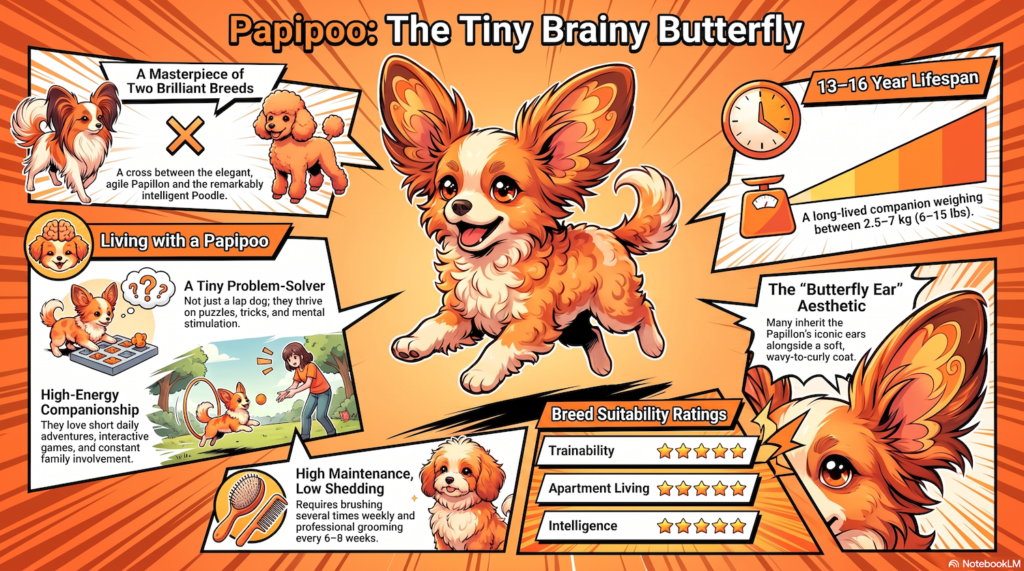
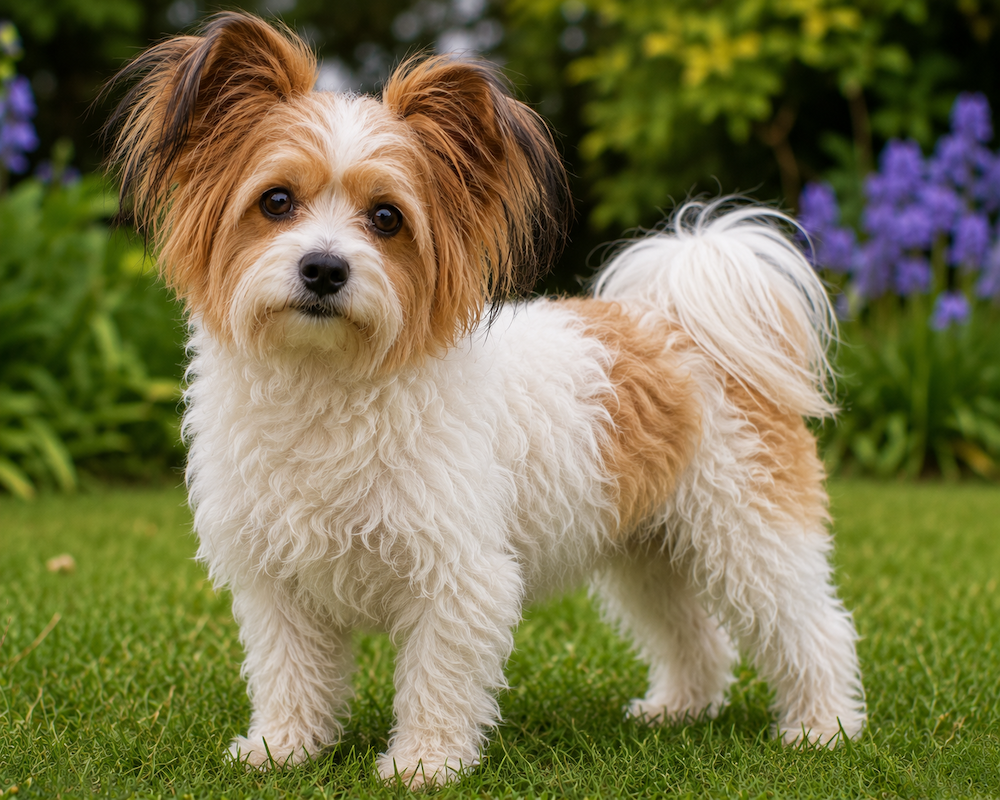







Intelligent, affectionate, and wonderfully playful — the Papipoo is a charming cross between the Papillon and Poodle, combining brains, beauty, and a loving personality in one small companion.
🧠 QUICK SNAPSHOT
- Temperament: Friendly, intelligent, affectionate
- Energy Level: Moderate to High
- Size: Small
- Good With Families: Yes
- Trainability: Very High
- Grooming: Moderate
- Best For: Families, apartment living, first-time owners, active seniors
📚 OVERVIEW
The Papipoo is a delightful designer crossbreed created by combining the elegant Papillon with the highly intelligent Poodle, most commonly the Toy or Miniature Poodle. This mix aims to combine the Papillon’s cheerful personality and distinctive butterfly-shaped ears with the Poodle’s exceptional intelligence and lower-shedding coat. The result is a lively, affectionate companion that enjoys being involved in every aspect of family life.
Although individual Papipoos can vary depending on which parent they take after, they are generally friendly, eager to please, and highly adaptable. They thrive in apartments as well as larger homes, provided they receive daily exercise and plenty of mental stimulation. Their playful personality, trainability, and love of human companionship make them a popular choice for families, couples, retirees, and first-time dog owners alike.
As with all crossbreeds, appearance, coat type, and temperament can vary between individual dogs, making responsible breeding and early socialisation especially important.
✅ PROS & CONS
Pros
- Highly intelligent and easy to train
- Affectionate and family-oriented
- Well suited to apartment living
- Often sheds less than many small breeds
- Excellent companion for first-time owners
Cons
- Can develop separation anxiety
- Needs regular grooming
- Requires daily mental stimulation
- Coat type varies between individuals
- Small size means care is needed around young children
Is a Papipoo a Good Family Dog?
Yes, the Papipoo is an excellent family companion. This crossbreed is known for its loving personality and enjoys spending time with people of all ages. It typically forms close bonds with its family and is happiest when included in everyday activities, whether that’s playing in the garden, joining a walk, or simply relaxing on the sofa.
Papipoos usually get along well with respectful children and often enjoy living with other dogs. They can also adapt well to homes with cats when introduced gradually and positively. Because of their small size, interactions with toddlers should always be supervised to prevent accidental injury.
This breed thrives on companionship and doesn’t enjoy being left alone for long periods. Families who can provide plenty of attention, affection, and daily interaction will be rewarded with a loyal, entertaining, and devoted companion that loves being at the centre of family life.
How Much Exercise Does a Papipoo Need?
The Papipoo requires around 45 to 60 minutes of exercise each day. While small in size, this is an active and energetic breed that enjoys both physical activity and mental challenges.
Daily walks, games of fetch, interactive toys, agility exercises, and play sessions around the home or garden all help keep the Papipoo healthy and happy. Many also enjoy learning tricks and participating in canine sports designed for smaller breeds.
Mental stimulation is particularly important because both the Papillon and Poodle are highly intelligent. Puzzle feeders, scent games, obedience training, and rotating toys help prevent boredom. Without enough activity, a Papipoo may become vocal or develop unwanted behaviours. A combination of moderate exercise and regular enrichment creates a well-balanced and content companion.
Is a Papipoo Easy to Train?
Yes, the Papipoo is one of the easiest small crossbreeds to train. Thanks to the intelligence inherited from both parent breeds, most Papipoos learn quickly and genuinely enjoy working with their owners.
Positive reinforcement using praise, treats, toys, and encouragement produces excellent results. Training should begin early and include basic obedience, house training, socialisation, and confidence-building experiences. Because the breed learns so quickly, short and enjoyable sessions are usually more effective than long, repetitive ones.
Papipoos often excel in trick training, agility, rally obedience, and interactive games that challenge their minds. Early socialisation helps develop a confident, friendly adult that is comfortable around strangers, children, other pets, and new environments. Consistent training throughout life keeps this intelligent little dog mentally stimulated and well behaved.
Does a Papipoo Shed?
Shedding varies depending on which parent breed the Papipoo takes after. Many inherit the Poodle’s low-shedding coat, while others develop a silkier Papillon-style coat that sheds a little more. Most Papipoos shed lightly compared to many other small breeds, but no dog can truly be guaranteed to be non-shedding or hypoallergenic.
Brushing two or three times each week helps prevent tangles, remove loose hair, and keep the coat healthy. Curly-coated Papipoos often require professional grooming every six to eight weeks to maintain a neat appearance and prevent matting.
Routine grooming should also include regular ear cleaning, nail trimming, and daily dental care, as small breeds are particularly prone to dental disease. Establishing a grooming routine from puppyhood helps make maintenance easy throughout the dog’s life.
What Health Problems Are Common in a Papipoo?
Like all crossbreeds, the Papipoo can inherit health conditions from either parent breed. Responsible breeders perform health testing on both Papillons and Poodles to reduce the likelihood of inherited diseases and improve the overall health of puppies.
Potential concerns include patellar luxation, progressive retinal atrophy (PRA), hip dysplasia (particularly in larger Miniature Poodle crosses), eye disorders, and dental disease, which is common in many small breeds. Some Papipoos may also develop allergies or ear infections, particularly if they inherit the Poodle’s dense, curly coat.
Regular veterinary examinations, maintaining a healthy weight, feeding a balanced diet, and providing consistent exercise all contribute to long-term health. Choosing a puppy from a breeder who performs comprehensive health screening gives owners the best opportunity to enjoy a healthy companion that commonly lives between 12 and 16 years.