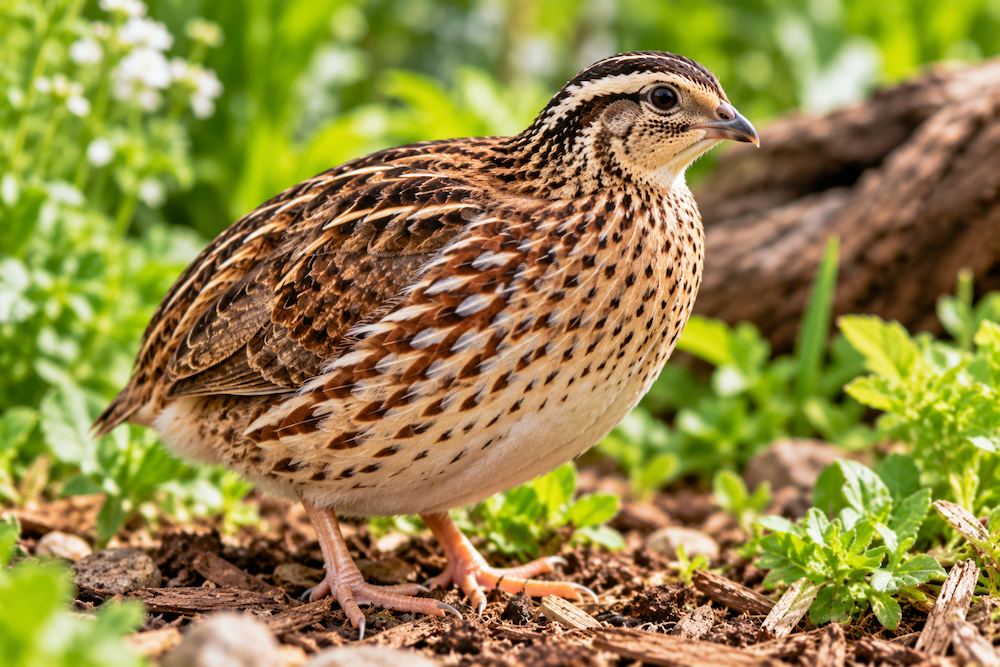







Small, charming and surprisingly entertaining, Quail are fascinating ground-dwelling birds with gentle personalities and distinctive calls.
🧠 QUICK SNAPSHOT
Trait | Quail |
|---|---|
Scientific Classification | Various species, including Coturnix japonica |
Other Names | Japanese Quail, Coturnix Quail, Domestic Quail |
Pet Type | Ground-dwelling bird / Poultry |
Natural Origin | Asia, Europe, Africa and other regions, depending on species |
Typical Lifespan | Around 2–5 years |
Adult Size | Approximately 15–25 cm, depending on species |
Adult Weight | Around 100–300 g for common domestic varieties |
Colours | Brown, golden, white, silver and patterned varieties |
Diet | Omnivore |
Activity | Primarily diurnal |
Temperament | Alert, active and generally shy |
Noise Level | Low to moderate |
Social Needs | Usually best in compatible groups |
Egg Production | Up to 200–300 eggs annually in productive Japanese Quail |
Housing | Secure ground-level aviary or spacious enclosure |
Beginner Friendly? | Yes, with appropriate preparation |
Famous Feature | Tiny speckled eggs and remarkable camouflage |
📚 OVERVIEW
Quail are small, ground-dwelling birds found across many parts of the world. Although several species are kept in captivity, the Japanese Quail (Coturnix japonica) is among the most popular domestic varieties.
These compact birds are known for their rounded bodies, short tails, beautiful camouflage patterns and quick movements. Unlike many familiar pet birds, Quail spend most of their time walking, scratching and searching for food on the ground.
Japanese Quail are also famous for their rapid growth and impressive egg production, with some females beginning to lay eggs at just six to eight weeks of age.
Despite their small size, Quail need secure accommodation, suitable companionship, nutritious food, dust-bathing areas and protection from predators. They’re generally better suited to observation than frequent handling.
✅ PROS & CONS
👍 Pros
Small and attractive birds
Fascinating natural behaviours
Relatively quiet females
Produce beautiful speckled eggs
Enjoy foraging and dust bathing
Require less space than chickens
Available in many colour varieties
Suitable for prepared beginners
👎 Cons
Vulnerable to predators
Can become stressed by handling
Need secure, spacious housing
Males may be noisy or aggressive
Shorter lifespan than many pet birds
Can injure themselves when startled
Require regular enclosure cleaning
Social groups need careful management
Are Quail Good Pets?
Yes. Quail can make delightful pets for people who enjoy observing natural bird behaviour.
They’re active, entertaining and relatively easy to accommodate compared with larger poultry.
However, they generally prefer minimal handling and require secure housing, appropriate nutrition and suitable companionship.
Are Quail Good for Beginners?
Japanese Quail are often suitable for well-prepared beginners.
They’re relatively hardy when provided with appropriate housing and nutrition.
However, their sensitivity to stress, vulnerability to predators and specific social requirements must be understood.
How Long Do Quail Live?
Domestic Japanese Quail commonly live around 2–5 years.
Some individuals may live longer with excellent care.
Lifespan varies between species, and intensive egg production can place additional demands on females.
How Big Do Quail Get?
Japanese Quail generally measure approximately 15–20 cm in length.
Adult weights commonly range from 100–300 grams, depending on breeding lines and sex.
Other pet Quail species may be smaller or larger.
What Are the Different Types of Pet Quail?
Popular Quail kept in captivity include:
Japanese Quail (Coturnix) — popular for eggs and companionship
King Quail — tiny, colourful ground-dwelling birds
Button Quail — a name often used for King Quail, though also applied to unrelated birds
Bobwhite Quail — attractive North American game birds
California Quail — distinctive curved head plume
Gambel’s Quail — striking desert species with prominent head feathers
Care requirements and legal restrictions vary between species.
Are Quail Friendly?
Quail are generally shy rather than openly affectionate.
Some captive-bred individuals become comfortable around familiar caregivers and feeding routines.
However, most prefer remaining on the ground rather than being picked up.
Can Quail Be Tamed?
Yes, Quail can become accustomed to gentle, predictable human interaction.
Offering food calmly and avoiding sudden movements can help build trust.
However, even tame Quail may startle easily.
Do Quail Recognise Their Owners?
Quail can learn familiar routines and respond to predictable environmental cues.
Some approach when they associate a caregiver with food.
Their recognition abilities shouldn’t be confused with the strong social bonds commonly observed in companion parrots.
Do Quail Like Being Held?
Generally, no.
Quail are prey animals and may become frightened when restrained.
Unnecessary handling should be avoided, and birds should always be supported carefully when handling is essential.
Can Quail Fly?
Yes.
Although Quail spend most of their time on the ground, many species can fly in short, powerful bursts.
Startled Quail may launch vertically, potentially injuring themselves against unsuitable enclosure roofs.
Safe aviary design is particularly important.
Are Quail Noisy?
Female Japanese Quail are generally relatively quiet.
Males produce distinctive crowing calls that can be surprisingly noticeable.
Noise levels vary by species, sex and individual bird.
What Do Quail Eat?
Quail need a balanced, species-appropriate diet.
A quality game bird or Quail feed should form the foundation of their nutrition, with suitable greens and occasional appropriate insects providing variety.
Laying females require adequate calcium and appropriate nutrient levels.
Can Quail Eat Vegetables?
Yes.
Suitable leafy greens and small amounts of other safe vegetables can supplement their regular feed.
However, treats shouldn’t replace a nutritionally complete diet.
Fresh food should be removed before it spoils.
Do Quail Need Grit?
Quail may benefit from appropriate insoluble grit, particularly when eating whole grains or fibrous foods.
Birds consuming finely processed complete feeds may not require additional grit.
Laying females also need a suitable calcium source, which serves a different nutritional purpose.
How Many Quail Should Be Kept Together?
Quail generally benefit from compatible companionship.
For Japanese Quail, groups of females or carefully managed breeding groups can work well.
Multiple males may fight, particularly when housed with insufficient space or too few females.
Can Male Quail Live Together?
Sometimes, but compatibility varies.
Male Japanese Quail can become territorial and aggressive, especially around females.
Separate accommodation may be necessary to prevent injuries.
Can Quail Live With Chickens?
Generally, separate housing is recommended.
Chickens are considerably larger and may injure or intimidate Quail.
Different nutritional requirements and potential disease transmission also make mixed housing challenging.
How Much Space Do Quail Need?
Quail need enough ground space to walk, forage, dust bathe and avoid unwanted interactions.
For a small group of Japanese Quail, approximately 1–2 square metres of usable floor space or more provides a practical starting point, with larger enclosures preferred.
Shelter, hiding places and safe roofing are essential.
Can Quail Live Outside?
Yes, in suitable climates.
Outdoor enclosures must protect Quail from predators, rain, wind and temperature extremes.
Dry shelter, secure mesh and appropriate flooring help maintain their health and comfort.
Do Quail Need a Dust Bath?
Yes.
Dust bathing is an important natural behaviour that helps Quail maintain their feathers.
A shallow area containing clean, suitable sand or dry soil allows them to roll and shake through the material.
How Often Do Quail Lay Eggs?
Healthy female Japanese Quail from productive laying lines may lay an egg almost daily under suitable conditions.
Some can produce 200–300 eggs annually.
Egg production depends on age, genetics, nutrition, lighting and overall health.
Do Female Quail Lay Eggs Without Males?
Yes.
Female Quail can lay eggs without a male being present.
However, these eggs will be unfertilised and cannot develop into chicks.
A male is only required when breeding fertile eggs.
How Long Do Quail Eggs Take to Hatch?
Japanese Quail eggs typically hatch after approximately 17–18 days of incubation.
Other Quail species may have different incubation periods.
Successful hatching requires carefully controlled temperature, humidity and egg management.
Why Do Quail Have Speckled Eggs?
Many Quail eggs feature beautiful brown spots and irregular patterns.
These markings help camouflage eggs in natural nesting environments.
Domestic Japanese Quail can produce eggs with remarkably varied patterns.
Why Are My Quail Losing Feathers?
Feather loss may result from normal moulting, aggressive flock behaviour, mating activity, parasites or nutritional problems.
Persistent bald patches or skin irritation should be investigated.
Adequate space and appropriate nutrition help support healthy feather condition.
What Health Problems Are Common in Quail?
Potential concerns include respiratory infections, parasites, injuries, nutritional deficiencies and reproductive problems.
Egg binding can be particularly serious in laying females.
Good hygiene, appropriate nutrition and prompt veterinary care are essential.
Are Quail Legal to Keep as Pets?
Regulations vary by species and location.
Domestic Japanese Quail are permitted in many areas, while native or protected species may require permits.
Local council rules may also regulate poultry keeping, enclosure placement and noise.
What Makes the Quail Unique?
Imagine a tiny bird that can begin laying eggs before it’s even two months old.
That’s the remarkable Japanese Quail.
Despite their small size, these birds possess extraordinary biological abilities.
Some domesticated females begin producing eggs at just six to eight weeks of age, making them among the fastest-maturing birds commonly kept by people.
Their eggs are miniature works of art.
Each one can display a unique arrangement of dark spots and speckles, helping disguise eggs against natural ground surfaces.
But perhaps their most surprising ability is their explosive flight.
Although Quail spend most of their lives walking and foraging, they can suddenly launch themselves into the air when frightened.
This rapid escape response helps wild birds evade predators but means captive Quail need carefully designed enclosures.
Their social behaviour is equally fascinating.
Quail communicate through calls, body movements and interactions with flock members.
They also enjoy dust bathing, scratching through loose material and investigating their surroundings.
And unlike parrots, which often climb and perch, Quail are specialists in life on the ground.
Their compact bodies, powerful legs and camouflage patterns reflect this unusual lifestyle.
The Quail may be tiny, but its remarkable eggs, rapid development and fascinating survival behaviours make it one of the most extraordinary little birds you can keep.