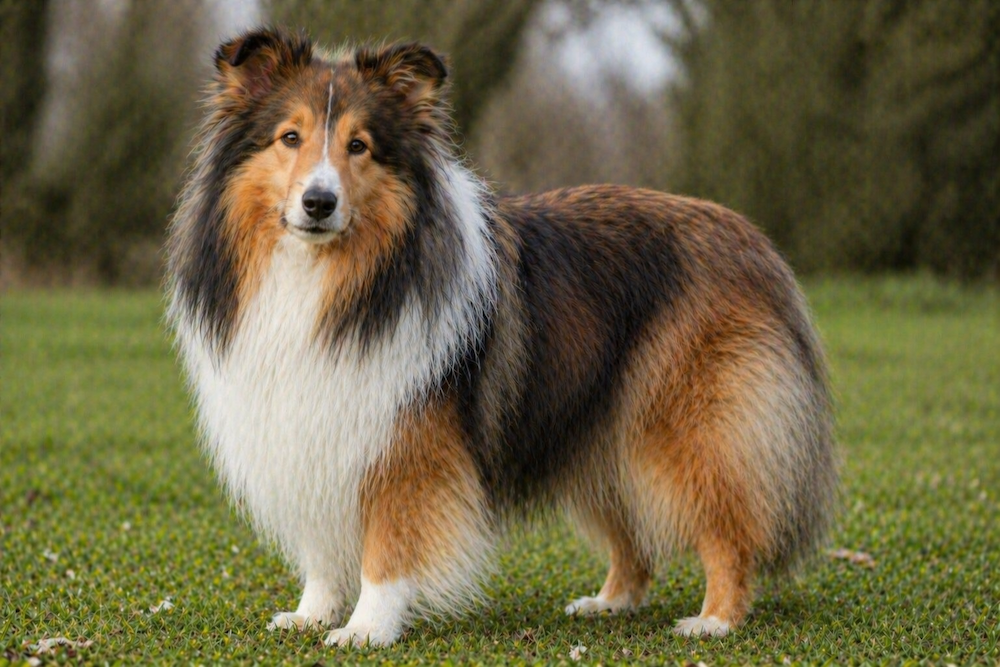







Intelligent, loyal, and beautifully coated — a small herding dog with a big personality.
🧠 QUICK SNAPSHOT
- Temperament: Intelligent, loyal, alert
- Energy Level: Moderate to high
- Size: Small to medium
- Good With Families: Yes
- Trainability: Very high
- Grooming: High
- Best For: Families, active homes, training-focused owners
📚 OVERVIEW
The Shetland Sheepdog, often called the “Sheltie,” is a highly intelligent herding breed known for its beautiful coat and strong loyalty. They are quick learners and excel in training, making them ideal for owners who enjoy working with their dog.
They are affectionate with family but can be reserved with strangers.
✅ PROS & CONS
Pros
- Extremely intelligent and trainable
- Loyal and devoted
- Great with families
- Beautiful, flowing coat
Cons
- Needs regular grooming
- Can be vocal
- Requires mental stimulation
- Sensitive temperament
Is a Shetland Sheepdog a Good Family Dog?
Yes. Shetland Sheepdogs, commonly called Shelties, are affectionate, intelligent and deeply devoted family dogs.
They usually form strong bonds with their owners and enjoy being involved in family life.
Their sensitivity, energy and tendency to bark mean they do best with families willing to provide regular exercise, training and companionship.
Are Shetland Sheepdogs Good With Children?
Generally, yes. Shelties can be excellent with respectful children, particularly when raised alongside them.
Their playful nature makes them good companions for active families.
However, their herding instincts may cause some Shelties to chase, circle or attempt to “herd” running children, so early training is important.
How Much Exercise Does a Shetland Sheepdog Need?
Most adult Shelties need around 60–90 minutes of daily exercise.
Walks, games, agility, obedience training and interactive play are all excellent options.
Mental exercise is equally important because Shelties are exceptionally intelligent dogs that can become bored without enough stimulation.
Are Shetland Sheepdogs Easy to Train?
Yes. Shelties are generally exceptionally trainable.
They’re intelligent, attentive and often highly motivated to work with their owners.
Shelties frequently excel in obedience, agility, rally and other dog sports, although their sensitive temperament means positive, reward-based training is preferable to harsh methods.
Do Shetland Sheepdogs Shed a Lot?
Yes. Shelties are heavy shedders.
Their dense double coat consists of a soft undercoat beneath a long, straight outer coat.
They shed throughout the year and can lose particularly large amounts of undercoat during seasonal coat changes.
Are Shetland Sheepdogs Hypoallergenic?
No.
Shetland Sheepdogs aren’t considered hypoallergenic and can produce substantial amounts of loose hair and dander.
They’re unlikely to suit someone specifically seeking a low-shedding breed.
How Often Should You Groom a Shetland Sheepdog?
Shelties should generally be brushed several times a week, with additional grooming during heavy shedding periods.
Particular attention should be given to areas behind the ears, around the legs and underneath the body where tangles can develop.
Regular nail, dental and ear care are also important.
What Health Problems Are Common in Shetland Sheepdogs?
Potential health concerns include hip dysplasia, eye disorders, thyroid disease, epilepsy and certain inherited bleeding disorders.
Some Shelties also carry the MDR1 gene variant, which can make affected dogs unusually sensitive to certain medications.
Responsible breeders should perform appropriate genetic and health screening.
How Long Do Shetland Sheepdogs Live?
Shetland Sheepdogs commonly live around 12–14 years, with some living longer.
Maintaining a healthy weight, providing appropriate exercise and arranging regular veterinary care can help support a long and active life.
How Big Does a Shetland Sheepdog Get?
Shelties are small-to-medium dogs.
Depending on the breed standard, adults are generally around 33–41 cm at the shoulder and commonly weigh approximately 6–12 kg.
Their abundant coats often make them look considerably larger than they actually are.
Can a Shetland Sheepdog Live in an Apartment?
Yes, provided its exercise and mental-stimulation needs are met.
Their relatively compact size suits smaller homes surprisingly well.
The bigger issue can be barking, particularly in apartments where a Sheltie can hear neighbours, doors, lifts and activity outside.
Can Shetland Sheepdogs Be Left Alone?
Adult Shelties can learn to tolerate reasonable periods alone, but they’re generally strongly attached to their families.
Regularly leaving them alone for very long periods isn’t ideal.
Insufficient companionship and stimulation can contribute to barking, anxiety or destructive behaviour.
Do Shetland Sheepdogs Bark a Lot?
They certainly can.
Shelties are naturally alert and have a strong tendency to announce people, animals, vehicles and unusual sounds.
Their barking can make them excellent watchdogs but can become excessive without training.
Teaching a reliable “quiet” behaviour from an early age can be particularly useful.
Are Shetland Sheepdogs Good Watchdogs?
Yes. Shelties can be excellent watchdogs.
They’re extremely observant and often quick to notice anything unusual around their home.
They aren’t conventional guard dogs because of their size, but they’re very capable of making sure the household knows someone has arrived.
Are Shetland Sheepdogs Affectionate?
Yes. Shelties are usually very affectionate with their families.
Many follow their owners around the house and prefer remaining close to them.
They can be reserved with unfamiliar people, so their affection may be much more obvious at home than when meeting strangers.
Are Shetland Sheepdogs Shy With Strangers?
Some can be naturally reserved around unfamiliar people.
Reserved doesn’t need to mean fearful, however.
Good breeding and extensive early socialisation are important for producing a confident Sheltie that can calmly handle unfamiliar people and environments.
Are Shetland Sheepdogs Good With Other Dogs?
Generally, yes.
Well-socialised Shelties usually live successfully with other dogs and often enjoy canine companionship.
Their playful herding behaviour can occasionally irritate dogs that don’t appreciate being chased or controlled.
Are Shetland Sheepdogs Good With Cats?
Many Shelties can live very successfully with cats, particularly when raised alongside them.
They may occasionally attempt to herd a moving cat rather than hunt it.
Early training can help discourage persistent chasing or herding behaviour.
Do Shetland Sheepdogs Have Strong Herding Instincts?
Yes. Herding behaviour remains strong in many Shelties.
They may instinctively circle, chase or attempt to control the movement of people, children or other animals.
Dog sports such as herding, agility and obedience can provide productive outlets for their intelligence and working instincts.
Are Shetland Sheepdogs Smart?
Extremely.
Shelties are widely regarded as one of the most intelligent and trainable dog breeds.
They can learn new behaviours very quickly, recognise routines and excel at complex dog sports.
That intelligence also means they need mental stimulation rather than simply physical exercise.
Are Shetland Sheepdogs Good at Agility?
Yes. Shelties are among the breeds commonly seen excelling in dog agility.
Their combination of speed, intelligence, responsiveness and compact size makes them exceptionally well suited to the sport.
They also frequently perform strongly in obedience, rally and herding competitions.
What Colours Do Shetland Sheepdogs Come In?
Common Sheltie colours include sable, black and blue merle, often combined with white and/or tan markings.
Breed standards define the accepted colour combinations in greater detail.
Their long coat and contrasting markings contribute strongly to the breed’s distinctive appearance.
Is a Shetland Sheepdog a Miniature Collie?
No. This is one of the most common misconceptions about the breed.
Although Shelties resemble small Rough Collies, they aren’t simply miniature Collies.
The Shetland Sheepdog developed as a distinct breed in the Shetland Islands, although Collie-type dogs contributed to its later development.
What Is the Difference Between a Shetland Sheepdog and a Rough Collie?
The most obvious difference is size.
A Sheltie is dramatically smaller than a Rough Collie, despite their similar long coats and elegant heads.
Both have herding ancestry and are intelligent, but they’re separate breeds with different developmental histories.
Shelties also tend to be particularly quick, alert and vocal.
Why Are Shetland Sheepdogs So Small?
The Sheltie’s small size is associated with its development in the Shetland Islands, where relatively small working animals were practical in a harsh environment with limited resources.
Shetland is also famous for other compact animals, including Shetland Ponies.
Later selective breeding helped establish the size and appearance of the modern Sheltie.
What Were Shetland Sheepdogs Originally Bred For?
The ancestors of modern Shelties were versatile farm dogs used in the Shetland Islands.
They helped manage livestock, protect gardens and cultivated areas from wandering animals and alert farmers to unusual activity.
Their work required intelligence, agility and responsiveness without the size of larger herding dogs.
Where Does the Shetland Sheepdog Come From?
The Shetland Sheepdog originated in the Shetland Islands of Scotland.
Small working dogs on the islands were subsequently influenced by other breeds as the modern Sheltie developed.
By the early 20th century, organised breeding and kennel-club recognition helped establish the breed familiar today.
Is a Shetland Sheepdog a Good First Dog?
Yes. A Sheltie can be an excellent first dog for someone prepared for its grooming, exercise and barking.
They’re highly trainable, affectionate and generally manageable in size.
Their sensitivity means patient, positive training is particularly important.
What Makes the Shetland Sheepdog Unique?
At first glance, the Sheltie looks like someone took a magnificent Rough Collie and pressed the “make smaller” button.
But that’s not what happened.
The Shetland Sheepdog developed from working dogs on Scotland’s remote Shetland Islands, where being compact, intelligent and economical made practical sense.
And while the modern Sheltie may be small, nobody remembered to reduce the brain.
These dogs are remarkably quick learners and have become outstanding performers in agility, obedience, rally and other dog sports.
They also retain another extremely effective piece of working equipment:
their voice.
A Sheltie can notice a visitor approaching the house, determine that everyone needs to know about it and issue a detailed announcement before you’ve even realised someone is outside.
So the Sheltie isn’t really a miniature Collie.
It’s a small Scottish herding dog with a very large brain — and absolutely no intention of keeping important neighbourhood developments to itself.