






Athletic, independent, and intensely loyal — the Thai Ridgeback is an ancient Southeast Asian breed known for its distinctive ridge of backward-growing hair, natural guarding instincts, and remarkable self-reliance.
🧠 QUICK SNAPSHOT
- Temperament: Loyal, intelligent, independent
- Energy Level: High
- Size: Medium to Large
- Good With Families: Yes, with experienced owners
- Trainability: Moderate
- Grooming: Low
- Best For: Experienced owners, active households, securely fenced homes
📚 OVERVIEW
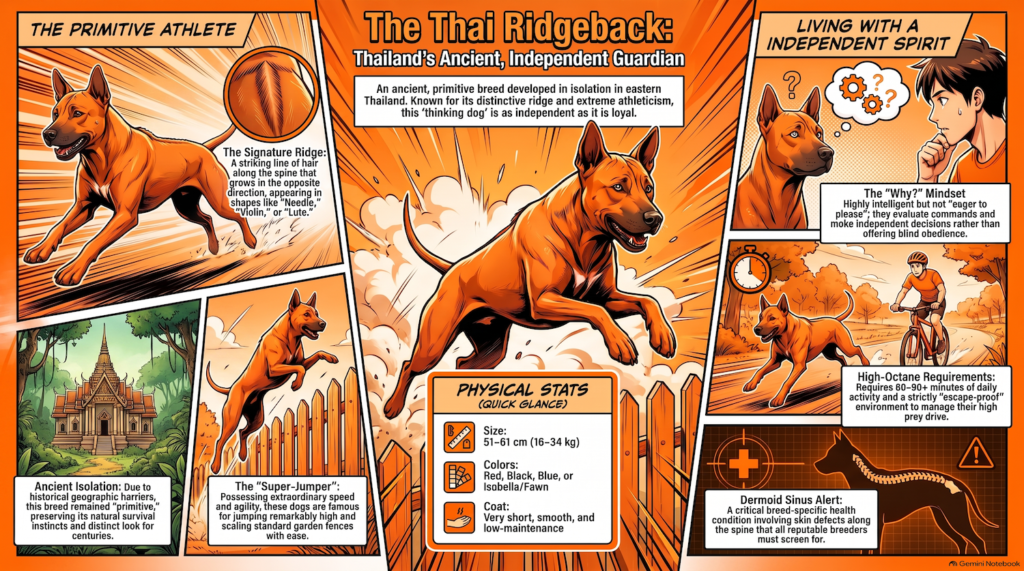
The Thai Ridgeback is an ancient breed originating in Thailand, where dogs of this type developed for centuries with relatively little outside influence. Traditionally used for hunting, guarding homes, and accompanying their owners, the breed needed intelligence, athleticism, courage, and the ability to make decisions independently.
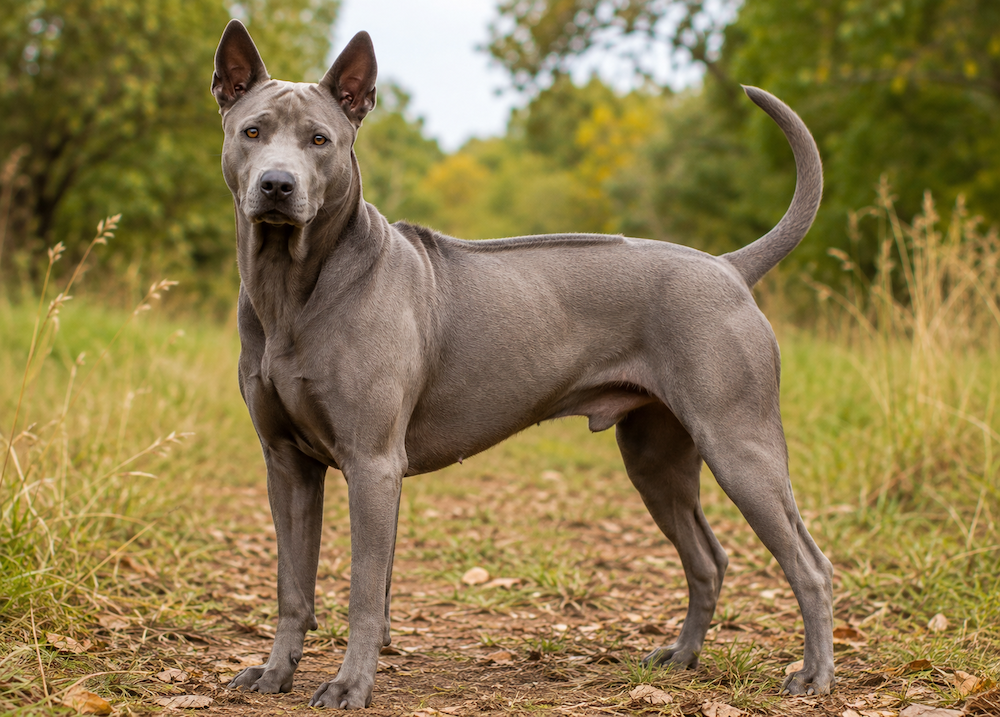
Its most famous characteristic is the ridge of hair running along its back in the opposite direction to the rest of the coat. This unusual feature is shared by only a small number of recognised breeds, including the Rhodesian Ridgeback.
The Thai Ridgeback has a muscular, streamlined body, upright ears, wedge-shaped head, and powerful athletic movement. Its temperament is equally distinctive. These dogs are exceptionally loyal to their families but can be naturally cautious around unfamiliar people. They are intelligent but independent thinkers rather than naturally obedient dogs.
For experienced owners who understand primitive breeds and can provide early socialisation, consistent training, secure boundaries, and plenty of activity, the Thai Ridgeback can be an extraordinarily devoted companion.
✅ PROS & CONS
Pros
- Extremely loyal to its family
- Intelligent and highly observant
- Excellent natural watchdog
- Athletic and agile
- Very low grooming requirements
Cons
- Strong independent streak
- Not ideal for inexperienced owners
- Can be wary of strangers
- Strong prey drive
- Requires secure fencing and extensive socialisation
Is a Thai Ridgeback a Good Family Dog?
Yes, a Thai Ridgeback can be a good family dog, but it is best suited to experienced households that understand independent and naturally protective breeds. With its own family, the Thai Ridgeback can be exceptionally loyal and affectionate, often developing particularly strong relationships with the people it trusts.
Proper socialisation from puppyhood is extremely important. The breed can be naturally reserved with strangers, so positive exposure to different people, environments, dogs, and everyday situations helps create a confident adult.
Thai Ridgebacks can live successfully with respectful children, particularly when raised alongside them, although supervision is sensible because of the breed’s strength and energetic play style. Relationships with other animals can vary. Some live happily with other dogs, while the breed’s hunting background can create a significant prey drive towards smaller animals.
For the right household, the Thai Ridgeback offers tremendous loyalty, but prospective owners should understand that this is a serious, independent breed rather than an easy-going companion for every family.
How Much Exercise Does a Thai Ridgeback Need?
A Thai Ridgeback generally needs around 60 to 90 minutes of exercise every day, supplemented by mental stimulation and opportunities to explore. This is an athletic breed with excellent strength, agility, and endurance, so a short walk around the block is unlikely to provide sufficient activity.
Brisk walks, hiking, running, interactive games, scent work, and structured play can all form part of its exercise routine. Access to a securely fenced area where the dog can move freely is particularly valuable.
Security matters because Thai Ridgebacks can possess both a strong prey drive and considerable athletic ability. They are capable jumpers, and fencing should be designed accordingly.
Mental exercise is equally important. Puzzle feeders, scent games, obedience exercises, and problem-solving activities give this intelligent dog productive outlets for its energy. Without enough physical and mental stimulation, a Thai Ridgeback may become restless, destructive, or increasingly difficult to manage.
Is a Thai Ridgeback Easy to Train?
The Thai Ridgeback is highly intelligent, but it is not generally considered an easy breed to train. Its ancestors survived and worked with considerable independence, and modern Thai Ridgebacks retain a strong ability to think and make decisions for themselves.
They respond best to calm, consistent, reward-based training. Food rewards, toys, praise, and interesting activities can encourage cooperation, while repetitive drilling is likely to lose their attention. Harsh or confrontational training methods should be avoided, as they can damage trust and potentially worsen defensive behaviour.
Training should begin immediately during puppyhood, with particular emphasis on recall, lead manners, impulse control, and calm behaviour around unfamiliar people and animals.
The breed’s combination of intelligence, physical strength, independence, and guarding instinct means it is generally better suited to an experienced owner. In capable hands, however, the Thai Ridgeback can learn quickly and become an exceptionally responsive and rewarding companion.
Does a Thai Ridgeback Shed?
Yes, the Thai Ridgeback sheds, but its short, smooth coat is extremely easy to maintain. Shedding is usually relatively light to moderate, although the amount can increase seasonally and varies between individual dogs.
Weekly brushing with a rubber grooming mitt or soft brush is normally enough to remove loose hairs and keep the coat looking healthy. Bathing is only necessary occasionally unless the dog becomes particularly dirty.
The breed’s warm-climate origins and short coat provide relatively little protection against cold weather, so Thai Ridgebacks living in colder regions may appreciate additional protection during winter.
The distinctive ridge itself does not require special grooming, although owners should routinely inspect the skin and coat for abnormalities. Regular nail trimming, dental care, and ear checks should complete the grooming routine.
Despite its easy-care coat, the Thai Ridgeback is not considered hypoallergenic.
What Health Problems Are Common in a Thai Ridgeback?
The Thai Ridgeback is generally considered a robust breed, with a typical lifespan of approximately 12 to 14 years, but there are several health issues prospective owners should understand.
One of the most important breed-specific concerns is dermoid sinus, a congenital condition involving abnormal development of the skin and underlying tissues that is associated with ridgeback breeds. Affected puppies require veterinary assessment, and responsible breeders carefully examine litters for the condition.
Hip dysplasia can also occur, making appropriate screening of breeding dogs important. Other health problems may arise in individual lines, so buyers should ask breeders which health tests have been performed rather than assuming the breed’s historically natural development makes screening unnecessary.
Regular veterinary examinations, good nutrition, maintaining a lean body condition, appropriate exercise, parasite prevention, and responsible breeding all contribute to long-term health. Prospective owners should seek breeders who prioritise temperament and documented health testing alongside the breed’s distinctive appearance.