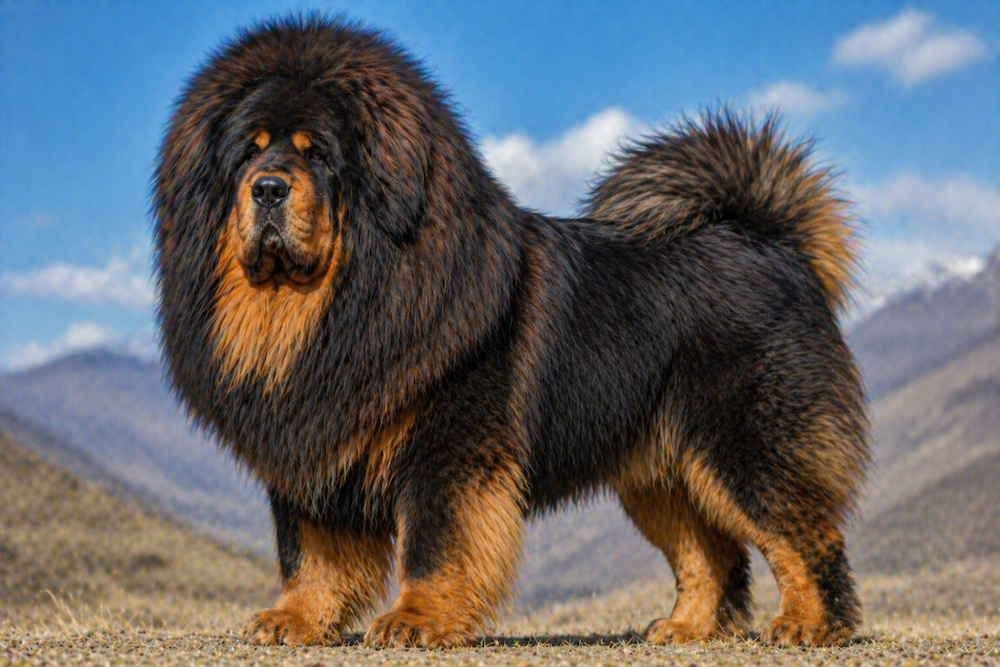







Massive, protective, and deeply loyal — a powerful guardian with an independent spirit.
🧠 QUICK SNAPSHOT
- Temperament: Protective, independent, loyal
- Energy Level: Moderate
- Size: Giant
- Good With Families: Yes (experienced homes)
- Trainability: Moderate to low
- Grooming: Moderate to high
- Best For: Experienced owners with space
📚 OVERVIEW
The Tibetan Mastiff is an ancient guardian breed known for its immense size and strong protective instincts. Originally used to guard livestock and property, they are naturally alert and reserved with strangers.
They are loyal to their family but highly independent, making them best suited to experienced owners who understand strong-willed breeds.
✅ PROS & CONS
Pros
- Extremely protective and loyal
- Impressive size and presence
- Independent and confident
- Strong guarding instincts
Cons
- Can be stubborn and difficult to train
- Needs experienced handling
- Requires space and secure boundaries
- Heavy shedding seasonally
Is a Tibetan Mastiff a Good Family Dog?
A Tibetan Mastiff can be a deeply loyal and devoted family dog, but it’s best suited to experienced owners.
These enormous guardian dogs are naturally independent, territorial and protective. They require extensive socialisation, secure fencing and owners who understand livestock guardian breeds.
Are Tibetan Mastiffs Good With Children?
Tibetan Mastiffs can be gentle and protective with children in their own family when properly raised and socialised.
However, their enormous size means interactions with young children should always be supervised.
They may also misinterpret rough play between visiting children and their own family members, making careful management important.
How Much Exercise Does a Tibetan Mastiff Need?
Most Tibetan Mastiffs need around 45–60 minutes of moderate exercise each day.
They’re not typically endurance athletes requiring hours of intense exercise.
Regular walks and access to a securely fenced area are generally more appropriate than repetitive high-impact activities.
Are Tibetan Mastiffs Easy to Train?
No. Tibetan Mastiffs are highly intelligent but also extremely independent thinkers.
They were developed to make guarding decisions without constant human direction, so obedience isn’t necessarily their highest priority.
Patient, consistent and positive training should begin early.
Do Tibetan Mastiffs Shed a Lot?
Yes, particularly during their seasonal coat change.
Tibetan Mastiffs have a thick double coat and typically undergo a major seasonal shed, often described as “blowing” their coat.
During this period, owners can expect substantial amounts of loose hair.
Are Tibetan Mastiffs Hypoallergenic?
No.
Tibetan Mastiffs aren’t considered hypoallergenic and can shed heavily.
Their large bodies and substantial coats also mean considerable amounts of hair and dander can accumulate around the home.
How Often Should You Groom a Tibetan Mastiff?
Tibetan Mastiffs generally need brushing several times a week, increasing to daily grooming during heavy seasonal shedding.
Their thick coat should be checked for tangles, particularly around areas with heavier feathering.
Routine nail, ear and dental care are also important.
What Health Problems Are Common in Tibetan Mastiffs?
Potential health concerns include hip and elbow dysplasia, thyroid disorders, eye conditions and certain inherited neurological problems.
Their large size can also increase the importance of careful joint management during growth.
Responsible breeders should perform appropriate health screening before breeding.
How Long Do Tibetan Mastiffs Live?
Tibetan Mastiffs commonly live around 10–12 years, although some live longer.
That’s a respectable lifespan for such a large dog.
Genetics, body condition, appropriate exercise and preventive veterinary care all influence longevity.
How Big Does a Tibetan Mastiff Get?
Tibetan Mastiffs are very large, powerful dogs.
Adults commonly stand around 61–76 cm or more at the shoulder, with males often weighing approximately 45–70 kg or more.
Size varies considerably between different bloodlines, and exceptionally large dogs shouldn’t automatically be considered better examples of the breed.
Can a Tibetan Mastiff Live in an Apartment?
They’re generally poorly suited to apartment living.
Their enormous size, territorial instincts and tendency to bark make them much easier to manage in a spacious home with secure outdoor areas.
A large property alone isn’t enough, however; they still need exercise, training and social interaction.
Can Tibetan Mastiffs Be Left Alone?
Tibetan Mastiffs are more independent than many companion breeds and can tolerate periods without constant human attention.
However, leaving one outside unattended for extended periods can encourage territorial barking and guarding behaviour.
They still need regular interaction with their family.
Do Tibetan Mastiffs Bark a Lot?
They can, particularly at night.
Tibetan Mastiffs were developed to watch for threats and alert people to potential danger, so barking is deeply connected to their traditional work.
Night-time barking can become a serious issue in suburban neighbourhoods.
Are Tibetan Mastiffs Good Guard Dogs?
Yes. Guarding is one of the Tibetan Mastiff’s defining characteristics.
They’re naturally territorial, watchful and suspicious of unfamiliar people, with an imposing appearance that can itself act as a deterrent.
Their guarding instinct requires careful socialisation and responsible management rather than encouragement.
Are Tibetan Mastiffs Aggressive?
Tibetan Mastiffs shouldn’t automatically be described as aggressive, but they’re naturally protective and can be highly suspicious of unfamiliar people or animals.
Their combination of size, strength, territorial behaviour and independent decision-making makes proper socialisation particularly important.
Poor management can create serious problems with such a powerful breed.
Are Tibetan Mastiffs Affectionate?
Yes, although their affection can be quite different from that of highly demonstrative companion breeds.
They’re often deeply devoted to their families while remaining independent and somewhat reserved.
Many enjoy being near their owners without constantly demanding attention.
Are Tibetan Mastiffs Good With Strangers?
They’re typically reserved and suspicious around unfamiliar people.
This behaviour reflects centuries of guardian work.
Early and extensive socialisation helps a Tibetan Mastiff learn to distinguish normal visitors and everyday situations from genuine threats.
Are Tibetan Mastiffs Good With Other Dogs?
They can live successfully with other dogs, particularly when raised together.
However, some adults can be territorial or assertive with unfamiliar dogs, especially dogs of the same sex.
Careful introductions and responsible management are important.
Are Tibetan Mastiffs Good With Cats?
Some Tibetan Mastiffs can live successfully with cats and other household animals, especially when raised alongside them.
As livestock guardians, they’re capable of accepting animals as part of their household group.
Individual temperament and early socialisation remain important.
Are Tibetan Mastiffs High-Energy Dogs?
Not usually.
Tibetan Mastiffs generally have moderate exercise requirements and are often calm around the home.
They can still be surprisingly agile and active when they believe something requires investigation.
Are Tibetan Mastiffs Good in Cold Weather?
Yes. Tibetan Mastiffs are exceptionally well adapted to cold conditions.
Their enormous double coat developed in the harsh environments of the Tibetan Plateau and Himalayan region.
Many are considerably more comfortable in cool weather than in hot, humid conditions.
Can Tibetan Mastiffs Live in Hot Weather?
They can struggle in hot conditions because of their extremely thick coats.
Exercise should be restricted during high temperatures, with constant access to shade, fresh water and cool indoor areas.
Owners in warm climates need to be particularly vigilant about overheating.
Should You Shave a Tibetan Mastiff?
Generally, no.
Their double coat provides insulation and protection and shouldn’t routinely be shaved simply to keep the dog cooler.
Regular removal of loose undercoat through appropriate grooming is generally preferable unless shaving is medically necessary.
What Colours Do Tibetan Mastiffs Come In?
Tibetan Mastiffs occur in colours including black, black and tan, various shades of gold, and blue-grey, depending on the breed standard.
Some dogs also have small white markings.
Their enormous mane, particularly prominent in many males, can make them appear almost lion-like.
Why Do Tibetan Mastiffs Have Such Thick Coats?
Their dense double coat helped protect them from the extreme cold, wind and harsh conditions of high-altitude Central Asia.
The particularly heavy hair around the neck and shoulders can create the breed’s famous mane.
The coat changes seasonally, becoming especially impressive during colder months.
What Were Tibetan Mastiffs Originally Bred For?
Tibetan Mastiff-type dogs were traditionally used as livestock and property guardians.
They protected homes, monasteries, camps and animals from potential threats.
Unlike herding breeds that move livestock, guardian dogs were expected to watch over them and independently respond to danger.
Where Does the Tibetan Mastiff Come From?
The Tibetan Mastiff has ancient roots in Tibet and the wider Himalayan and Central Asian region.
Large guardian dogs have worked alongside nomadic communities and around settlements and monasteries there for centuries.
The modern pedigree Tibetan Mastiff was later standardised from dogs associated with these traditional populations.
Are Tibetan Mastiffs Related to Wolves?
Tibetan Mastiffs are domestic dogs, not wolf-dog hybrids.
Like all domestic dogs, they ultimately share ancient ancestry with wolves, but the Tibetan Mastiff is a recognised domestic breed.
Its unusual adaptations to high altitude are the result of its own evolutionary and breeding history rather than recent wolf ancestry.
Why Are Tibetan Mastiffs So Expensive?
Some Tibetan Mastiffs have attracted extraordinary prices, particularly during a period when the breed became a status symbol among wealthy buyers in China.
Highly publicised sales reportedly reached enormous sums.
Those exceptional transactions don’t represent the normal value of a Tibetan Mastiff, and price isn’t an indication of health, temperament or breeding quality.
Is a Tibetan Mastiff a Good First Dog?
Generally, no.
Tibetan Mastiffs are best suited to experienced owners who understand large guardian breeds, territorial behaviour and independent temperaments.
Their enormous strength, suspicion of strangers, night-time barking and tendency to make their own decisions can be challenging even for experienced dog owners.
What Makes the Tibetan Mastiff Unique?
The Tibetan Mastiff wasn’t developed to wait patiently for someone to tell it what to do.
Its traditional job required almost the opposite.
These enormous dogs guarded livestock, homes, camps and monasteries in some of the world’s harshest environments. When something suspicious appeared at night, there wasn’t necessarily a handler standing beside the dog issuing instructions.
The dog had to notice the problem, assess it and make its own decision.
That helps explain the modern Tibetan Mastiff remarkably well.
Its independence isn’t necessarily stubbornness in the conventional sense. It’s part of a centuries-old guardian mentality.
Add an enormous body, a spectacular lion-like mane, a booming bark and exceptional cold-weather adaptation, and you get one of the world’s most imposing dogs.
But perhaps the most important thing to understand about the Tibetan Mastiff is this:
It may love its owner enormously.
It may understand perfectly well what its owner is asking.
And then it may quietly consider the request and decide:
“I’ll be the judge of that.”