






Playful, affectionate, and full of personality — the perfect companion for modern living.
🧠 QUICK SNAPSHOT
- Temperament: Affectionate, Playful, Easygoing
- Energy Level: Low to Moderate
- Size: Small
- Good with Families: Yes
- Training Difficulty: Easy to Moderate
📚 OVERVIEW
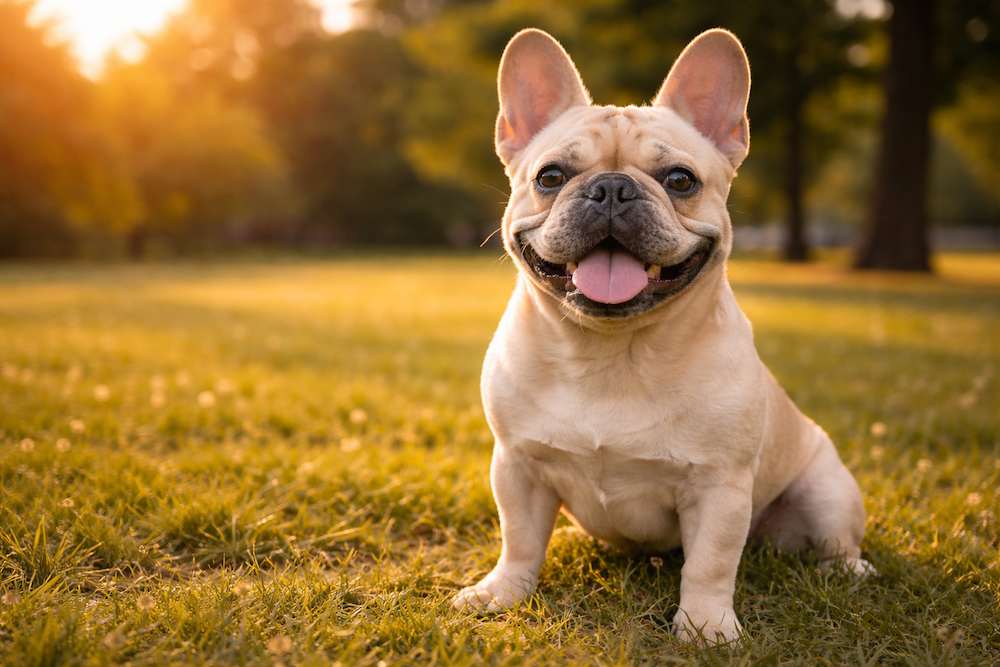
French Bulldogs are one of the most popular companion dogs in the world. Known for their bat-like ears and charming personalities, they are affectionate, adaptable, and love being around people. Their smaller size and lower exercise needs make them well-suited to city and indoor living.
✅ PROS & CONS
Pros
- Great for apartments and smaller homes
- Very affectionate and people-focused
- Low exercise requirements
Cons
- Can have breathing and health issues
- Sensitive to heat and overexertion
- Can be stubborn during training
Is a French Bulldog a Good Family Dog?
Yes. French Bulldogs are generally affectionate, playful and highly people-oriented family companions.
They usually enjoy being involved in household life and often get along well with respectful children.
However, prospective owners should understand the breed’s significant health risks, particularly those associated with its flat face and compact body. Choosing a responsibly bred French Bulldog with more functional anatomy is extremely important.
How Much Exercise Does a French Bulldog Need?
Most healthy adult French Bulldogs need around 30–60 minutes of moderate daily activity, usually divided into shorter walks and play sessions.
They aren’t endurance athletes.
Brachycephalic airway restrictions can make strenuous exercise dangerous, particularly in warm or humid weather.
Exercise should always be adjusted to the individual dog’s breathing ability.
Is a French Bulldog Easy to Train?
French Bulldogs are intelligent but can be stubborn and easily distracted.
They generally respond well to positive reinforcement, food rewards and short, entertaining training sessions.
Harsh methods are unnecessary and can damage trust.
Their clownish personality can occasionally make training feel more like negotiation than instruction.
Does a French Bulldog Shed?
Yes. French Bulldogs shed moderately, despite their short coats.
Regular brushing helps remove loose hair and maintain healthy skin.
Some colours and individual dogs appear to shed more heavily than others.
The short hairs can also embed themselves surprisingly effectively in clothing and furniture.
Is a French Bulldog Hypoallergenic?
No. French Bulldogs aren’t considered hypoallergenic.
They shed hair and produce allergens through saliva and skin secretions.
Their tendency towards skin problems can also increase dander in affected individuals.
People with significant dog allergies should spend time around adult French Bulldogs before considering ownership.
How Often Does a French Bulldog Need Grooming?
French Bulldogs have relatively simple coats and usually need weekly brushing.
However, grooming isn’t limited to the coat.
Facial folds, ears, nails and skin require regular attention, and some dogs need cleaning around the tail pocket.
Skin folds should be kept clean and dry to reduce irritation and infection.
What Health Problems Are Common in French Bulldogs?
French Bulldogs have a substantial risk of health problems including brachycephalic obstructive airway syndrome (BOAS), spinal disorders, skin disease, allergies, eye problems, patellar luxation and heat intolerance.
Some also experience ear disease and gastrointestinal problems.
Responsible breeding should prioritise breathing, movement and overall function rather than increasingly exaggerated physical characteristics.
What Is BOAS in French Bulldogs?
BOAS stands for Brachycephalic Obstructive Airway Syndrome.
It describes breathing problems associated with shortened skull anatomy and can involve narrowed nostrils, an elongated or thickened soft palate and other airway abnormalities.
Affected dogs may snore loudly, struggle during exercise, gag, overheat or have difficulty breathing even at rest.
BOAS can significantly affect quality of life.
Is It Normal for a French Bulldog to Snore?
Snoring is common, but common doesn’t necessarily mean healthy.
Mild noise during deep sleep may occur in brachycephalic dogs.
However, loud breathing while awake, repeated gagging, exercise intolerance, sleep disruption or obvious respiratory effort can indicate airway obstruction.
Breathing difficulty shouldn’t be dismissed simply because the dog is a French Bulldog.
Why Does My French Bulldog Breathe So Loudly?
Noisy breathing can result from restricted airflow through brachycephalic airways.
Narrow nostrils and soft-tissue obstruction can make each breath require additional effort.
Persistent snorting, wheezing or laboured breathing deserves veterinary assessment.
A healthy dog should be able to breathe comfortably without fighting for air.
Why Does My French Bulldog Snort?
Occasional snorting can occur because of the breed’s short muzzle and upper-airway anatomy.
Excitement, exercise and irritation can make it more noticeable.
Frequent or severe snorting accompanied by respiratory effort shouldn’t automatically be treated as a cute breed characteristic.
What Is Reverse Sneezing in a French Bulldog?
Reverse sneezing is a sudden episode in which a dog rapidly pulls air inward through the nose, often producing dramatic snorting sounds.
Episodes can occur in many breeds and are often brief.
However, French Bulldogs already have increased airway risks, so frequent or prolonged respiratory episodes should be discussed with a veterinarian.
Why Does My French Bulldog Gag After Drinking?
Some French Bulldogs gulp water or swallow considerable amounts of air because of their facial and airway anatomy.
This can contribute to coughing, gagging or regurgitation.
Repeated episodes can also indicate airway, swallowing or gastrointestinal problems and deserve veterinary investigation.
Can French Bulldogs Breathe Normally?
Some French Bulldogs breathe considerably better than others.
Dogs with more open nostrils, less extreme facial shortening and healthier airway anatomy may function much more comfortably.
However, the breed as a population has an elevated risk of breathing problems.
Responsible selection for functional anatomy is therefore critical.
Why Are Open Nostrils Important in a French Bulldog?
Very narrow nostrils, known as stenotic nares, restrict airflow before it even reaches the deeper airway.
More open nostrils allow air to move with less resistance.
When choosing a puppy, visibly open nostrils and quiet, effortless breathing are far preferable to extremely pinched nostrils.
Do French Bulldogs Overheat Easily?
Yes. French Bulldogs are particularly vulnerable to heat stress and heatstroke.
Dogs cool themselves largely through panting, and compromised airways make that cooling system less efficient.
Exercise during hot or humid conditions can become dangerous remarkably quickly.
Cool indoor environments and careful scheduling of walks are essential in warm climates.
Can French Bulldogs Live in Hot Climates?
They can, but they require careful heat management.
Air conditioning or another reliably cool indoor environment can be particularly important during extreme heat.
Walks should occur during the coolest parts of the day.
French Bulldogs should never be forced to exercise when they’re struggling to breathe or cool themselves.
Can French Bulldogs Swim?
French Bulldogs are generally poor swimmers and can drown quickly.
Their heavy front ends, large heads, short legs and brachycephalic anatomy can make keeping the nose above water difficult.
Some individuals can paddle, but that doesn’t make them safe swimmers.
Close supervision and a properly fitted canine life jacket are strongly recommended around pools, boats and deep water.
Why Can’t French Bulldogs Swim Well?
Their body shape creates an unfortunate combination for swimming: a heavy head and chest, relatively short legs and a compact body.
Keeping the head high enough to breathe can therefore be difficult.
Airway restrictions add another potential problem.
Never assume a French Bulldog will instinctively save itself if it falls into water.
Are French Bulldogs Prone to Back Problems?
Yes. French Bulldogs have an increased risk of spinal abnormalities and intervertebral disc disease (IVDD).
Their compact body shape and genetic background can predispose them to abnormal vertebral development.
Signs such as back pain, weakness, reluctance to jump or sudden paralysis require urgent veterinary attention.
What Are Hemivertebrae in French Bulldogs?
Hemivertebrae are abnormally shaped spinal vertebrae, often wedge-shaped rather than normally formed.
Some dogs have them without obvious symptoms.
In others, abnormal vertebrae can deform the spine or compress the spinal cord, potentially causing pain, weakness or neurological problems.
The screw tail and vertebral abnormalities can be genetically connected aspects of skeletal development.
Are French Bulldogs Prone to IVDD?
Yes. French Bulldogs have a significant predisposition to intervertebral disc disease.
IVDD occurs when spinal discs degenerate, bulge or rupture and potentially compress the spinal cord.
Symptoms can range from pain to paralysis.
Sudden weakness or inability to walk is a veterinary emergency.
Should French Bulldogs Use Stairs?
Healthy French Bulldogs can usually manage some stairs, but repeated high-impact activity should be considered carefully, particularly in dogs with known spinal problems.
Ramps or steps can reduce repeated jumping from beds, sofas and vehicles.
Maintaining healthy muscle condition and avoiding obesity are also important for spinal health.
Why Does My French Bulldog Have a Curly Tail?
The characteristic short or screw-shaped tail results from inherited changes affecting tail vertebrae.
The appearance became strongly associated with the breed through selective breeding.
Extremely tight tails can create deep skin folds and tail pockets requiring regular care.
The trait can also occur alongside other vertebral abnormalities.
What Is a Tail Pocket in a French Bulldog?
A tail pocket is a deep skin fold beneath or around a tightly curled tail.
Moisture, dirt and debris can accumulate inside it.
Some dogs require regular gentle cleaning and drying to prevent irritation or infection.
Not every French Bulldog has a significant tail pocket.
Are French Bulldogs Prone to Skin Allergies?
Yes. French Bulldogs can be particularly prone to allergic skin disease and recurrent skin infections.
Symptoms can include itching, paw licking, ear infections, redness and hair loss.
Environmental allergens, food reactions, parasites and secondary infections can all contribute.
Persistent itching warrants veterinary investigation.
Why Do French Bulldogs Lick Their Paws?
Frequent paw licking can indicate allergies, skin irritation, infection, pain or behavioural stress.
French Bulldogs are prone to allergic skin disease, making allergies a common possibility.
Persistent licking shouldn’t simply be dismissed as a quirky habit, particularly if the paws appear red or inflamed.
Why Does My French Bulldog Smell?
Odour can come from skin folds, ears, paws, dental disease, tail pockets or skin infections.
A healthy French Bulldog shouldn’t necessarily smell strongly.
Persistent odour often indicates that something needs attention rather than simply being a normal characteristic of the breed.
Are French Bulldogs Prone to Ear Infections?
Yes. Their upright ears don’t automatically protect them from ear inflammation and infection.
Allergies can contribute substantially to recurrent ear problems.
Redness, discharge, odour, head shaking or persistent scratching should be assessed by a veterinarian.
Are French Bulldogs Prone to Eye Problems?
Yes. Their large, prominent eyes and shallow eye sockets increase susceptibility to injury and several eye disorders.
Problems can include corneal ulcers, dry eye and prolapse of the third-eyelid gland, commonly called cherry eye.
Squinting or suddenly keeping an eye closed requires prompt veterinary attention.
What Is Cherry Eye in a French Bulldog?
Cherry eye occurs when the tear-producing gland of the third eyelid protrudes, appearing as a red or pink lump near the inner corner of the eye.
It’s relatively common in several brachycephalic breeds.
Veterinary treatment is important because the gland contributes significantly to normal tear production.
How Long Do French Bulldogs Live?
French Bulldogs commonly live around 10–12 years, although lifespan varies substantially with health and breeding.
Severe airway, spinal or other inherited disorders can significantly affect quality and length of life.
Selecting dogs from health-tested parents with functional anatomy is particularly important in this breed.
How Big Does a French Bulldog Get?
French Bulldogs are small but muscular and surprisingly heavy for their height.
Many adults weigh approximately 8–14 kg, depending on sex, build and breed standard.
They’re compact dogs with broad chests, substantial heads and strong bone.
Healthy body condition is more important than achieving a particular number on the scales.
Are French Bulldogs Prone to Obesity?
Yes. French Bulldogs can gain weight easily, particularly because their exercise capacity may be limited by breathing problems.
Excess weight makes breathing, joint and spinal problems worse.
Portion control and appropriate daily activity are therefore particularly important.
A chunky appearance shouldn’t be confused with healthy breed type.
Can a French Bulldog Live in an Apartment?
Yes. French Bulldogs are generally excellent apartment dogs.
They’re relatively small and don’t require enormous amounts of exercise.
They also tend to enjoy indoor family life.
Their potential for snoring and other unusual noises may be more noticeable than their barking.
Do French Bulldogs Bark a Lot?
Usually not excessively.
French Bulldogs tend to be moderate barkers.
They may alert owners to visitors or become vocal when excited, but persistent barking isn’t usually considered a defining breed characteristic.
Individual behaviour and training still matter.
Can French Bulldogs Be Left Alone?
French Bulldogs are highly people-oriented and can be prone to separation-related problems.
They generally prefer being close to their families.
Gradual independence training is important from puppyhood.
They’re not an ideal choice for someone wanting a dog that routinely spends very long days alone.
Why Does My French Bulldog Follow Me Everywhere?
French Bulldogs were developed primarily as companion dogs, and close attachment to people became one of their defining traits.
Many follow their owners from room to room and want to be involved in whatever is happening.
They’re often described as “Velcro dogs” for good reason.
Are French Bulldogs Cuddly?
Very often.
French Bulldogs are typically extremely affectionate and physically demonstrative.
Many enjoy laps, sofas and sleeping pressed against their favourite person.
Their combination of compact size and companion temperament is one of the main reasons they’ve become so popular.
Are French Bulldogs Good With Children?
Generally, yes.
Well-socialised French Bulldogs are usually playful and affectionate with children.
Their relatively sturdy build can make them less physically fragile than some small companion breeds.
Children should still be taught respectful interaction, particularly because back and breathing problems can make rough handling painful.
Are French Bulldogs Good With Other Dogs?
Many are.
French Bulldogs are generally social and playful with other dogs, particularly when properly socialised.
Some individuals can be selective or overly enthusiastic.
Early positive experiences and appropriate introductions help establish good social behaviour.
Are French Bulldogs Good With Cats?
Many French Bulldogs can live successfully with cats, especially when raised alongside them.
They generally don’t have the extreme prey drive seen in many hunting breeds.
Individual chasing behaviour still varies, so introductions should be gradual.
Are French Bulldogs Aggressive?
Aggression isn’t a defining characteristic of a well-bred French Bulldog.
They’re generally sociable companion dogs.
Like any breed, fear, pain, poor socialisation or inappropriate breeding can contribute to aggressive behaviour.
Sudden aggression in a normally friendly French Bulldog can also indicate pain and deserves veterinary attention.
Why Are French Bulldogs So Funny?
Their combination of playfulness, expressive faces, stubbornness and strong interest in people creates behaviour owners often describe as clownish.
Many seem to deliberately seek interaction and repeat behaviours that produce a response.
The famous Frenchie personality has contributed enormously to the breed’s popularity.
Why Does My French Bulldog Get the Zoomies?
Short bursts of frantic running, commonly called zoomies, are normal playful behaviour in many dogs.
French Bulldogs can be particularly enthusiastic about them.
Because of their breathing limitations, however, owners should prevent prolonged overexertion, especially during hot weather.
Why Do French Bulldogs Fart So Much?
Flatulence can be particularly noticeable in French Bulldogs.
Brachycephalic dogs may swallow extra air while eating, drinking and breathing, contributing to gas.
Diet and gastrointestinal sensitivity can also play roles.
Persistent excessive gas, diarrhoea or vomiting warrants veterinary investigation.
Why Does My French Bulldog Eat So Fast?
Many French Bulldogs are enthusiastic eaters.
Rapid eating can increase swallowed air and potentially worsen digestive discomfort.
Slow-feeder bowls or appropriately designed feeding toys may help some dogs eat more slowly.
Feeding equipment should still allow a brachycephalic dog to breathe comfortably.
Why Does My French Bulldog Sleep So Much?
Adult French Bulldogs commonly spend a substantial portion of the day sleeping or resting.
Their companion lifestyle and moderate exercise requirements contribute.
However, excessive lethargy combined with breathing difficulty, weakness or other changes shouldn’t automatically be attributed to the breed.
Why Does My French Bulldog Sit Like a Human?
French Bulldogs sometimes sit with their hind legs positioned unusually forward or to the side, producing a human-like posture.
Often it’s simply comfortable.
Repeated abnormal posture combined with pain, weakness or reluctance to move can indicate orthopaedic or spinal problems and deserves investigation.
What Are “Bat Ears” on a French Bulldog?
The French Bulldog’s famous upright ears are described as bat ears because they’re broad at the base, rounded at the top and carried erect.
They’re one of the breed’s defining characteristics.
Interestingly, this ear shape played an important role in separating the French Bulldog’s emerging identity from related bulldog types.
Are French Bulldog Puppies Born With Their Ears Standing Up?
Not necessarily.
French Bulldog puppies may initially have soft or floppy ears, with the ears becoming erect as cartilage strengthens during development.
One ear may stand before the other.
Most naturally develop the characteristic bat-ear appearance without intervention.
What Colours Can French Bulldogs Be?
Traditional recognised colours include variations of brindle, fawn, cream and combinations with white, depending on the kennel organisation.
The explosion in French Bulldog popularity has also produced a large market for so-called rare colours.
Not every fashionable colour is accepted by recognised breed standards.
What Is a Blue French Bulldog?
A Blue French Bulldog has a diluted black coat, creating a grey or bluish appearance.
The colour results from recessive dilution genetics.
Blue isn’t accepted under several major traditional French Bulldog standards.
Dilute-coloured dogs can also be susceptible to colour dilution alopecia, although not every blue dog develops it.
What Is an Isabella French Bulldog?
“Isabella” generally describes a diluted brown or chocolate-based coat, creating a pale taupe or lilac-like appearance.
It’s primarily a colour-marketing term within non-standard French Bulldog breeding.
These dogs aren’t a separate breed or special variety.
Health and functional anatomy matter far more than rare colour.
What Is a Lilac French Bulldog?
Lilac usually describes dogs carrying genetic combinations affecting brown and dilution pigmentation, producing a pale greyish-brown appearance.
The term has become commercially valuable in the Frenchie market.
A high price attached to unusual colouring doesn’t indicate superior health, quality or rarity in any meaningful welfare sense.
What Is a Merle French Bulldog?
Merle produces irregular patches of diluted and darker pigment.
Merle isn’t a traditional French Bulldog colour and its appearance in modern Frenchies reflects ancestry outside the historical breed population.
Breeding two merle dogs together can produce double-merle puppies with a greatly increased risk of serious hearing and eye abnormalities.
What Is a Fluffy French Bulldog?
A “Fluffy Frenchie” is a French Bulldog with longer hair caused by recessive long-coat genetics.
The appearance differs dramatically from the traditional short-coated French Bulldog.
Long-haired French Bulldogs have become highly marketed in recent years.
They’re still French Bulldogs rather than a separate recognised breed.
What Is a Big Rope French Bulldog?
“Big Rope” refers to French Bulldogs bred for an extremely prominent fold of skin across the top of the nose.
It’s a modern appearance-focused breeding trend rather than a separate breed.
Excessive facial folds can increase skin irritation and shouldn’t be prioritised over healthy breathing, eyes and overall function.
What Is a Mini French Bulldog?
“Mini French Bulldog” isn’t a recognised official size variety.
The term may describe unusually small French Bulldogs, dogs selectively bred for extreme smallness or crosses with smaller breeds.
Deliberately miniaturising an already structurally challenged breed can create additional health concerns.
What Is a Teacup French Bulldog?
“Teacup French Bulldog” is a marketing term, not a recognised breed variety.
There is no official teacup French Bulldog standard.
Extremely small size may result from selecting unusually small dogs, developmental problems or crossbreeding.
Buyers should be particularly cautious of breeders charging extreme prices for miniature labels.
What Is the Difference Between a French Bulldog and an English Bulldog?
French Bulldogs are generally smaller, lighter and more athletic, with distinctive upright bat ears.
English Bulldogs are heavier, broader and typically have folded or rose-shaped ears.
Both are brachycephalic breeds and can experience serious breathing and structural health problems.
They share historical bulldog ancestry but developed into clearly separate breeds.
What Is the Difference Between a French Bulldog and a Boston Terrier?
French Bulldogs are generally heavier-boned and more muscular, while Boston Terriers tend to be lighter and more athletic.
Both have erect ears and short muzzles.
Boston Terriers traditionally display tuxedo-style markings, while French Bulldogs occur in a broader range of traditional colours.
Their histories overlap with 19th-century bull-type dogs but developed separately.
Did the French Bulldog Actually Come From France?
Yes — but the story begins in England.
Small bulldog-type dogs were popular among English workers, particularly in the Midlands.
When some workers migrated to France during the Industrial Revolution, they took their small bulldogs with them.
Those dogs became enormously popular in France and were further developed there into the French Bulldog.
Did French Bulldogs Come From English Bulldogs?
The breed’s ancestors included small English bulldog-type dogs, often called toy bulldogs.
These weren’t simply miniature versions of today’s English Bulldog, but they belonged to the broader bulldog population of the period.
After reaching France, they were selectively bred into a distinctive companion dog.
Why Did English Lace Workers Take Bulldogs to France?
During the 19th century, mechanisation disrupted traditional lace-making industries in England, particularly around Nottingham.
Some lace workers moved to northern France seeking employment.
They took their small companion bulldogs with them.
The dogs became popular among French workers and gradually developed a new identity.
Is the French Bulldog Connected to Nottingham?
Yes. Nottingham’s lace-making communities are an important part of French Bulldog history.
Small bulldog-type dogs were popular companions among lace workers.
When workers relocated to France, their dogs travelled with them.
It’s an unusual breed history: an English industrial migration helped create one of France’s most famous dogs.
What Does “Bouledogue Français” Mean?
Bouledogue Français is the French name for the French Bulldog.
“Bouledogue” is the French adaptation of “bulldog,” while “français” means French.
The name became associated with the distinctive small companion bulldogs being developed in France during the late 19th century.
Were French Bulldogs Popular With Working-Class People in Paris?
Yes. Early French Bulldogs became popular among Parisian workers, shopkeepers and other ordinary city residents.
Their compact size suited urban life.
The breed subsequently spread through very different levels of society, eventually becoming fashionable among artists, entertainers and wealthy socialites.
Were French Bulldogs Popular With Parisian Prostitutes?
Historical accounts frequently associate French Bulldogs with Parisian sex workers or “les belles de nuit” during the Belle Époque.
Photographs and postcards from the period helped reinforce this connection.
The dogs subsequently became fashionable across Parisian nightlife and artistic circles.
It’s one of the more unusual chapters in pedigree dog history.
Did Artists Own French Bulldogs?
French Bulldogs became closely associated with Belle Époque Paris, where they appeared among artists, entertainers and fashionable urban society.
Their distinctive appearance made them appealing subjects for photographs, postcards and artwork.
This cultural visibility helped transform them from working-class companions into fashionable international dogs.
Why Do French Bulldogs Have Bat Ears?
Early French Bulldogs showed variation in ear shape, including rose ears and upright bat ears.
American enthusiasts strongly favoured the erect bat ear and helped establish it as a defining breed characteristic.
The debate became surprisingly important during the breed’s early development.
Did Americans Help Shape the Modern French Bulldog?
Yes. American breeders and enthusiasts played a significant role in establishing the bat ear as the defining French Bulldog ear type.
At the end of the 19th century, disputes arose because some European judges favoured dogs with rose ears.
American fanciers strongly resisted that direction.
Their preference ultimately prevailed.
What Was the French Bulldog Ear Controversy?
During the breed’s early show history, both rose-eared and bat-eared dogs could be seen.
American enthusiasts considered the upright bat ear essential to the breed’s distinctive identity.
Disagreement over judging contributed to the establishment of dedicated French Bulldog organisations and standards in the United States.
The bat ear eventually won the argument.
When Was the French Bulldog Club of America Founded?
The French Bull Dog Club of America was founded in 1897 and is generally regarded as one of the earliest breed clubs devoted specifically to the French Bulldog.
Its members strongly promoted the bat-eared type.
That influence helped shape the dog recognised worldwide today.
Were French Bulldogs on the Titanic?
Yes. At least one French Bulldog is famously documented among the dogs aboard RMS Titanic in 1912.
A brindle French Bulldog named Gamin de Pycombe, owned by American banker Robert Daniel, was aboard the ship.
The dog didn’t survive the sinking.
Who Was Gamin de Pycombe?
Gamin de Pycombe was a brindle French Bulldog owned by Robert W. Daniel, an American passenger aboard Titanic.
The dog had reportedly been purchased in Britain for a considerable sum before the voyage.
Daniel survived the disaster, but Gamin did not.
The story illustrates how fashionable and valuable French Bulldogs had already become by the early 20th century.
Were French Bulldogs Expensive 100 Years Ago?
Yes. Exceptional French Bulldogs could command very high prices even in the early 1900s.
The breed became fashionable among wealthy Americans and Europeans.
Its modern reputation as an expensive dog therefore isn’t entirely new.
What has changed is the scale of global demand and the commercial market surrounding rare colours and unusual physical traits.
Why Did French Bulldogs Become So Popular Again?
Modern French Bulldog popularity reflects a powerful combination of compact size, affectionate temperament, distinctive appearance and suitability for urban lifestyles.
Social media dramatically amplified their visibility.
Unfortunately, enormous demand also encouraged irresponsible breeding, puppy farming and increasingly exaggerated or unusual physical characteristics.
Popularity has therefore brought serious welfare challenges alongside the breed’s success.
Why Are French Bulldogs So Expensive?
Several factors contribute, including high demand, breeding costs and reproductive difficulties.
French Bulldogs can have difficulty mating and giving birth naturally because of their body proportions.
Responsible health testing and veterinary care also add legitimate costs.
However, extremely high prices based primarily on fashionable colours or labels such as “fluffy,” “Isabella” or “Big Rope” don’t necessarily reflect better quality.
Can French Bulldogs Give Birth Naturally?
Some can, but difficult births are unusually common.
Large puppy heads combined with the mother’s relatively narrow pelvis can create dystocia.
Caesarean sections are therefore frequently required in the breed.
The high rate of reproductive intervention is one of the major welfare concerns surrounding extreme French Bulldog anatomy.
Do French Bulldogs Need Artificial Insemination?
Artificial insemination is commonly used in French Bulldog breeding, although not every mating requires it.
Body shape can make natural mating difficult for some dogs.
The extent to which routine reproduction depends on human intervention has become an important welfare issue in discussions about the breed’s future.
Is the French Bulldog a Natural Breed?
No. The modern French Bulldog is the result of deliberate selective breeding, primarily during the 19th century.
Small English bulldog-type dogs provided important foundations, with further development occurring in France and later substantial influence from American breeders.
Its highly distinctive modern anatomy is the product of human selection rather than adaptation to a natural working environment.
Is a Longer-Nosed French Bulldog Healthier?
A longer muzzle alone doesn’t guarantee health, but less extreme brachycephalic anatomy can improve the potential for normal airway function.
Nostril openness, internal airway anatomy, neck structure and overall body condition also matter.
Responsible breeding increasingly focuses on measurable respiratory function rather than assuming every French Bulldog must breathe poorly.
Can French Bulldogs Be Healthy?
Yes, individual French Bulldogs can live active and enjoyable lives, but the breed has significant population-level health challenges.
Choosing dogs with functional breathing, open nostrils, good spinal health and less exaggerated anatomy can improve welfare prospects.
Health screening and responsible breeding matter enormously.
“That’s normal for a Frenchie” should never be used to excuse suffering.
Is a French Bulldog a Good First Dog?
Potentially, yes.
Their affectionate temperament, manageable size and moderate exercise needs can suit first-time owners.
However, prospective owners need to be prepared for potentially substantial veterinary expenses and careful management of breathing, heat, skin and spinal health.
They’re behaviourally manageable for many beginners but medically more complicated than their easygoing personality suggests.
Where Does the French Bulldog Come From?
The French Bulldog has a wonderfully international history. Its story began with small bulldog-type dogs in England, some of which travelled to France with lace workers displaced by industrialisation during the 19th century.
In France, these little bulldogs became fashionable urban companions and developed into the Bouledogue Français. American enthusiasts then played an important role in making the upright bat ear one of the breed’s defining characteristics.
The result became one of the world’s most recognisable companion dogs: English industrial roots, French development and an American contribution to those enormous ears — all packed into a small dog that now behaves as though the sofa was invented specifically for it.