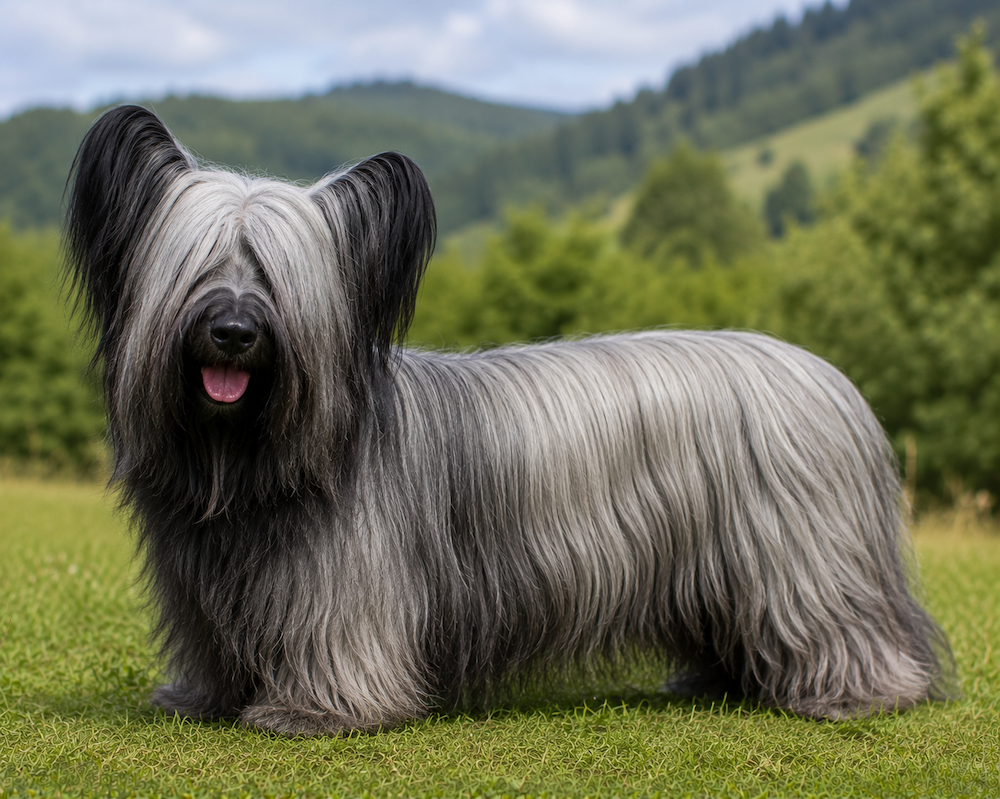







Elegant, loyal, and full of character — the Skye Terrier is a rare Scottish breed renowned for its flowing coat, unwavering devotion, and surprisingly brave personality.
🧠 QUICK SNAPSHOT
- Temperament: Loyal, dignified, courageous
- Energy Level: Moderate
- Size: Small
- Good With Families: Yes
- Trainability: Moderate
- Grooming: High
- Best For: Families, experienced owners, companion homes
📚 OVERVIEW
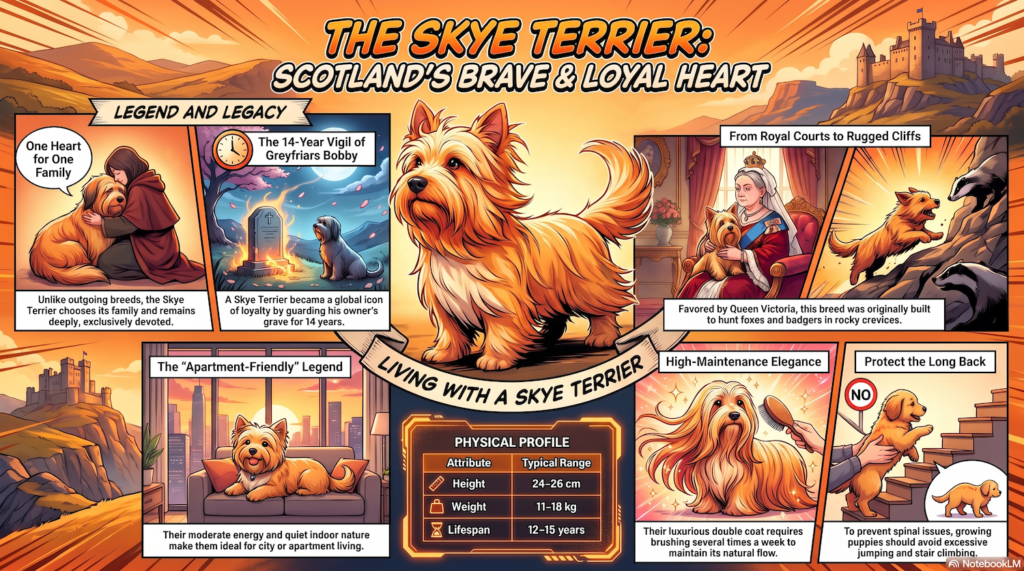
The Skye Terrier is one of Scotland’s oldest and most distinctive terrier breeds. Originally bred on the Isle of Skye to hunt foxes, badgers, and otters, this long-bodied, short-legged dog quickly earned a reputation for remarkable courage and determination. Today, the breed is far better known as a devoted companion, admired for its elegant appearance, luxurious double coat, and deep loyalty to its family.
Despite its graceful appearance, the Skye Terrier remains a true terrier at heart. It is intelligent, confident, and independent while also forming exceptionally close bonds with its owners. Unlike many smaller breeds, the Skye Terrier is generally calm indoors but still enjoys regular walks, interactive play, and spending quality time with its family. Although now considered one of the world’s rarest native dog breeds, those fortunate enough to own a Skye Terrier often describe it as one of the most loyal companions they have ever known.
✅ PROS & CONS
Pros
- Exceptionally loyal and devoted
- Calm and affectionate indoors
- Unique, elegant appearance
- Good watchdog without excessive aggression
- Intelligent and adaptable
Cons
- Coat requires regular grooming
- Can be reserved with strangers
- Independent terrier personality
- Strong prey drive toward small animals
- Rare and difficult to find
Is a Skye Terrier a Good Family Dog?
Yes, the Skye Terrier can be an excellent family dog, particularly for families who appreciate a calm, loyal, and affectionate companion. The breed forms incredibly strong attachments to its owners and often develops a particularly close bond with one person while remaining devoted to the entire household.
Skye Terriers generally behave well with respectful older children who understand how to interact gently with dogs. Due to their small size and independent temperament, they may be less tolerant of rough handling from very young children, making supervision important during family interactions.
The breed can coexist happily with other dogs when socialised early but may display its natural terrier instincts around smaller pets. Early socialisation helps build confidence around unfamiliar people and encourages polite behaviour in different environments. Families looking for a quiet, faithful companion with plenty of personality will find the Skye Terrier a rewarding addition to the home.
How Much Exercise Does a Skye Terrier Need?
The Skye Terrier requires around 45 to 60 minutes of exercise each day to remain healthy and mentally stimulated. While not as energetic as many working breeds, it still enjoys regular activity and benefits from opportunities to explore and investigate new surroundings.
Daily walks, interactive games, gentle hikes, and play sessions in a securely fenced yard provide excellent exercise. The Skye Terrier enjoys using its nose and naturally likes exploring, so scent-based games can be particularly enjoyable.
Mental stimulation is equally valuable. Puzzle toys, obedience training, and learning new tricks help satisfy the breed’s intelligent mind and prevent boredom. Although generally calm indoors, insufficient exercise may lead to stubborn behaviour or excessive barking. A balanced routine of moderate activity and quality family time keeps the Skye Terrier happy and well-adjusted.
Is a Skye Terrier Easy to Train?
The Skye Terrier is intelligent but possesses the independent nature typical of many terriers. It learns quickly but may question commands if training becomes repetitive or inconsistent. Owners who use patience and positive reinforcement usually achieve the best results.
Training should focus on praise, treats, toys, and short, engaging sessions that maintain the dog’s interest. Harsh corrections are unnecessary and may damage the trust that is so important with this sensitive breed. Because Skye Terriers enjoy solving problems, introducing variety into training helps keep them motivated.
Early socialisation is essential to ensure puppies become confident around strangers, other dogs, and unfamiliar environments. With consistent leadership and ongoing training, the Skye Terrier develops into a well-mannered, obedient companion while retaining its distinctive confidence and personality.
Does a Skye Terrier Shed?
Yes, the Skye Terrier sheds moderately throughout the year. Its long, straight double coat requires regular grooming to keep it healthy, clean, and free from tangles. While it is not difficult to maintain, owners should expect to brush the coat several times each week.
Frequent brushing removes loose hair, prevents matting, and helps distribute natural oils throughout the coat. Particular attention should be paid to the feathering on the legs, chest, and tail, where knots are most likely to develop. Regular bathing every few weeks helps maintain the coat’s appearance without stripping its natural oils.
The Skye Terrier is not considered hypoallergenic, so it may not be suitable for allergy sufferers. Routine nail trimming, ear cleaning, and dental care should also form part of its regular grooming routine.
What Health Problems Are Common in a Skye Terrier?
The Skye Terrier is generally a healthy breed with a lifespan of around 12 to 15 years, but like all purebred dogs, it has several inherited health conditions prospective owners should understand.
One of the most recognised concerns is Skye Limp, a temporary developmental condition affecting growing puppies that usually resolves with maturity. Hip dysplasia can also occur, while some individuals may develop autoimmune diseases, hypothyroidism, eye disorders, or certain forms of cancer later in life. Their long back also means owners should discourage repeated jumping from furniture or excessive stair climbing during puppyhood to reduce stress on the spine.
Choosing a puppy from a reputable breeder who performs appropriate health testing significantly reduces the likelihood of inherited problems. Combined with a healthy diet, appropriate exercise, routine veterinary care, and maintaining an ideal body weight, most Skye Terriers enjoy long, active, and happy lives.