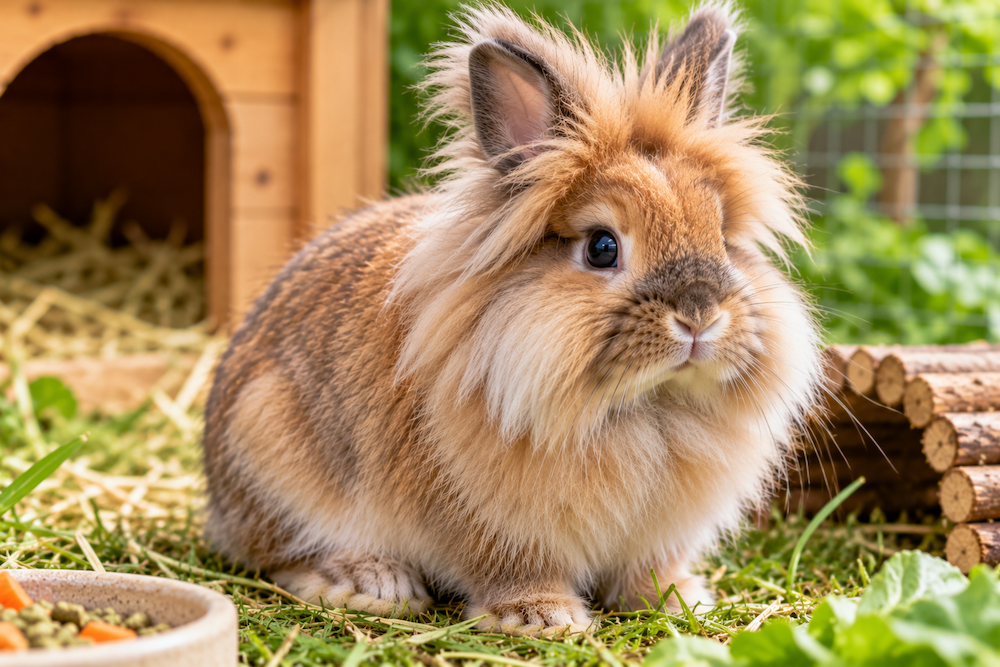







Tiny rabbit, enormous hairstyle. The Lionhead Rabbit is famous for the distinctive woolly mane surrounding its head, but beneath all that fluff is an intelligent, energetic companion.
🧠 QUICK SNAPSHOT
| Trait | Lionhead Rabbit |
|---|---|
| Species | Domestic Rabbit (Oryctolagus cuniculus domesticus) |
| Breed Type | Small, mane-coated rabbit |
| Origin | Belgium |
| Typical Lifespan | Around 7–10+ years |
| Adult Weight | Commonly around 1.1–1.7 kg |
| Diet | Herbivore |
| Activity | Most active around dawn and dusk |
| Temperament | Intelligent, lively and often affectionate |
| Coat | Shorter body coat with distinctive woolly mane |
| Grooming | Moderate to high |
| Social Needs | High |
| Beginner Friendly? | Moderate |
| Famous Feature | Lion-like mane around the head |
📚 OVERVIEW
The Lionhead Rabbit is a small domestic rabbit instantly recognisable by the woolly mane surrounding its head and neck.
Developed in Europe, the breed’s distinctive appearance results from a genetic trait that produces longer wool around the head. Lionheads may have either a single or double mane, with double-maned rabbits generally carrying more extensive wool.
They’re intelligent, active animals that need room to run, forage, explore and interact. Many become affectionate with patient socialisation, although they usually prefer attention with their feet safely on the ground rather than being carried.
That spectacular mane also means Lionheads require more grooming than many short-haired rabbit breeds.
✅ PROS & CONS
Pros
- Unique lion-like appearance
- Small, manageable size
- Intelligent and curious
- Often playful and affectionate
- Can learn litter habits and routines
- Generally quiet
- Can form strong bonds with owners
- Potential lifespan of a decade or more
Cons
- Mane requires regular grooming
- Can develop tangles and mats
- Needs considerably more space than a small cage
- Usually doesn’t enjoy frequent picking up
- Requires unlimited hay and careful nutrition
- Needs daily exercise and enrichment
- Teeth grow continuously
- Long-term commitment despite its small siz
Are Lionhead Rabbits Good Pets?
Yes. Lionheads can make excellent companions for people prepared to meet their grooming, social and exercise needs.
They’re generally intelligent, lively and interactive, with plenty of personality packed into a relatively small rabbit.
Are Lionhead Rabbits Good for Beginners?
They can be, but they’re slightly more demanding than a short-coated rabbit because of their grooming requirements.
New owners need to understand rabbit nutrition, dental health, handling and the importance of adequate living space.
Are Lionhead Rabbits Good With Children?
They can suit calm, respectful children when adults supervise interactions.
Lionheads are small and physically delicate, and most rabbits prefer interaction at ground level rather than being carried around.
How Long Do Lionhead Rabbits Live?
Lionhead Rabbits commonly live around 7–10 years or longer with excellent care.
Nutrition, genetics, exercise and veterinary care can all influence lifespan.
How Big Do Lionhead Rabbits Get?
Lionheads are relatively small rabbits, commonly weighing around 1.1–1.7 kg as adults.
Their impressive mane can make them appear considerably larger and rounder than they really are.
Why Do Lionhead Rabbits Have a Mane?
The Lionhead’s mane results from a dominant genetic mutation affecting wool growth.
Longer wool develops around the head and neck, creating the characteristic lion-like appearance that gives the breed its name.
What Is the Difference Between a Single-Maned and Double-Maned Lionhead?
A single-maned Lionhead inherits one copy of the mane gene, while a double-maned rabbit inherits two.
Double-maned Lionheads generally develop more extensive wool, which may extend around the head and onto areas of the body when young.
Do Lionhead Rabbits Need Grooming?
Yes. Regular grooming is particularly important around the mane and any longer areas of wool.
Brushing helps prevent tangles, matting and excessive ingestion of loose fur during self-grooming.
More frequent grooming is useful during heavy moults.
Can You Cut a Lionhead Rabbit’s Hair?
Occasional careful trimming may be necessary when wool becomes tangled or creates hygiene problems.
Rabbit skin is extremely delicate, so severe mats shouldn’t simply be attacked with scissors.
Professional or veterinary assistance may be safer when significant matting develops.
What Do Lionhead Rabbits Eat?
An adult Lionhead’s diet should be based primarily on unlimited good-quality grass hay, supplemented with suitable leafy greens and an appropriate quantity of rabbit pellets.
Fresh water should always be available.
Why Is Hay Important for Lionhead Rabbits?
Hay provides the fibre required for healthy digestion and encourages extensive chewing.
Because rabbit teeth grow continuously, this chewing helps provide essential natural dental wear.
Hay should therefore make up the majority of the diet.
How Much Space Does a Lionhead Rabbit Need?
Far more than a traditional small rabbit cage.
Lionheads need enough permanent space to hop, stretch, stand upright and explore naturally, together with regular access to a larger exercise area.
Their small body doesn’t reduce their need for movement.
Can Lionhead Rabbits Live Indoors?
Yes. Lionheads can make excellent indoor companions when given adequate space.
The environment needs to be rabbit-proofed because electrical cables, furniture, houseplants and other household objects can quickly become chewing targets.
Can Lionhead Rabbits Be Litter Trained?
Yes. Many Lionheads can learn to use a litter tray.
Rabbits naturally tend to choose particular toilet areas, making litter training easier than many new owners expect.
Are Lionhead Rabbits Affectionate?
Many are.
A confident Lionhead may approach familiar people, nudge for attention or settle down for gentle stroking.
As with all rabbits, personality varies considerably between individuals.
Do Lionhead Rabbits Like Being Held?
Most rabbits don’t naturally enjoy being lifted and restrained.
As prey animals, they generally feel more secure with their feet on the ground.
Building a relationship through floor-level interaction is often much more rewarding.
Do Lionhead Rabbits Need a Companion?
Rabbits are highly social and often benefit enormously from a compatible bonded rabbit companion.
Their partner doesn’t need to be another Lionhead.
Successful bonding depends much more on temperament and careful introductions than breed.
Do Lionhead Rabbits Need Exercise?
Absolutely.
Lionheads need daily opportunities to run, hop, explore, forage and binky.
Exercise supports healthy body weight, muscle condition and mental wellbeing.
Why Does My Lionhead Rabbit Binky?
A binky is an energetic leap that can include twisting and kicking in mid-air.
It’s commonly associated with excitement and playful behaviour.
Lionheads may combine binkies with sudden bursts of high-speed zoomies.
Why Does My Lionhead Rabbit Thump?
Thumping is a natural warning behaviour.
A rabbit may strike the ground with its powerful hind feet when frightened, suspicious or displeased.
In wild rabbits, the vibration can help alert others to possible danger.
Do Lionhead Rabbits Shed?
Yes. Lionheads shed and can experience particularly noticeable moults because of their longer wool.
Regular grooming during these periods helps remove loose fur and reduces the amount swallowed during self-grooming.
What Health Problems Are Common in Lionhead Rabbits?
Potential concerns include dental disease, gastrointestinal stasis, respiratory problems and coat or skin issues.
Their wool also increases the importance of monitoring for matting and maintaining good grooming.
Changes in eating or droppings should always be taken seriously.
What Colours Do Lionhead Rabbits Come In?
Lionheads occur in many colours and patterns, including black, blue, chocolate, white, tortoiseshell and various shaded or patterned combinations.
The defining characteristic is the mane rather than a particular colour.
What Is the Difference Between a Lionhead and Netherland Dwarf Rabbit?
Both are small breeds, but their coats make them easy to distinguish.
The Netherland Dwarf has a short, compact coat, while the Lionhead develops its unmistakable woolly mane.
Lionheads are also generally somewhat larger.
Where Did the Lionhead Rabbit Come From?
The Lionhead was developed in Belgium, with breeders creating small rabbits carrying the distinctive mane trait.
The breed subsequently spread through Europe and elsewhere, eventually becoming one of the most recognisable modern companion rabbit breeds.
Is a Lionhead Rabbit a Good First Rabbit?
It can be.
Lionheads are small, intelligent and engaging, but owners need to be prepared for regular grooming, substantial exercise space, excellent nutrition and potentially a decade of care.
Small and fluffy doesn’t mean low-maintenance.
What Makes the Lionhead Rabbit Unique?
Most rabbit breeds are named for where they came from, their colour or the shape of their ears.
The Lionhead only needs one look.
Around that tiny rabbit face sits a dramatic circle of wool that makes the animal appear to be wearing its own miniature lion’s mane.
But the hairstyle is only the beginning.
Give a Lionhead enough space and the dignified little lion can suddenly explode into zoomies.
Then comes a binky.
A leap.
A twist.
Perhaps another sprint across the room.
Something suspicious happens?
THUMP.
And five minutes later, the same rabbit may calmly settle beside you for a head scratch as though nothing happened.
The Lionhead may look like somebody crossed a rabbit with a tiny lion.
Fortunately, only the hairstyle made the journey.
Discover why Lionhead Rabbits grow their extraordinary manes, what single and double manes mean, why rabbits binky and thump, and what these fluffy little companions really need to thrive.
Watch our Lionhead Rabbit video and discover what makes this miniature maned rabbit so distinctive.