




Affectionate, intelligent, and irresistibly cute — a cheerful companion that thrives on family life and companionship.
🧠 QUICK SNAPSHOT
- Temperament: Friendly, affectionate, playful
- Energy Level: Moderate
- Size: Small
- Good With Families: Yes
- Trainability: High
- Grooming: Moderate
- Best For: Families, apartments, companionship
📚 OVERVIEW
The Havapoo is a cross between a Havanese and a Poodle, combining intelligence with a loving and social personality. Known for their adorable appearance and friendly nature, Havapoos quickly become a cherished part of the family.
They are adaptable dogs that fit comfortably into apartments, smaller homes, or larger family households, provided they receive plenty of attention and companionship.
✅ PROS & CONS
Pros
- Extremely affectionate and family-oriented
- Intelligent and easy to train
- Great for apartments and smaller homes
- Often low shedding depending on coat type
Cons
- Can develop separation anxiety
- Requires regular grooming
- Needs companionship and attention
- May become vocal when bored
Is a Havapoo a Good Family Dog?
Yes. Havapoos are generally affectionate, playful and highly people-oriented family dogs.
They combine Havanese and Poodle ancestry, two breeds known for intelligence and companionship.
Their small size can suit families particularly well, although young children should learn to handle them gently.
What Breeds Make a Havapoo?
A Havapoo is a cross between a Havanese and a Poodle, usually a Toy or Miniature Poodle.
Because the parents differ in size, coat and structure, Havapoos can vary considerably.
They’re also known by names including Havadoodle and Poovanese.
Is a Havapoo the Same as a Havadoodle?
Yes. Havapoo and Havadoodle generally describe the same Havanese × Poodle cross.
Havapoo is probably the more immediately recognisable name.
Neither term represents a separate officially recognised breed.
What Is a Poovanese?
Poovanese is another name occasionally used for the Havanese-Poodle cross.
Havapoo and Havadoodle are more commonly encountered.
All three names can describe essentially the same cross, so pedigree information is more useful than terminology.
How Much Exercise Does a Havapoo Need?
Most Havapoos need around 30–60 minutes of daily exercise, combined with mental stimulation.
Walks, retrieving games, trick training and interactive toys work particularly well.
They’re small dogs, but Poodle ancestry can produce surprisingly energetic individuals.
Is a Havapoo Easy to Train?
Usually, yes.
Both Havanese and Poodles are intelligent, highly trainable dogs that enjoy interacting with people.
Havapoos generally respond particularly well to positive reinforcement.
Their intelligence makes them excellent trick dogs but also means they quickly learn behaviours owners accidentally reward.
Are Havapoos Intelligent?
Yes. Havapoos can be extremely clever.
Poodles have a long working history requiring intelligence and cooperation, while Havanese became famous as companion and performing dogs.
The combination can produce an enthusiastic little problem solver.
Is a Havapoo Easy to Toilet Train?
Some are, while others require patience.
Small companion dogs can be challenging to house-train because of small bladders, frequent toileting requirements and dislike of unpleasant weather.
A consistent schedule and immediate rewards for toileting outdoors usually work best.
Does a Havapoo Shed?
Many Havapoos shed relatively little, but low shedding isn’t guaranteed.
Both Havanese and Poodles are low-shedding breeds, so the chances of substantial shedding are generally lower than with crosses involving heavily shedding breeds.
Individual coat genetics still matter.
Is a Havapoo Hypoallergenic?
Not completely.
Havapoos are often marketed as hypoallergenic because both parent breeds are relatively low shedding.
However, all dogs produce allergens through saliva, skin and dander.
An allergy sufferer should spend time with the individual dog rather than relying solely on its breed label.
What Coat Types Can a Havapoo Have?
Havapoos may have wavy, curly or relatively straight coats.
Some inherit the loose, flowing Havanese coat, while others develop tighter Poodle-like curls.
The popular soft, wavy teddy-bear coat falls somewhere between the two.
Do Havapoos Have Hair or Fur?
Havapoo coats are frequently described as hair because they tend to grow continuously and shed relatively little.
Biologically, hair and fur are both keratin structures.
The practical issue is that these coats require regular trimming and brushing.
Are Havapoos High-Maintenance to Groom?
They can be.
Low shedding often means loose hair remains trapped within the coat, increasing the risk of tangles and matting.
Many Havapoos require brushing several times each week and professional grooming approximately every six to eight weeks.
How Often Should a Havapoo Be Groomed?
A Havapoo should generally be brushed at least several times a week, and some curly or longer-coated dogs benefit from daily brushing.
Professional clipping is commonly scheduled every six to eight weeks.
The ears, legs, armpits and harness areas are particularly prone to tangling.
Can You Give a Havapoo a Puppy Cut?
Yes. Puppy-style clips are extremely popular for Havapoos.
The coat is shortened to a manageable, fluffy length, often with the face rounded to preserve the teddy-bear appearance.
A shorter coat still requires brushing but can substantially reduce maintenance.
Can You Shave a Havapoo?
Yes.
If severe matting develops, clipping the coat very short may be the most humane solution.
Unlike routine shaving of a heavy double-coated northern breed, regular clipping is a normal part of maintaining many Poodle-influenced coats.
Why Does My Havapoo Mat So Easily?
Soft, curly or wavy coats can trap loose hairs rather than releasing them.
Friction then causes those hairs to tangle around surrounding coat, eventually producing tight mats.
A fluffy surface can hide significant tangling closer to the skin.
What Health Problems Are Common in Havapoos?
Potential concerns include patellar luxation, hip problems, eye disorders, dental disease, Legg-Calvé-Perthes disease and certain inherited conditions from either parent breed.
Poodle-related risks vary depending on whether Toy or Miniature Poodles were used.
Responsible breeding should include health testing of both parents.
Are Havapoos Prone to Luxating Patellas?
Yes. Patellar luxation can occur in both Havanese and smaller Poodles.
The kneecap slips out of its normal position, potentially causing skipping, intermittent lameness or arthritis.
Responsible breeders should have breeding dogs evaluated for patellar health.
Are Havapoos Prone to Dental Problems?
They can be.
Small jaws can create crowded teeth, increasing the risk of plaque accumulation and periodontal disease.
Daily tooth brushing and regular veterinary dental assessments are particularly valuable.
Are Havapoos Prone to Eye Problems?
Potential inherited eye conditions occur in both parent breeds.
Responsible breeders should use appropriate eye examinations and available genetic testing.
Squinting, cloudiness, redness or unexplained vision changes warrant veterinary assessment.
Do Havapoos Get Ear Infections?
They can.
Floppy ears combined with hair around the ear canal can reduce ventilation.
Regular checks are particularly useful after bathing or swimming.
Persistent redness, odour, scratching or discharge requires veterinary attention.
How Long Does a Havapoo Live?
Havapoos commonly live around 12–16 years, with some living longer.
Small dogs generally have greater average longevity than giant breeds.
Genetics, dental health, body condition and preventive veterinary care all influence lifespan.
How Big Does a Havapoo Get?
Most Havapoos are small dogs, commonly weighing around 3–9 kg, although some can be larger.
Adult size depends strongly on whether a Toy or Miniature Poodle was used and on the size of the Havanese parent.
There is no official Havapoo size standard.
What Is a Toy Havapoo?
A Toy Havapoo generally has Toy Poodle ancestry and is bred toward the smaller end of the Havapoo size range.
“Toy Havapoo” isn’t an officially recognised breed category.
The actual sizes of the parents provide more useful information than the marketing label.
What Is a Mini Havapoo?
A Mini Havapoo usually has Miniature Poodle ancestry.
These dogs may be somewhat larger and more robust than Toy-Poodle-based Havapoos.
There’s no universally accepted weight separating Toy and Mini Havapoos.
Are There Teacup Havapoos?
“Teacup Havapoo” is a marketing term rather than a recognised size.
Deliberately breeding for extreme smallness can increase risks including fragility, hypoglycaemia, dental crowding and orthopaedic problems.
Health should take priority over exceptionally tiny size.
Can a Havapoo Live in an Apartment?
Yes. Havapoos are usually excellent apartment dogs.
Their small size and moderate exercise needs suit compact living.
Daily walks, play, training and companionship remain essential, while barking should be managed early in shared buildings.
Can a Havapoo Be Left Alone?
Havapoos generally prefer substantial human companionship.
Havanese were specifically developed as companion dogs, while Poodles also form strong relationships with their owners.
Gradual independence training is important because some Havapoos can develop separation-related behaviour.
Are Havapoos Prone to Separation Anxiety?
They can be.
A Havapoo potentially combines two highly people-oriented breeds.
Owners should avoid creating a situation where the puppy is never alone during its early months and then suddenly expected to cope with long absences.
Short, positive periods of independence should be introduced gradually.
Are Havapoos Velcro Dogs?
Many are.
Following their owners around the house is extremely common.
Havanese ancestry contributes strong companion instincts, while Poodles are also highly people-focused.
A Havapoo may regard a closed bathroom door as an unacceptable breakdown in family communication.
Are Havapoos Cuddly?
Usually.
Many Havapoos love sitting on laps, sleeping beside their owners and receiving physical affection.
Their combination of small size, soft coat and people-oriented temperament contributes greatly to their popularity as companion dogs.
Are Havapoos Good With Children?
Generally, yes.
They’re often playful and affectionate with respectful children.
Their small size means they can be injured by rough handling, so interactions with young children should be supervised.
Are Havapoos Good With Other Dogs?
Usually.
Both parent breeds generally have good social potential.
Early exposure to dogs of different sizes helps prevent a small Havapoo becoming fearful or overly reactive.
Are Havapoos Good With Cats?
Often, yes.
Most have relatively manageable prey drive and can coexist successfully with cats when introduced appropriately.
Individual temperament still matters.
Do Havapoos Have a Strong Prey Drive?
Usually not particularly strong.
Poodles have genuine hunting and retrieving ancestry, but Havanese were primarily companion dogs.
Some Havapoos enjoy chasing birds or squirrels, but extreme predatory behaviour isn’t generally a defining feature.
Do Havapoos Bark a Lot?
They can be moderately vocal.
Havanese can be enthusiastic alert barkers, while smaller Poodles can also be highly aware of environmental sounds.
Training can help prevent doorbell barking and attention barking from becoming excessive.
Are Havapoos Good Watchdogs?
They’re often excellent little alarm systems.
A Havapoo may quickly announce visitors or unusual sounds.
Once the visitor is admitted, many rapidly switch from watchdog to enthusiastic welcoming committee.
Are Havapoos Good Guard Dogs?
No.
They’re small companion dogs rather than serious guardians.
They can alert their owners to unusual activity, but their primary defensive strategy is likely to involve making considerable noise from a strategically safe location.
Are Havapoos High-Energy Dogs?
They’re generally moderately energetic.
Some Toy-Poodle-based dogs are lively but easily exercised, while Miniature Poodle ancestry can produce more athletic Havapoos.
Daily activity and mental stimulation are still important.
When Does a Havapoo Calm Down?
Many begin settling noticeably between one and two years of age, although playful behaviour often continues throughout life.
Regular exercise and teaching calm behaviour help.
The Havanese side of the family is particularly famous for retaining a cheerful, puppy-like personality.
Are Havapoos Good Walking Dogs?
Yes.
Their compact size doesn’t prevent them from enjoying substantial walks.
Healthy adults can often walk much farther than people expect from a fluffy little companion dog.
Distance should be increased gradually according to fitness.
Are Havapoos Good Hiking Dogs?
Many can enjoy moderate hikes.
Their small size means owners should consider terrain, temperature and distance carefully.
Long coats also collect grass seeds, burrs and debris, making post-walk grooming important.
Can Havapoos Swim?
Many can swim, particularly dogs inheriting strong Poodle traits.
Poodles were originally water retrievers, so aquatic ability is genuinely present in the family tree.
However, small body size and a heavy wet coat mean supervision remains important.
Are Havapoos Good at Tricks?
Excellent.
Havanese have a history as performing dogs, while Poodles are among the most famously trainable breeds.
A Havapoo therefore has trick-dog credentials on both sides of its pedigree.
Short, reward-based sessions can produce impressive results.
Are Havapoos Good Therapy Dogs?
Suitable individuals can make excellent therapy dogs.
Their small size, affectionate nature and trainability can be valuable in hospitals, schools and aged-care environments.
Successful therapy work requires calmness and confidence, not simply friendliness.
Are Havapoos Good for Older People?
They can be excellent companions for older adults.
They’re small, affectionate and don’t usually require extreme exercise.
Potential owners should consider professional grooming costs and the dog’s need for companionship.
Are Havapoos Good First Dogs?
Often, yes.
They’re generally friendly, trainable and manageable in size.
First-time owners should understand that low shedding comes with significant grooming requirements and that separation training is particularly important.
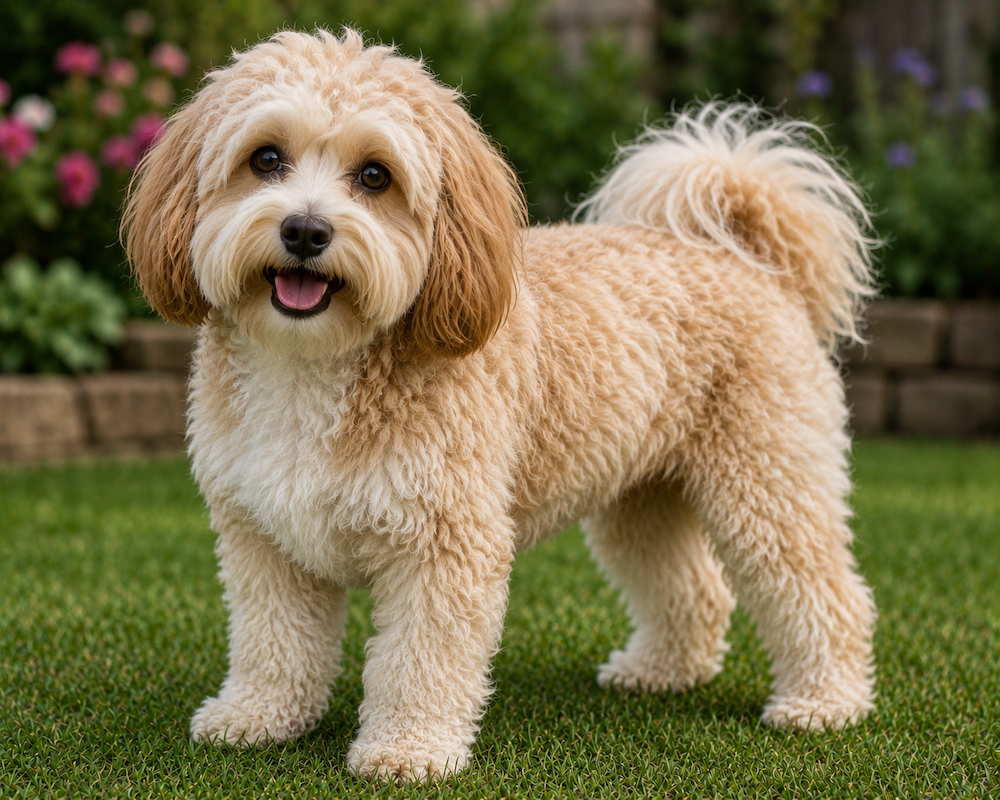
What Does a Havapoo Look Like?
Havapoos are small dogs with soft wavy or curly coats, expressive eyes and floppy ears.
Many have facial furnishings that create the popular teddy-bear appearance.
Others may inherit a longer, straighter Havanese-style coat.
There is no single standard appearance.
Why Do Havapoos Look Like Teddy Bears?
The appearance comes from facial furnishings, soft hair, rounded grooming and large expressive eyes.
Poodle curls combined with the Havanese’s long companion-dog coat can produce a particularly plush appearance.
Professional grooming contributes considerably to the effect.
What Colours Can Havapoos Be?
Havapoos can occur in black, white, cream, apricot, red, chocolate, silver, gold and numerous combinations and patterns.
Both parent breeds offer substantial coat-colour diversity.
Puppy colour can also change as the dog matures.
Can Havapoos Be Black?
Yes.
Black occurs naturally in both Havanese and Poodles.
Some black Havapoos remain dark throughout life, while others develop silver or lighter hairs as they mature.
Can Havapoos Be Chocolate?
Yes.
Chocolate or brown Havapoos can inherit brown pigmentation from either parent line.
Brown pigment generally also affects the nose and other pigmented areas.
Can Havapoos Be Red or Apricot?
Yes.
Red and apricot are particularly popular colours and can come through Poodle ancestry.
The colour may fade considerably with age, so a dark red puppy isn’t guaranteed to remain the same shade as an adult.
Why Does My Havapoo’s Colour Change?
Both Havanese and Poodles can carry genes that cause progressive lightening or colour changes.
A puppy that begins life dark chocolate, black or red may become substantially lighter.
This is generally normal rather than evidence of poor coat health.
Can Havapoos Be Parti-Coloured?
Yes.
Parti Havapoos have substantial areas of white combined with another colour.
Both parent breeds can contribute white spotting patterns.
The exact distribution is genetically variable.
Can Havapoos Be Merle?
Merle Havapoos require careful scrutiny.
Merle isn’t a traditional recognised colour of either the Havanese or Poodle.
A merle Havapoo therefore generally indicates that merle was introduced through another breed somewhere in the pedigree. Merle-to-merle breeding also creates serious hearing and eye risks.
What Is an F1 Havapoo?
An F1 Havapoo is a first-generation Havanese × Poodle cross.
Its average ancestry is approximately 50% from each parent breed.
Individual puppies can still inherit very different combinations of characteristics.
What Is an F1B Havapoo?
An F1B Havapoo is usually produced by breeding an F1 Havapoo back to a Poodle.
This creates approximately 75% Poodle ancestry on average.
The approach is often used to increase the probability of a curly, low-shedding coat.
Does an F1B Havapoo Definitely Not Shed?
No.
An F1B dog may be more likely to inherit Poodle-like coat characteristics, but generation labels can’t guarantee shedding level.
Individual coat genes remain important.
What Is an F2 Havapoo?
An F2 Havapoo is generally produced by breeding two F1 Havapoos together.
Genetic recombination can create considerable variation among puppies.
An F2 isn’t automatically more predictable than an F1.
What Is a Multigenerational Havapoo?
A multigenerational Havapoo has several generations of Havapoo ancestry rather than being a simple first-generation cross.
Careful selective breeding over multiple generations can potentially make size, temperament and coat more predictable.
The term alone doesn’t guarantee breeding quality.
Is a Havapoo a Recognised Breed?
No. Major traditional kennel organisations don’t recognise the Havapoo as an established pedigree breed.
The Havanese and Poodle are recognised breeds, while the Havapoo remains a deliberately produced crossbreed.
There is no universally accepted international Havapoo breed standard.
Is a Havapoo a Designer Dog?
Yes.
The Havapoo belongs to the large family of modern Poodle-based designer crosses.
The objective is generally to combine the Havanese’s companion temperament with Poodle intelligence and low-shedding coat characteristics.
Are Havapoos Healthier Than Purebred Dogs?
Not automatically.
Crossbreeding can increase genetic diversity, but a Havapoo can still inherit health conditions occurring in either parent population.
Hybrid vigour isn’t a substitute for responsible breeding and health testing.
What Is Hybrid Vigour in a Havapoo?
Hybrid vigour describes situations where crossing genetically different populations can produce certain biological advantages.
It’s a legitimate genetic concept but is often oversimplified in designer-dog advertising.
A crossbreed isn’t automatically free from inherited disease.
What Health Tests Should Havapoo Parents Have?
Testing should address health concerns from both Havanese and the Poodle variety being used.
Appropriate screening can include patellar, eye, hip and relevant DNA testing depending on the parents.
A statement that the parents “look healthy” isn’t equivalent to formal health testing.
Is a Havapoo a Type of Poodle?
No.
A Havapoo is a Havanese-Poodle cross.
Even an F1B Havapoo with substantial Poodle ancestry remains a crossbreed rather than a Poodle variety.
What Is the Difference Between a Havapoo and a Cavapoo?
A Havapoo combines Havanese and Poodle, while a Cavapoo combines Cavalier King Charles Spaniel and Poodle.
Both are small companion crosses and can look remarkably similar.
Their non-Poodle parent contributes different health risks and temperament tendencies.
What Is the Difference Between a Havapoo and a Maltipoo?
A Maltipoo combines Maltese and Poodle, while the Havapoo uses a Havanese.
Havanese are generally somewhat sturdier and occur naturally in a wider range of colours than Maltese.
The resulting crosses can nevertheless look very similar.
What Is the Difference Between a Havapoo and a Cockapoo?
Cockapoos combine Cocker Spaniel and Poodle ancestry.
They’re often larger and may have stronger sporting instincts than Havapoos.
Havapoos have Havanese ancestry and are generally more strongly rooted in the companion-dog tradition.
What Is the Difference Between a Havapoo and a Havanese?
The Havanese is an established Cuban breed, while the Havapoo adds Toy or Miniature Poodle ancestry.
A Havapoo may have tighter curls and a more Poodle-like body shape.
Havanese generally have more predictable size and coat because they’re an established breed.
Why Were Havanese Crossed With Poodles?
The general objective was to combine the Havanese’s affectionate companion temperament with the Poodle’s intelligence, trainability and low-shedding coat.
Because Havanese already shed relatively little, the cross isn’t simply about reducing shedding.
Poodle ancestry can also contribute different coat textures and athletic ability.
Does the Havapoo Have Working-Dog Ancestry?
On the Poodle side, absolutely.
Poodles were historically water retrievers, developed to work with hunters retrieving waterfowl.
The Havanese side contributes a very different history centred on companionship and performance.
A Havapoo therefore combines a water-working dog with a Cuban lapdog and entertainer.
Does the Havapoo Have Circus-Dog Ancestry?
In an unusual sense, yes.
Havanese-type dogs became known as performing and circus dogs in Europe, while Poodles also have a long reputation as highly trainable performers.
This makes trick training particularly appropriate for the cross.
Where Does the Name Havapoo Come From?
“Havapoo” combines Havanese and Poodle.
Like Cavapoo, Cockapoo and Maltipoo, the name immediately identifies the two parent breeds.
Alternative names such as Havadoodle and Poovanese never became quite as universally familiar.
Where Did the Havapoo Originate?
There is no reliably documented single breeder, date or location responsible for creating the first Havapoo.
Havanese and Poodles could have been crossed informally before the name existed.
Purposeful breeding became more visible during the modern designer-dog movement, particularly in North America.
When Did Havapoos Become Popular?
Havapoos became increasingly visible during the late 20th and early 21st centuries, alongside rapid growth in other Poodle crosses.
Demand was driven by owners seeking small, affectionate dogs with potentially low-shedding coats.
Social media later accelerated the popularity of teddy-bear-looking companion crosses.
Who Created the First Havapoo?
There is no well-documented individual who can reliably be identified as the creator of the Havapoo.
This differs from crosses such as the modern Labradoodle, which has a famous documented development story.
The Havapoo appears to have emerged through multiple independent breeding programmes.
Is the Havapoo an American Dog?
The modern designer cross is often associated with North American breeding, but calling it a definitively American-created breed goes beyond the available history.
Its parent breeds have dramatically different origins: Havanese developed in Cuba, while the Poodle’s historical development is strongly associated with Germany and later France.
Could the Havapoo Become a Recognised Breed?
Potentially, but that would require much more than simply breeding Havapoos together.
Breeders would need a consistent breed standard, multigenerational pedigrees, stable characteristics, genetic diversity and coordinated health programmes.
At present, Havapoos remain a variable crossbreed.
Is a Havapoo Better Than a Havanese for Allergies?
Not necessarily.
Both Havanese and Poodles are relatively low-shedding breeds, so crossing them doesn’t guarantee an allergy advantage over a purebred Havanese.
Individual allergen production varies considerably.
For someone with allergies, testing their response to the actual dog is more meaningful than choosing between the labels.
Why Are Havapoos So Popular?
They package several desirable companion-dog characteristics into one small dog: affection, intelligence, trainability, low shedding and a teddy-bear appearance.
They’re also adaptable to apartments and don’t require enormous amounts of exercise.
The combination fits modern urban lifestyles particularly well.
Is a Havapoo a Good First Dog?
Yes, for many owners.
They’re generally manageable in size, affectionate and highly trainable.
The main challenges are regular professional grooming, coat maintenance, toilet training and preventing excessive dependence on their owners.
Where Does the Havapoo Come From?
The Havapoo — also called the Havadoodle or Poovanese — is a modern cross between the Havanese and usually a Toy or Miniature Poodle.
Unlike the Havanese, which has a fascinating documented connection with Cuba, the Havapoo has no clearly established single creator or founding date. It became increasingly popular as part of the broader designer-dog movement during the late 20th and early 21st centuries.
What makes the combination particularly interesting is how different the two parent histories are. The Havanese developed in Cuba primarily as an affectionate companion and later became famous as a performing dog. The Poodle began as an intelligent European water retriever and also became renowned for performing and trick work.
So although the Havapoo may look like a tiny teddy bear, its family tree combines a Cuban companion, a water-retrieving working dog and two breeds with a suspicious amount of show-business experience.
That may explain why so many Havapoos seem convinced that everything they do deserves an audience.