





Playful, affectionate, and full of character — a lovable companion that combines charm, energy, and a fun-loving personality.
🧠 QUICK SNAPSHOT
- Temperament: Friendly, affectionate, playful
- Energy Level: Moderate
- Size: Small to medium
- Good With Families: Yes
- Trainability: Moderate
- Grooming: Low
- Best For: Families, apartments, companionship
📚 OVERVIEW
The Golden Shepherd is a cross
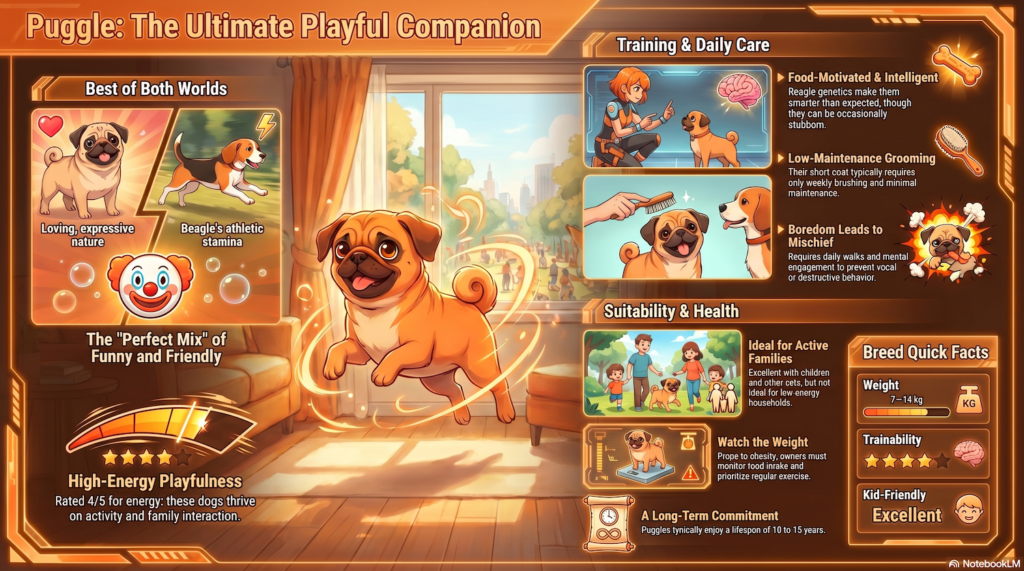
The Puggle is a popular cross between a Pug and a Beagle, combining the playful nature of the Pug with the curiosity and energy of the Beagle. Known for their expressive faces and friendly personalities, Puggles are social dogs that love spending time with their family.
They are adaptable companions that fit well into many different lifestyles, from apartment living to active family homes.
✅ PROS & CONS
Pros
- Friendly and affectionate personality
- Great with families and children
- Low grooming requirements
- Fun and entertaining companion
Cons
- Can inherit breathing issues from the Pug side
- May be stubborn during training
- Can be vocal due to Beagle heritage
- Prone to weight gain without proper exercise
Is a Puggle a Good Family Dog?
Yes. Puggles can be affectionate, playful and sociable family dogs.
The Puggle is a cross between a Pug and a Beagle, two breeds that generally enjoy human company but have quite different working histories. Puggles can combine the Pug’s companion-dog personality with the Beagle’s curiosity and energy.
They usually do best with families prepared for regular exercise, training and plenty of interaction.
Are Puggles Good With Children?
Generally, yes.
Puggles are often playful, friendly and relatively sturdy for a small-to-medium dog.
Their energetic nature can make them excellent companions for children, although interactions with young children should always be supervised.
How Much Exercise Does a Puggle Need?
Most Puggles need around 45–60 minutes of daily exercise, with more energetic individuals benefiting from additional activity.
A Puggle inheriting strong Beagle characteristics may need considerably more exercise than a typical Pug.
Walks, scent games, exploring and interactive play are particularly valuable.
Is a Puggle Easy to Train?
Puggles are intelligent but can be challenging to train.
Beagles were developed to follow scent independently, while Pugs can have a stubborn streak. A Puggle may therefore understand exactly what you’re asking while deciding that something else is currently more interesting.
Food rewards and short, positive training sessions usually work best.
Do Puggles Shed a Lot?
Puggles are generally moderate to heavy shedders.
Both Pugs and Beagles shed despite having short coats.
Regular brushing helps remove loose hair, but the Puggle isn’t a good choice for someone specifically seeking a low-shedding dog.
Are Puggles Hypoallergenic?
No.
Neither Pugs nor Beagles are considered hypoallergenic, and Puggles can shed considerably.
Dog allergens are also produced through saliva and skin secretions, not simply shed hair.
How Often Should You Groom a Puggle?
Puggles are relatively straightforward to groom.
Brushing once or twice a week, increasing during heavier shedding periods, is usually sufficient for the coat.
Dogs inheriting deeper facial wrinkles from the Pug should also have their skin folds checked and kept clean and dry.
What Health Problems Are Common in Puggles?
Puggles can inherit health problems from either parent breed, including hip dysplasia, patellar luxation, eye disorders, epilepsy, obesity and certain spinal problems.
Those inheriting a very short Pug-like muzzle can also experience brachycephalic obstructive airway syndrome (BOAS).
Their long Beagle-like ears can contribute to ear problems, making regular ear checks important.
Can Puggles Have Breathing Problems?
Yes, particularly if they inherit a significantly shortened muzzle from the Pug.
Puggles with longer Beagle-like muzzles may have less brachycephalic airway restriction, but a longer nose doesn’t automatically guarantee healthy breathing.
Persistent noisy breathing, exercise intolerance or difficulty coping with heat should be assessed by a veterinarian.
How Long Does a Puggle Live?
Puggles commonly live around 10–15 years, although there is limited large-scale lifespan research specifically on the cross.
Genetics, adult size, breathing health, body weight and veterinary care all influence longevity.
Keeping a Puggle lean is especially important because both parent breeds can have enthusiastic appetites.
How Big Does a Puggle Get?
Most Puggles weigh approximately 7–14 kg, although individuals can fall outside this range.
They generally stand around 25–38 cm tall.
Because Puggles aren’t a standardised breed, adult size and body shape can vary significantly.
When Is a Puggle Fully Grown?
Most Puggles reach close to their adult height at around 9–12 months.
They may continue developing muscle and filling out until around 18 months.
Adult size depends on the individual dog’s genetics and the size of its parents.
Is There a Mini or Teacup Puggle?
There is no officially recognised Miniature or Teacup Puggle variety.
Such terms are generally marketing descriptions rather than established sizes.
Extreme miniaturisation should never be prioritised over healthy structure and responsible breeding.
Can a Puggle Live in an Apartment?
Yes, provided it receives sufficient daily exercise and mental stimulation.
Their size suits apartment living, but Beagle ancestry can introduce two potential problems: energy and noise.
A bored Puggle may quickly discover that howling is an excellent indoor hobby.
Can Puggles Be Left Alone?
Adult Puggles can learn to tolerate reasonable periods alone, but they’re generally social dogs.
Beagles traditionally worked around other dogs and people, while Pugs were developed specifically for human companionship.
Long periods of regular isolation can contribute to boredom or separation-related behaviour.
Are Puggles Cuddly?
Many are extremely affectionate.
The Pug side often contributes strong companion instincts, while Beagles are generally friendly and sociable.
Some Puggles are dedicated lap dogs, although larger individuals may not realise that they’ve exceeded traditional lap dimensions.
Do Puggles Bark or Howl a Lot?
They can be quite vocal.
Pugs may bark at activity around the home, while Beagles are famous for their baying and howling.
Some Puggles inherit the Beagle’s distinctive voice, particularly when excited, bored or following an interesting scent.
Are Puggles Good With Other Dogs?
Generally, yes.
Beagles have a long history of working in packs, and Pugs are typically sociable companion dogs.
Well-socialised Puggles often enjoy living and playing with other dogs.
Are Puggles Good With Cats?
Many can live successfully with cats, particularly when raised together.
However, Beagle ancestry can contribute a strong instinct to chase smaller animals.
Careful introductions and supervision are therefore important.
Do Puggles Have a High Prey Drive?
Some do.
Beagles are scent hounds bred specifically to locate and pursue game, particularly rabbits and hares.
A Puggle inheriting strong Beagle instincts may become intensely interested in wildlife and small animals.
Are Puggles Good Off Leash?
Many Puggles can be challenging off leash.
A dog that inherits the Beagle’s powerful nose may follow an interesting scent and temporarily develop selective hearing.
Strong recall training is important, but secure fenced areas remain the safest choice for many Puggles.
Can Puggles Handle Hot Weather?
Care is needed, especially with short-muzzled individuals.
Puggles inheriting significant Pug facial characteristics may have reduced ability to cool themselves through panting.
During hot Australian weather, exercise should take place during cooler parts of the day.
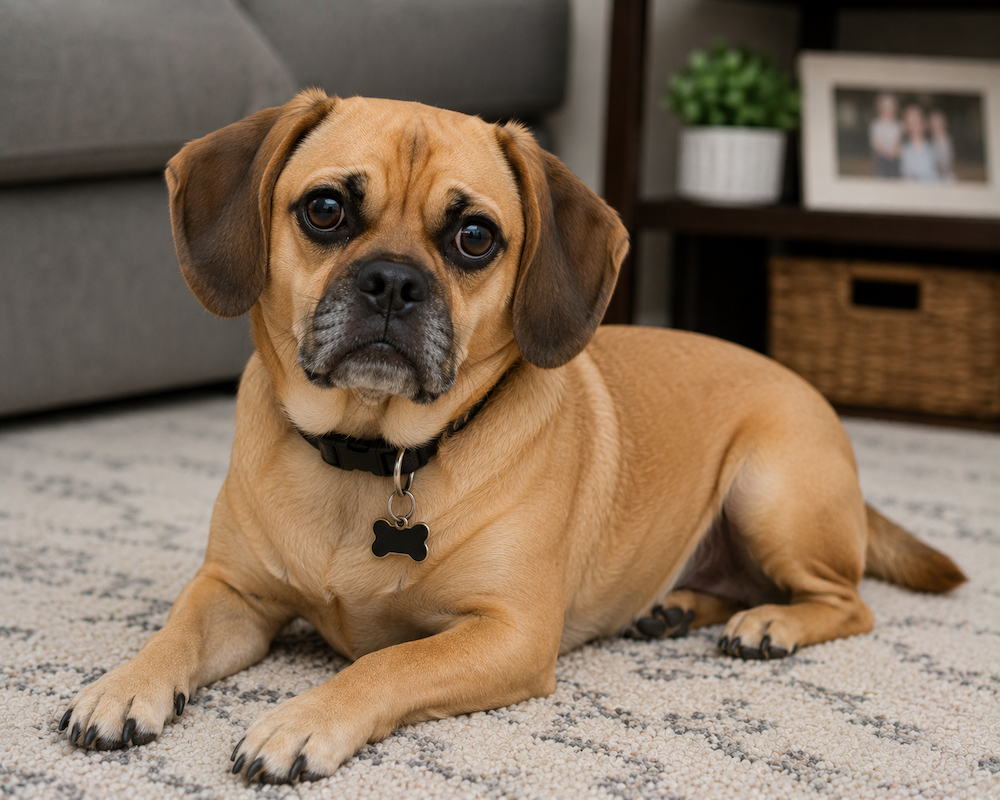
What Does a Puggle Look Like?
Puggles commonly have a compact body, short coat, floppy ears and a muzzle longer than a typical Pug’s.
Some strongly resemble small Beagles with Pug features, while others inherit a stockier body, more wrinkled forehead and tightly curled tail.
Appearance can vary considerably even within the same litter.
What Colours Can Puggles Be?
Common colours include fawn, tan, black and combinations involving white, depending on the parents.
Many fawn Puggles inherit a dark facial mask reminiscent of the Pug.
Colour should be secondary to temperament, health and functional structure.
What Is the Difference Between a Puggle and a Pug?
A Pug is an established companion breed, while a Puggle combines Pug and Beagle ancestry.
Puggles are generally larger, more athletic and more scent-driven than Pugs.
They also commonly have longer muzzles, although this isn’t guaranteed.
What Is the Difference Between a Puggle and a Beagle?
Beagles are established scent hounds bred for hunting, while Puggles combine Beagle and Pug characteristics.
Puggles are often smaller and stockier than Beagles and may have shorter muzzles and curled tails.
Their hunting and scent instincts can still be surprisingly strong.
Is a Puggle a Purebred Dog?
No.
The Puggle is a Pug × Beagle cross rather than a recognised purebred breed.
There is no universal Puggle breed standard, so appearance, size and temperament remain less predictable than in an established breed.
What Does F1 Puggle Mean?
An F1 Puggle has one purebred Pug parent and one purebred Beagle parent.
This gives the puppy approximately half its ancestry from each breed.
It doesn’t mean every physical or behavioural characteristic will be divided evenly between them.
Where Does the Puggle Come From?
The modern Puggle is strongly associated with the United States, where deliberate Pug-Beagle breeding became increasingly visible during the late 20th century.
The cross became particularly fashionable during the early 2000s as interest in designer dogs expanded.
Pug-Beagle mixes undoubtedly existed earlier, so claims about a single definitive “first Puggle” should be treated cautiously.
Why Were Pugs Crossed With Beagles?
The aim was generally to combine the Pug’s affectionate companion personality with the Beagle’s athleticism, longer muzzle and outgoing nature.
The resulting puppies can be appealing family companions, but genetics aren’t predictable enough to guarantee a particular muzzle length, temperament or health outcome.
A Puggle isn’t simply a healthier Pug with a Beagle nose.
Is a Puggle Healthier Than a Pug?
Potentially, but not automatically.
A Puggle that inherits a longer muzzle and less extreme facial structure may avoid some problems associated with severe brachycephaly.
However, Puggles can inherit health conditions from both the Pug and Beagle, so responsible breeding and health testing remain important.
Is a Puggle a Good First Dog?
A Puggle can be a good first dog for someone prepared for exercise, shedding and consistent training.
They’re often affectionate, sociable and highly food motivated.
The Beagle influence can make recall and scent-driven behaviour more challenging than some new owners expect.
What Makes the Puggle Unique?
The Puggle combines two breeds originally created for almost completely different purposes.
The Pug spent centuries as a companion dog, bred primarily to stay close to people.
The Beagle was developed to put its nose down and follow scent trails across the countryside.
That combination explains a lot about the Puggle.
You may get the Pug’s desire to remain close to its owner — combined with the Beagle’s sudden conviction that a smell disappearing underneath a fence is the most important event of the day.
Both breeds also have another characteristic in common:
they tend to take food very seriously.
That can make Puggles highly trainable with treats, but weight management is important.
So perhaps the easiest way to understand the Puggle is as a dog caught between two powerful ancestral instructions:
“Stay with the human.”
and
“Follow that smell.”
Which one wins may depend entirely on whether the human is holding a snack.