






Intelligent, affectionate, and surprisingly cat-like — a charming companion with an ancient history and a devoted personality.
🧠 QUICK SNAPSHOT
- Temperament: Affectionate, intelligent, alert
- Energy Level: Moderate
- Size: Small
- Good With Families: Yes
- Trainability: Moderate
- Grooming: Moderate
- Best For: Families, apartments, companionship
📚 OVERVIEW
The Tibetan Spaniel is an ancient companion breed that originated in the monasteries of Tibet, where it served as a watchdog and beloved companion to Buddhist monks. Despite its name, it is not a true spaniel and was bred primarily for companionship.
Known for its expressive face, flowing mane, and independent nature, the Tibetan Spaniel combines affection with a surprisingly cat-like personality. They enjoy spending time with their family but are also happy to observe the world from a high perch.
✅ PROS & CONS
Pros
- Affectionate and loyal companion
- Well suited to apartment living
- Alert and excellent watchdog
- Intelligent and adaptable
Cons
- Can be reserved around strangers
- May be stubborn during training
- Requires regular coat maintenance
- Doesn’t enjoy being left alone for long periods
Is a Tibetan Spaniel a Good Family Dog?
Yes. Tibetan Spaniels can make affectionate, loyal and adaptable family dogs.
They’re strongly attached to their families but often retain an independent streak. Despite the name, they’re not a true spaniel in the traditional sporting-dog sense.
Are Tibetan Spaniels Good With Children?
Generally, yes, particularly with respectful older children.
Tibetan Spaniels are small dogs and can be injured by rough handling, so interactions with young children should be supervised.
They’re often playful and affectionate without being excessively boisterous.
How Much Exercise Does a Tibetan Spaniel Need?
Most Tibetan Spaniels need around 30–60 minutes of exercise each day, along with regular play and mental stimulation.
They’re moderately active rather than intensely energetic.
Daily walks and opportunities to explore are usually sufficient for a healthy adult.
Are Tibetan Spaniels Easy to Train?
Tibetan Spaniels are intelligent but can be independent thinkers.
They generally learn quickly when training is interesting and rewarding, but repetitive drilling may cause them to lose interest.
Positive reinforcement and short training sessions usually work best.
Do Tibetan Spaniels Shed a Lot?
Yes. Tibetan Spaniels have a double coat and can shed moderately throughout the year, with heavier seasonal shedding.
Regular brushing helps remove loose undercoat and reduces the amount of hair around the home.
Are Tibetan Spaniels Hypoallergenic?
No.
Tibetan Spaniels aren’t considered hypoallergenic and do shed.
People with significant dog allergies should spend time around the breed before deciding whether one is suitable.
How Often Should You Groom a Tibetan Spaniel?
Brushing two or three times a week is generally sufficient, although more frequent grooming may be needed during seasonal shedding.
Particular attention should be given to feathering around the ears, tail and legs where tangles can develop.
Their coat doesn’t normally require extensive trimming.
What Health Problems Are Common in Tibetan Spaniels?
Potential health concerns include progressive retinal atrophy and other eye disorders, patellar luxation and certain inherited conditions.
Responsible breeders should screen breeding dogs for health problems relevant to the breed.
Maintaining healthy body weight and good dental health is also important.
How Long Do Tibetan Spaniels Live?
Tibetan Spaniels commonly live around 12–15 years, with some reaching their later teens.
Their small size contributes to a relatively long potential lifespan.
Good nutrition, exercise, dental care and regular veterinary checks can help support longevity.
How Big Does a Tibetan Spaniel Get?
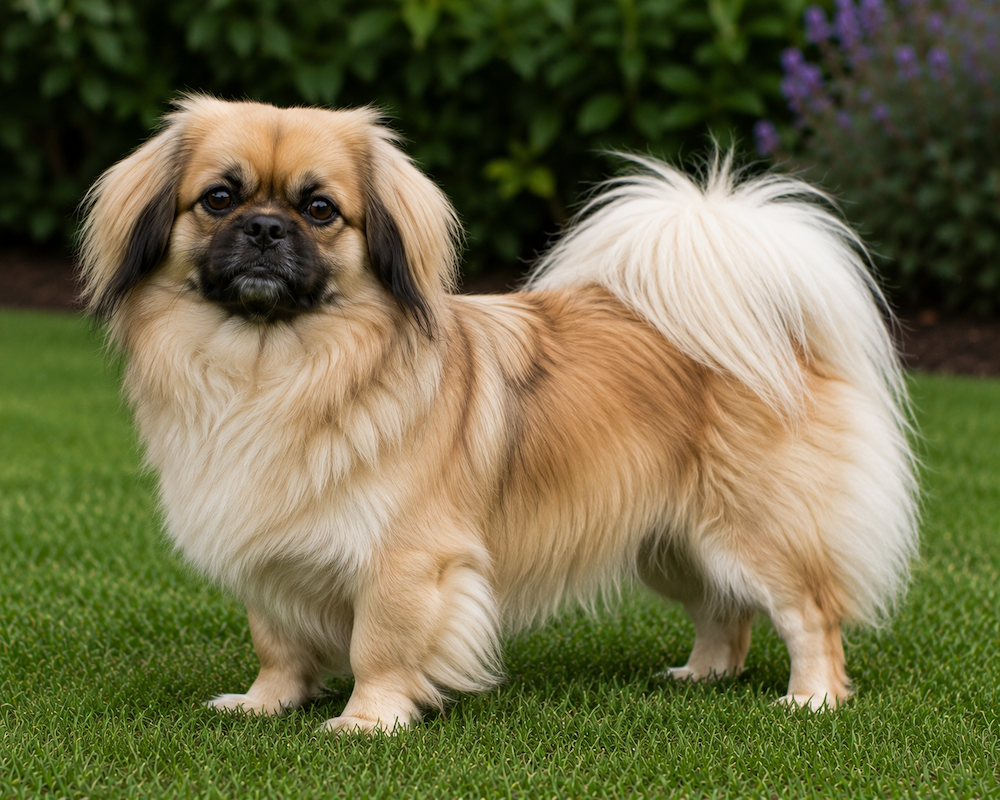
Tibetan Spaniels are small dogs, generally standing around 25 cm at the shoulder and weighing approximately 4–7 kg.
Despite their small size, they’re sturdy rather than particularly delicate.
Their feathered tail is characteristically carried curled over the back.
Can a Tibetan Spaniel Live in an Apartment?
Yes. Tibetan Spaniels are generally excellent apartment dogs.
They’re small and have moderate exercise requirements.
Their tendency to alert-bark at unfamiliar sights and sounds can require management in buildings with close neighbours.
Can Tibetan Spaniels Be Left Alone?
Adult Tibetan Spaniels can learn to tolerate reasonable periods alone, but they’re companionable dogs that form close relationships with their families.
They generally prefer being involved in household life.
Gradual alone-time training can help prevent separation-related problems.
Do Tibetan Spaniels Bark a Lot?
They can be quite alert and vocal.
Tibetan Spaniels have a long history as watchdogs, so many readily announce approaching people, unfamiliar noises or unusual activity.
Early training can help keep alert barking under control.
Are Tibetan Spaniels Good Watchdogs?
Yes. Their small size prevents them from functioning as conventional guard dogs, but they’re naturally observant and make excellent watchdogs.
Historically, Tibetan Spaniels were valued for their ability to spot approaching people and sound the alarm.
That instinct remains strong in many modern dogs.
Are Tibetan Spaniels Affectionate?
Yes. Tibetan Spaniels are typically affectionate and devoted to their families.
They often enjoy cuddling but may also display an independent, almost cat-like personality.
Many prefer choosing when and where affection happens rather than constantly demanding it.
Are Tibetan Spaniels Good With Strangers?
They can be reserved around unfamiliar people.
Their historical watchdog role encouraged awareness of strangers, so they’re often more cautious than extremely outgoing companion breeds.
Good early socialisation helps prevent natural reserve from becoming excessive suspicion.
Are Tibetan Spaniels Good With Other Dogs?
Generally, yes.
Tibetan Spaniels can live successfully with other dogs and often enjoy canine companionship.
Early socialisation and appropriate introductions remain important.
Are Tibetan Spaniels Good With Cats?
Yes. Many Tibetan Spaniels can live very successfully with cats.
Their moderate size, relatively manageable prey drive and somewhat cat-like personality can make them suitable for multi-pet households.
Individual temperament still matters.
Are Tibetan Spaniels High-Energy Dogs?
No. They’re generally moderately active dogs.
Tibetan Spaniels enjoy walks and play but don’t usually require the intensive exercise associated with working or sporting breeds.
They’re often equally happy relaxing somewhere comfortable after their daily activity.
Are Tibetan Spaniels Smart?
Yes. Tibetan Spaniels are intelligent, observant and good at solving problems.
Their intelligence comes with considerable independence.
They may understand exactly what their owner wants without necessarily sharing the owner’s enthusiasm about doing it.
Why Do Tibetan Spaniels Like High Places?
Many Tibetan Spaniels have a fascinating tendency to climb onto furniture, window ledges or other elevated positions.
This behaviour fits their historical role in Tibetan monasteries, where small dogs reportedly watched from elevated positions and alerted people and larger guardian dogs when strangers approached.
Modern Tibetan Spaniels often still seem happiest when they can survey their surroundings from above.
Do Tibetan Spaniels Have Flat Faces?
Tibetan Spaniels have relatively short muzzles, but they’re generally less extremely flat-faced than breeds such as Pugs or Pekingese.
Individual facial structure varies.
Dogs with shorter muzzles may be more susceptible to heat and breathing difficulties, so responsible breeding remains important.
What Colours Do Tibetan Spaniels Come In?
Tibetan Spaniels occur in a very wide range of colours and combinations.
These can include gold, cream, red, fawn, black, white and parti-colours, among others.
Unlike some breeds, there isn’t one single colour that defines the Tibetan Spaniel’s appearance.
Is a Tibetan Spaniel Actually a Spaniel?
Not in the traditional sense.
Sporting spaniels were developed primarily to locate and flush game for hunters, while the Tibetan Spaniel developed as a companion and watchdog in Tibet.
European visitors applied the “spaniel” name because of the dog’s appearance rather than its working function.
What Is the Difference Between a Tibetan Spaniel and a Pekingese?
The breeds share some visual similarities, but they’re distinct.
Tibetan Spaniels generally have a longer muzzle, lighter build and more athletic appearance, while Pekingese tend to have flatter faces, heavier coats and more compact bodies.
Their histories also developed in different cultural settings.
What Is the Difference Between a Tibetan Spaniel and a Tibetan Terrier?
Despite both carrying “Tibetan” in their names, they’re quite different dogs.
The Tibetan Terrier is substantially larger and has a long, shaggy coat.
The Tibetan Spaniel is a small companion and watchdog, while the Tibetan Terrier developed as a versatile companion and working dog.
Interestingly, neither breed fits neatly into the conventional Western meaning of “spaniel” or “terrier.”
What Were Tibetan Spaniels Originally Bred For?
Tibetan Spaniels were traditionally kept as companions and alert dogs.
They became closely associated with Tibetan Buddhist monasteries, where small dogs could watch their surroundings and alert monks and larger guardian dogs to approaching visitors.
Their role required alertness, intelligence and independence rather than hunting ability.
Where Does the Tibetan Spaniel Come From?
The Tibetan Spaniel originated in Tibet, where small companion dogs of this general type have existed for centuries.
They became particularly associated with monasteries and Buddhist culture.
Dogs were also exchanged as valued gifts, helping related Asian companion-dog types spread between regions.
Is a Tibetan Spaniel a Good First Dog?
Yes. A Tibetan Spaniel can be a good choice for a first-time dog owner.
They’re conveniently small, moderately active and relatively adaptable.
Prospective owners should still be prepared for regular grooming, alert barking and an independent personality that can make training different from that of highly eager-to-please breeds.
What Makes the Tibetan Spaniel Unique?
One of the most charming things about the Tibetan Spaniel is that it appears to have remembered its ancient job.
For centuries, these little dogs were associated with Tibetan monasteries, where their alertness made them useful watchdogs.
And they had a particularly clever strategy:
get up high and watch everything.
Modern Tibetan Spaniels frequently climb onto the back of sofas, window ledges or other elevated positions where they can survey the household and whatever is happening outside.
It’s one reason owners sometimes describe them as strangely cat-like.
They’re small enough to be comfortable lap dogs, intelligent enough to think independently and observant enough to notice almost everything happening around them.
So if your Tibetan Spaniel spends half the afternoon sitting on the highest piece of furniture in the room staring out the window, it may not simply be relaxing.
It could be reporting for a job its ancestors started centuries ago.