
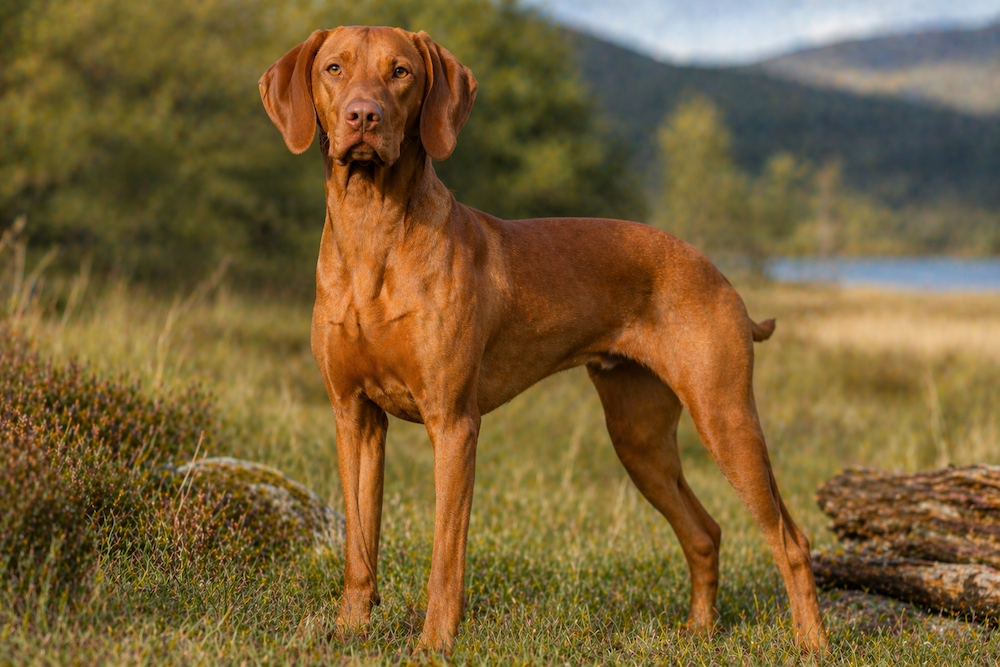







Energetic, affectionate, and incredibly loyal — a high-performance companion that thrives on activity and human connection.
🧠 QUICK SNAPSHOT
- Temperament: Affectionate, energetic, loyal
- Energy Level: Very high
- Size: Medium to large
- Good With Families: Yes
- Trainability: High
- Grooming: Low
- Best For: Active owners and outdoor lifestyles
📚 OVERVIEW
The Vizsla is a sleek, athletic breed originally developed for hunting and retrieving. Known for their strong bond with humans, they are often called “velcro dogs” because they love to stay close to their owners.
They are highly energetic and thrive in environments where they can run, play, and be part of daily activities.
✅ PROS & CONS
Pros
- Extremely loyal and affectionate
- Highly trainable
- Low grooming needs
- Great for active lifestyles
Cons
- Needs a lot of daily exercise
- Can develop separation anxiety
- Not suited to sedentary homes
- Requires constant engagement
Is a Vizsla a Good Family Dog?
Yes. Vizslas can make affectionate, loyal and energetic family dogs for active households.
They form exceptionally strong bonds with their owners and usually want to be involved in everything the family does. Their high exercise and companionship needs mean they’re not ideal for every household.
Are Vizslas Good With Children?
Generally, yes. Vizslas are often affectionate, playful and gentle with children.
However, they’re energetic, athletic dogs and can accidentally knock over small children when excited.
Early training and supervision are important.
How Much Exercise Does a Vizsla Need?
Most adult Vizslas need around 90 minutes to two hours of exercise each day, with some individuals requiring even more.
Running, hiking, retrieving, swimming and scent-based activities can all be excellent outlets.
A short daily walk is generally nowhere near enough for this athletic sporting breed.
Are Vizslas Easy to Train?
Yes. Vizslas are intelligent, responsive and highly trainable.
They generally learn quickly and enjoy working closely with their owners.
Positive reinforcement is particularly important because Vizslas can be sensitive and may respond poorly to harsh training methods.
Do Vizslas Shed a Lot?
Vizslas shed a moderate amount throughout the year.
Their coat is extremely short, so shedding may be less noticeable than with long-haired breeds, but they aren’t non-shedding dogs.
Regular brushing helps remove loose hair.
Are Vizslas Hypoallergenic?
No.
Vizslas aren’t considered hypoallergenic.
Although their short coat is easy to maintain, they still produce allergens through dander, saliva and skin secretions.
How Often Should You Groom a Vizsla?
Vizslas have very low-maintenance coats.
Weekly brushing is usually sufficient, with occasional bathing when necessary.
Regular nail trimming, ear checks and dental care should also be part of their routine.
What Health Problems Are Common in Vizslas?
Potential health concerns include hip dysplasia, epilepsy, certain cancers, thyroid disorders and eye diseases.
Responsible breeders should screen breeding dogs for health conditions relevant to the breed.
Maintaining a healthy body weight and providing appropriate exercise are also important.
How Long Do Vizslas Live?
Vizslas commonly live around 12–14 years.
Some live longer with good genetics, appropriate nutrition, regular exercise and preventive veterinary care.
How Big Does a Vizsla Get?
Vizslas are medium-to-large athletic dogs.
Adults generally stand around 53–64 cm at the shoulder and commonly weigh approximately 20–30 kg, with males typically larger than females.
They’re lean and muscular rather than heavily built.
Can a Vizsla Live in an Apartment?
It’s possible, but challenging.
A well-exercised Vizsla can settle indoors, but its very high exercise requirements must be met every day.
Access to a backyard doesn’t replace walks, running, training and other structured activities.
Can Vizslas Be Left Alone?
Vizslas generally don’t cope particularly well with being left alone for long periods.
They’re intensely people-oriented and often want almost constant contact with their owners.
Gradual alone-time training from puppyhood is important, but this isn’t usually the best breed for households where everyone is away all day.
Why Are Vizslas Called Velcro Dogs?
Vizslas are famously known as “Velcro dogs” because of their tendency to stay extremely close to their owners.
Many follow family members from room to room, lean against them, climb onto laps and sleep as close as possible.
Their close attachment reflects a working history that required extensive cooperation with people.
Do Vizslas Have Separation Anxiety?
Some Vizslas can be particularly susceptible to separation-related distress because of their strong attachment to people.
Not every Vizsla develops separation anxiety, but independence should be taught gradually from an early age.
Exercise alone won’t necessarily solve genuine separation anxiety.
Do Vizslas Bark a Lot?
Vizslas aren’t generally among the most excessive barking breeds.
However, they may bark when excited, bored, anxious or alerting their owners.
Insufficient exercise and long periods alone can contribute to unwanted vocal behaviour.
Are Vizslas Affectionate?
Extremely.
Vizslas are famous for their intense affection and physical closeness.
Many seem happiest when they’re touching their owners, whether leaning against a leg, sleeping beside them or attempting to occupy the same chair.
Are Vizslas Good With Other Dogs?
Generally, yes.
Well-socialised Vizslas are often friendly and playful with other dogs.
Their energetic style of play may be overwhelming for much smaller, elderly or particularly quiet dogs.
Are Vizslas Good With Cats?
Vizslas can live successfully with cats, particularly when raised alongside them.
However, they’re hunting dogs and can have significant prey drive.
Careful introductions and supervision are important, particularly around unfamiliar cats.
Do Vizslas Have a High Prey Drive?
Yes. Many Vizslas have a strong prey drive.
They were developed as versatile hunting dogs, so pursuing birds and other moving animals can be instinctive.
Recall training should begin early, and off-leash freedom should only be allowed in appropriate locations.
Are Vizslas Good Off Leash?
Vizslas can develop excellent recall because they’re naturally inclined to work closely with their handlers.
However, hunting instincts can still override training when wildlife appears.
Reliable recall requires extensive practice, and dogs should only be off leash where it’s safe and permitted.
Are Vizslas High-Energy Dogs?
Yes. Vizslas are very high-energy, athletic dogs.
They were developed to spend long periods working in the field and retain substantial stamina.
They’re generally best suited to active owners who genuinely enjoy daily outdoor exercise.
Do Vizslas Like to Swim?
Many Vizslas enjoy swimming.
Their sporting background makes water activities a useful form of exercise, particularly when combined with retrieving.
Individual preferences vary, and all dogs should be introduced to water safely.
Are Vizslas Good Running Dogs?
Yes. Healthy adult Vizslas can make excellent running companions.
Their athletic build and endurance suit jogging and longer-distance activities.
Puppies shouldn’t undertake repetitive long-distance running while their bones and joints are still developing.
Do Vizslas Get Cold Easily?
Yes. Vizslas have a very short coat with little insulation, so they can become cold relatively easily.
Dogs living in colder climates may benefit from a properly fitted coat during winter walks.
They’re generally much happier sleeping inside with their families than living outdoors.
What Colour Are Vizslas?
Vizslas are famous for their distinctive golden-rust coat.
Their nose, eye rims and other pigmentation typically harmonise with the coat rather than providing the strong black contrast seen in many breeds.
This uniform colouring contributes to the Vizsla’s distinctive appearance.
What Is the Difference Between a Vizsla and a Weimaraner?
Vizslas and Weimaraners are separate breeds with different histories.
Vizslas are typically smaller and golden-rust in colour, while Weimaraners are generally larger and famous for their silver-grey coats.
Both are athletic hunting breeds that can form very close relationships with their owners.
What Were Vizslas Originally Bred For?
Vizslas were developed as versatile pointing and retrieving hunting dogs.
They worked closely with hunters to locate game, indicate its position and retrieve it after the shot.
This helps explain the modern breed’s combination of athleticism, intelligence and unusually strong attachment to its handler.
Where Does the Vizsla Come From?
The Vizsla originated in Hungary, where its ancestors have a long association with Hungarian hunters and nobility.
Dogs resembling the modern Vizsla were developed over centuries as versatile hunting companions.
The breed survived major political upheaval and the two World Wars before becoming established internationally.
Did the Vizsla Nearly Become Extinct?
The breed’s population was severely threatened during the 20th century, particularly around the World Wars and political upheaval in Hungary.
Dedicated breeders preserved surviving bloodlines, and Vizslas were eventually exported to other countries.
The breed subsequently recovered and became popular internationally.
Is a Vizsla a Good First Dog?
A Vizsla can be a good first dog for a very active and committed owner, but it’s not an easy beginner breed.
Its trainability and affectionate personality are major advantages, but the breed requires substantial exercise, companionship and mental stimulation.
People wanting a low-maintenance lifestyle companion should generally look elsewhere.
What Makes the Vizsla Unique?
The Vizsla’s nickname tells you almost everything you need to know:
the Velcro dog.
These Hungarian hunting dogs were developed to work closely alongside people, and modern Vizslas have taken the concept of “closely” rather seriously.
Going to the kitchen?
The Vizsla is coming.
Moving to the sofa?
It’s coming too.
Going to the bathroom?
Apparently that’s a team activity.
But underneath that famously affectionate personality is a serious athlete. Vizslas were developed to search, point and retrieve game, giving them speed, endurance, intelligence and an enormous appetite for activity.
That combination is what makes the breed special.
Outside, you can have an athletic hunting dog capable of running for miles.
Inside, you can have a deeply affectionate companion whose understanding of personal space is approximately:
zero centimetres.